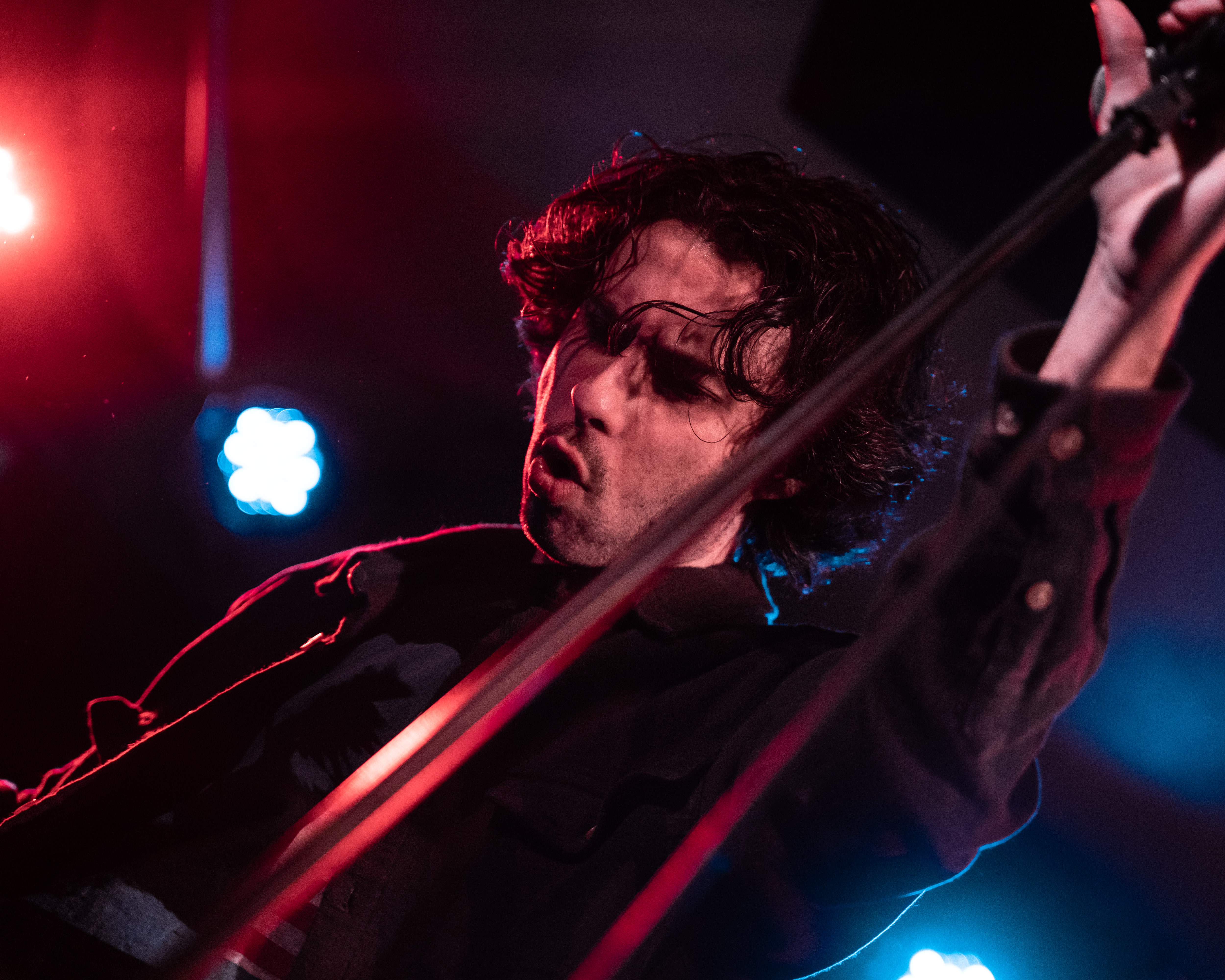
Angelo Coppola performs live with The Lows, a Detroit hard rock quintet.
For Angelo Coppola, Michigan’s coronavirus quarantine feels more like a creative sabbatical.
The Detroit alt rock singer-songwriter and multi-instrumentalist dropped a new banger six-track EP, The Quarantine Sessions, Vol. 1, last week to satisfy growing Motor City cravings for additional releases in world currently without “traditional” live music.
“I’m kind of like a songwriting machine, I just can’t stop, and I have way more songs written than I’m able to put out, or I’m able to play with The Lows. I have this back catalog of 30 to 40 finished songs. All six of these are from the past year or so, but they’ve all been developed over time,” said Coppola, who’s also the frontman for The Lows.
“I thought these were the best of the bunch and didn’t know if The Lows would ever play them, but I just wanted to get something out. I’ve had the time now being home with my dad because he helps produce and mix it, and I can finally get a lot of these songs recorded and out that I didn’t have time for before.”
Throughout The Quarantine Sessions, Coppola seeks tantalizing ‘90s alt rock inspiration from genre-heavy royalty, including Foo Fighters, Nirvana, Alice in Chains, Stone Temple Pilots and Oasis. A seamless head-banging fusion of aggressive vocals, distorted electric guitars, charging bass and pounding drums immerse listeners in a grungy underworld.
“All six are a wide variety of genres within the rock genre, and I wanted to spread out the styles on the album. It was kind of random the ones we decided to start, and we have eight more that we started, and that I’m going to put out,” Coppola said.
“We’re going to do The Quarantine Sessions, Vol. 2 for sure in the next couple of weeks. It only took us a week to get all six of these done. It was basically like a song a day working down there, and we’re gonna grind out some more, too.”
George Shuntov of The Phoenix Process. Photo courtesy of The Phoenix Process
For George Shuntov, music embodies a phoenix-like quality.
New music evolves from past encounters and emotions that leave an indelible mark on the soul. In turn, those experiences ignite another musical spark and regenerate the soul into a new creative being.
“George in a sense is like the phoenix, and he’s no longer with us in the physical world, but in an artistic and spiritual one he’s still with us. It’s amazing, and The Phoenix Process is still in effect, and George really is the phoenix,” said Julian Cumpian, Shuntov’s longtime friend and collaborator.
Cumpian reflected on Shuntov’s profound musical legacy Sunday night along with his former bandmates, Brandon Salazar and Théo Caen, in The Phoenix Process. Shuntov, the prolific frontman for the Chicago electro alt-rock quartet and a highly-regarded, do-it-yourself (DIY) music champion, suddenly passed away March 20 at age 34.
“The places where he was active in and in communication with, he did leave an impact, and that’s something that will be remembered and will continue to leave an impact on more people. I’ve been sharing his music with people I know who are artists, and they are floored at the level of musicianship he had and just the way he did everything. He was all self-taught and all self-produced. He didn’t need a lot to make it sound amazing,” Cumpian said.
Cumpian met Shuntov, a Chicago native with Bulgarian and Ecuadorian roots, through a mutual friend on MySpace in 2006. Over the next decade, Cumpian and Shuntov became fast friends and musical collaborators who performed live together. By 2013, Shuntov formed The Phoenix Process with another friend, who soon departed the project, and later brought Cumpian into the fold.
Forming The Phoenix Process
Julian Cumpian, George Shuntov, Brandon Salazar and Theo Caen of The Phoenix Process. Photo courtesy of The Phoenix Process
Together, Cumpian and Shuntov developed multi-genre musical concepts and visual elements for The Phoenix Process and created an eclectic live sound built around electronic beats, world influences, electric guitars and hand percussion. In May 2014, they played their first live show in Rogers Park at the now-defunct Red Line Tap.
“It was a good start, and we figured out what worked and what didn’t, and we got people exposed to the sound in a live setting. Fast-forward to 2015, Brandon and Théo joined the band, which continued until 2017,” said Cumpian, who left The Phoenix Process in 2016. “The band didn’t last long, but it lasted long enough I’d say for us to develop a sound, get to know George and have people get to know George’s music. He left a big impact in such a short amount of time.”
Meanwhile, Salazar met Shuntov through a Facebook group called Chicago Musician Exchange after seeing a “want ad” post for a drummer and guitarist. While only age 16 at the time, Salazar reached out to Shuntov about a possible collaboration, and the two started working together with Caen.
“I heard his music, and I was like, ‘This guy is the real deal, this guy is a fucking professional. There’s no way he would take a little guy like me.’ I showed him some of my stuff, and I put myself out there into the world, and he saw me and Théo through that,” said Salazar, drummer and percussionist for The Phoenix Process.
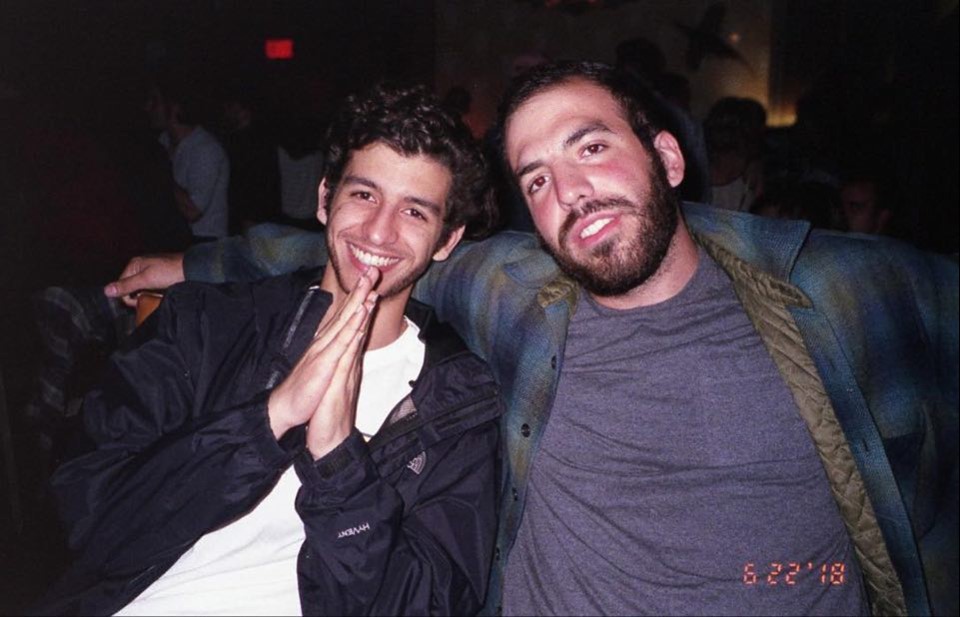
Timo Radwan and Niko Matsamakis of Quick Tiko. Photo courtesy of Niko Matsamakis
A surge of emerging artists has become “immune” to the coronavirus.
That “immunity” arrives in the form of new music inspired by or released early to cope with the ongoing pandemic. This week, Quick Tiko and We Three combat the coronavirus on different ends of the creativity spectrum. Here are two freshly-pressed singles repeating in our ears, minds and hearts.
Quick Tiko – ‘Virus’
Quick Tiko, a new punk-garage rock duo comprised of The Sneeks’ Niko Matsamakis (guitars, vocals) and Timo Radwan (drums, bass, guitar), recently dropped a new raw, propulsive banger called “Virus.” It’s akin to early Kings of Leon, think “Aha Shake Heartbreak” and “Because of the Times” with extra spunk and rough edges.
A feisty two-minute track, “Virus” erupts into whirring, echoey guitars, pounding drums and driving bass as Matsamakis rowdily sings, “And now I’m petrified/La la la, don’t go outside/Whoa ho, I will stay inside/I ain’t going out to say goodbye/And now I’m super-duper high/Feelin’ kinda paranoid/Thinkin’ if I go outside, maybe I’m a catch a virus.”
“Stay inside people! Save lives! I was singing about exactly what was on my mind. I’d rather stay inside than possibly die. Timo and I wrote that song in one day, roughly a week ago. We wanted the recording to capture the energy and anxiety we’re feeling as best as possible,” Matsamakis said.
Luckily, Quick Tiko effectively practices social distancing with Matsamakis residing in metro Detroit and Radwan hunkering down in Toronto. The duo met at Michigan State University and wrote and recorded a ton of tracks when they were roommates back in 2016.
“Now we both just have all the time we need to chill in our respective home studios and record. For ‘Virus,’ I recorded some guitars and vocals, sent it to Timo, who then laid down the drums, bass and another guitar part. We’ve already been working on a couple more songs with this method of recording – hopefully to be released soon,” Matsamakis said.
Quick Tiko also plans to release a video for “Virus,” which will include separate quarantine video footage of Matsamakis and Radwan that’s compiled by artist and friend Colin Knighton.
We Three – ‘I Wanna Love Somebody’
We Three’s Joshua Humlie, Bethany Blanchard and Manny Humlie. Photo courtesy of Palawan Productions
We Three eloquently embraces the dark side of loneliness on their lighthearted new single, “I Wanna Love Somebody,” which dropped Friday via Palawan Productions.
The McMinnville, Ore., pop-rock sibling trio of Manny Humlie (guitar, vocals), Bethany Blanchard (bass, vocals) and Joshua Humlie (keys, drums, vocals) tackles the negative, troublesome thoughts that wreak havoc on lonely, anxious minds.
“I Wanna Love Somebody” allows We Three to proudly raise their sonic lightsabers in retaliation against incessant worries of lingering solitude and paralyzing self-doubt. It’s time to silence the “sith” of pessimism and welcome the “jedi” of optimism.
“This song is about the feeling in the pit of your stomach as you are going to bed where you feel like you are unworthy and never will be loved. The concept of ‘I think I’m gonna die alone’ is a feeling we have all had. It is a really dark thing, but we wanted to convey it in a lighthearted way that connects people when they are feeling like that,” said Manny Humlie, who originally appeared on “America’s Got Talent” with his siblings in 2018.
The track soars with vibrant electric guitars, quick finger snaps and bouncy synths that harmonize instantly with Manny Humlie’s quick, cheeky vocals, “I figured it out while I’m in the ground/There’s no kinda lining/Just laying around and counting the cracks/All in the ceiling/Just fooling around and breaking it down/To find a meaning.”
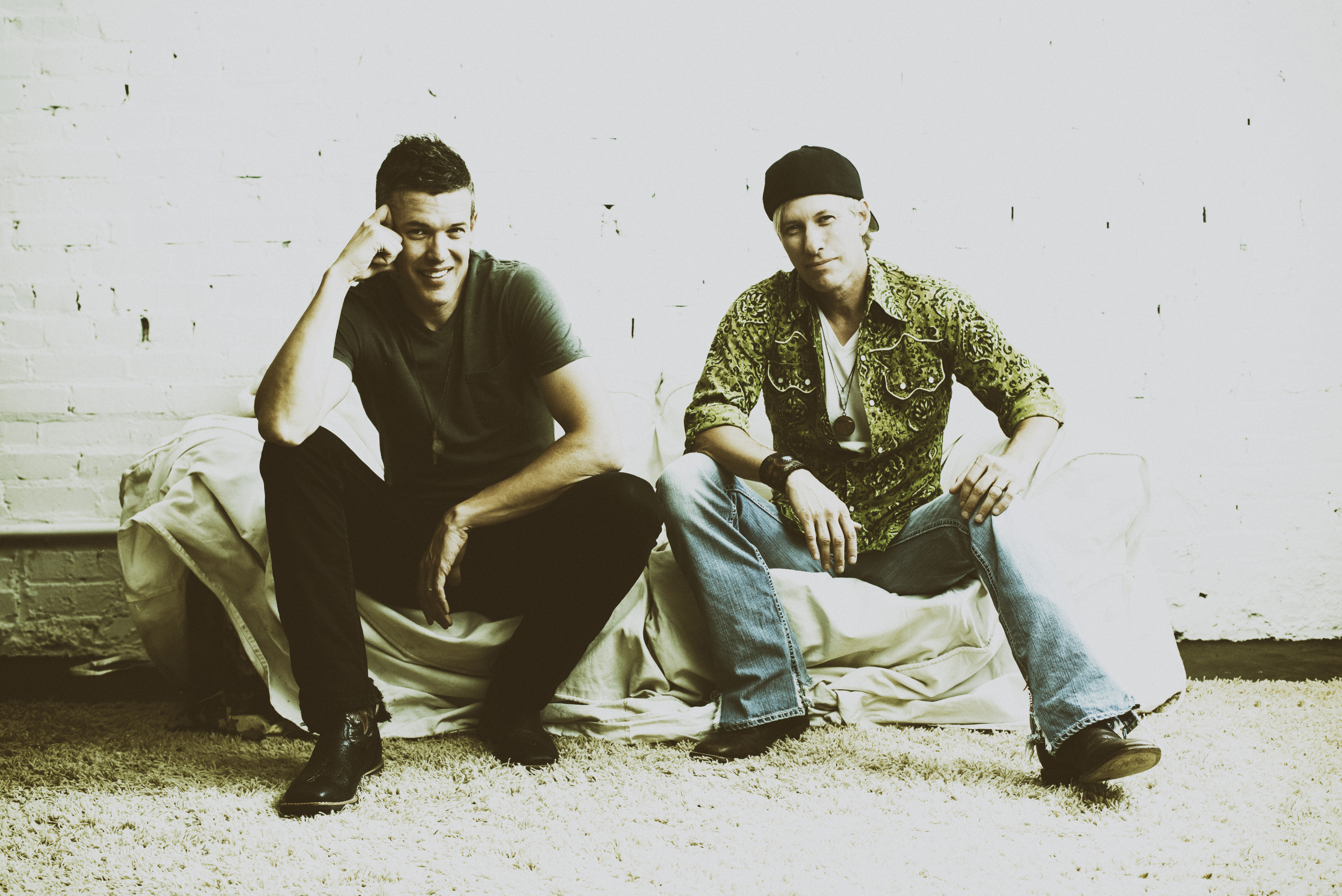
Bret Bourquin and Chad Bourquin of Big Time Grain Company
With carefree lyrics, driving instrumentation and cruising melodies, Big Time Grain Company provides the ultimate cross-country joy ride.
The Kansas City country-rock quintet zooms along life’s two-lane highway with a caravan of uplifting Americana singles and EPs that travel far and wide. Behind the wheel are Big Time Grain Company frontmen and brothers Bret Bourquin and Chad Bourquin who accelerate on their latest free-spirited single, “I’ll Take You with Me.”
This three-minute country adventure revs with traveling drums, resonant electric guitar and bouncy banjo as Bret Bourquin euphorically sings, “We’ll leave my big bus, take your Volkswagen van/Don’t need a suitcase, don’t need a backup plan/Oh won’t need my MapQuest to straighten out these wheels/You can pick the direction/We’ll put this town on our heels.”
“We’ve got a lot of songs that fit that same category that are in the hopper that have not been released yet. The subplot to that is opposites attract to make a relationship exciting. The line in there, ‘We’ll leave my big bus, take your Volkswagen van,’ my wife wanted a Volkswagen van for years,” said Chad Bourquin, Big Time Grain Company’s guitarist and co-lead vocalist.
“She doesn’t have one yet, but they’re coming out with a new one. We’re thinking they should adopt this song for their commercial and provide us all Volkswagen vans. It’s those differences that really make a relationship work, and in spite of those differences, I’m going to take you with me wherever I go.”
After embarking on a fun road trip, Big Time Grain Company briefly returns home for a family visit on “Sunday Morning,” which blends uplifting electric guitar, steady drums, jamming bass and vibrant acoustic guitar into this weekend domestic track.
Bret Bourquin and Chad Bourquin eloquently reflect on the joys and comforts of coming home, “40 days I’m on the road and playing songs/Making friends that’s cool/I wouldn’t trade it for a day gig/I wouldn’t turn back if I thought I could/But your picture crosses my mind a time or two/This beer I’m drinking don’t erase the truth/That the only place my heart rests is right here with you.”
“We’ve been really fortunate to have designed this to be the way we want it to be. In other words, we’re not gone for long bouts of time because we’re completely independent. We go out for a few days and then we come home because we like being home,” said Chad Bourquin, who has three children.
“We like being with our families, but we also love playing and love traveling. It’s a big shift every time you crawl off that bus and get back home, especially with Bret because his kids are so young now. It’s an even bigger shift for him.”
Border Patrol’s new album, “The Worst Excuses,” poignantly and irreverently addresses a spectrum of inner hurdles and identifies novel ways to overcome them.
Border Patrol masterfully builds a lasting sonic bridge between Detroit and Windsor.
As musical architects, the American-Canadian “folk-everything” duo of Dave Toennies (guitar, vocals) and Cody Howard (banjo, vocals) creates a timeless infrastructure supported by candid lyrics, robust string instrumentation and impassioned vocals on The Worst Excuses.
Released last week, Border Patrol’s second, soul-stirring album spans eight raw tracks layered with shared stories of self-doubt and second guesses wrapped in daily struggles and victories of incremental growth, minor adjustments and hopeful moments. Each Worst Excuses track poignantly and irreverently addresses a spectrum of inner hurdles and identifies novel ways to overcome them.
“It started from my personal experience, and that’s the only way that I’ve managed to make real progress growing in recent years. I’m easily overwhelmed sometimes at the prospect of self-improvement and all the things that have to come with it,” said Toennies, who lives in Hamtramck.
“Because I tend to get real busy and involved in things and overwhelm myself, I try to focus on just the one little thing in front of me that I have to do, get that one done and then move on to the next. Once I started trying to scale that up and applying it to a much more broad growth thing, it’s been the only thing that’s really worked for me.”
Uncovering ‘The Worst Excuses’
With Toennies and Howard at the storytelling helm, Border Patrol invites listeners into a raw, recognizable head trip that crosses international waters and lands directly in the midst of relatable chaos. Their internal journey begins with “A Little Bit Better (Still Bad)” as a tight-knit fusion of folky acoustic guitar, banjo and drums quickly launches into an ongoing tale of feeling stuck personally and professionally.
Despite the track’s initial, dark mood, Toennies eloquently finds a small silver lining, “But there was nothing that could hurt me in that moment/And there was nothing for me in the life I knew/In that moment something unexpected happened/Out of nothing, something grew.” Occasionally, an optimistic, hopeful thought briefly wins over an anxious, weary mind on the toughest of days.
“I hope it’s a positive thing, and there are just a lot of running jokes that we perpetuate, too. It can be sort of depressing music, but I think that it’s depressing in the way that it’s trying to be frank and talk about things that we have a hard time talking about sometimes,” Toennies said.
“We’ve always tried to take these serious topics, and rather than having it sound super serious, maybe make it a little fun, bouncy and upbeat. I hope that it’s relatable and positive in spite of all the things that are wrong.”





 The Stratton Setlist