
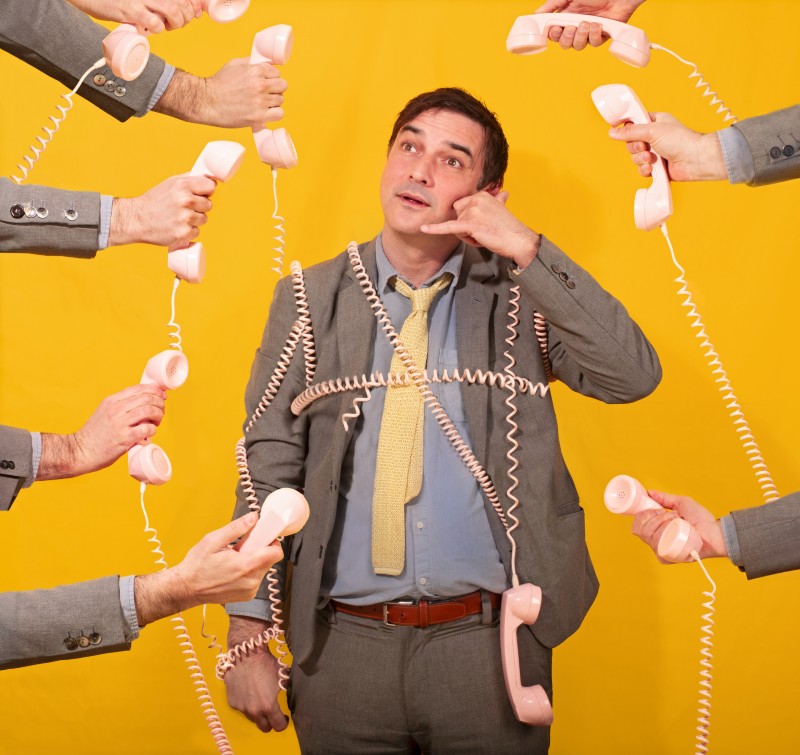
In 2010, Nathan Langston craved connection after moving to New York City.
The poet-composer wanted to meet other artists and developed an art project called Telephone, which is inspired by the children’s game of the same name.
“The game seemed like a sneaky way to meet other artists,” said Langston, founder and director of Telephone. “It took a long time, but it worked! At first, I was physically taking work from artist to artist around the city on the subway, but that took too long.”
Instead, Langston and other artists started sharing their creative works online for Telephone.
“We began passing works via the internet, which vastly increased the pool size of possible players,” said Langton, who’s now based in Seattle.
“The other thing we did was to assign each finished work to two or three artists, rather than one. That meant that the game branched outward like a family tree, and if any one artist dropped out, the game could continue expanding.”
To participate, artists sign up through the Telephone website, receive an anonymous piece of artwork from another creative to interpret, and then have two weeks to create their artistic response in a different medium.
For example, a visual artist’s painting could inspire a musician to write a song, and that same song could then inspire a filmmaker to create a short movie.
The goal is to have an initial piece of artwork spark new creations in music, visual art, literature, film, and dance.
That plan took flight with the first iteration of Telephone, which took place in 2015 and included 315 artists. By 2021, the project had grown to include 795 artists in its second iteration.
“The second game was unplanned,” Langston said. “I didn’t expect to revisit the concept, but when the pandemic hit, I found myself racking my brain for how art could be used to decrease the very intense feelings of isolation and fear that many of us were feeling at the time.
“Telephone again seemed ideal, and that turned out to be true. The second game in 2021 had … proved deeply important to many of the artists who played with us.”
In October, Langston and his team of eight volunteers launched the third iteration of Telephone, featuring nearly 1,395 artists from 930 cities in 65 countries worldwide.
“This third game, the one we just published, was started in the early autumn of 2024 as the U.S. elections were in full swing,” Langston said.
“It came from a similar motivation: deep, deep divides and isolation and a lack of connection. I thought, ‘Gosh, this year is going to be brutal, one way or the other,’ and it seemed an important time to bring artists together from all over the world in a very intimate way.”
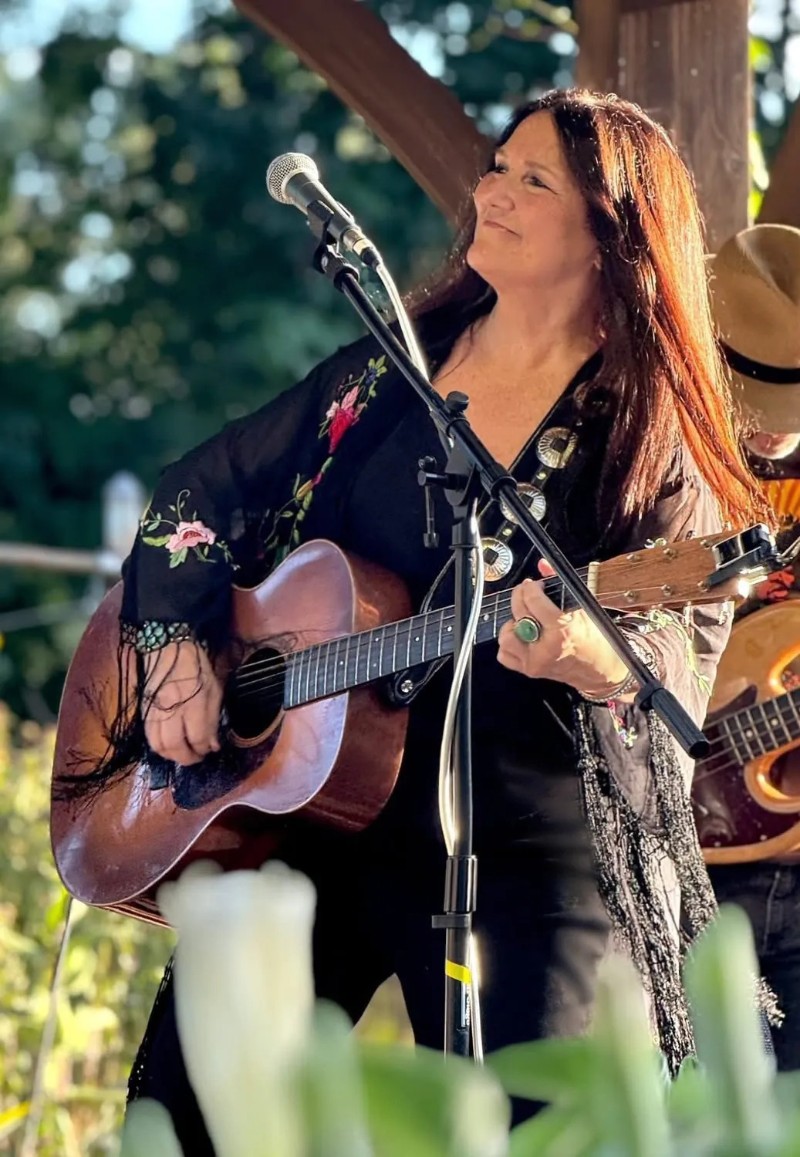
In Michigan, 25 artists submitted creative works for music, painting, sculpture, literature, photography, and drawing.
Ann Arbor singer-songwriters Judy Banker, Annie Bacon, and Kat Steih and Chelsea singer-songwriter Annie Capps created songs for Telephone.
Banker wrote the song, “On the Verge,” in response to Thomas C. Chung’s photo of dead wildflowers standing on a cliff before a partially cloudy sky and a calm body of water.
“As I played with the work, I found myself very inspired by the story of dried flowers standing there overlooking the sea as a metaphor for our human struggle and the volatile times we are in,” wrote Banker about the song on the Telephone website. “The poem inherently addressed that theme, and I decided to lean into it.”
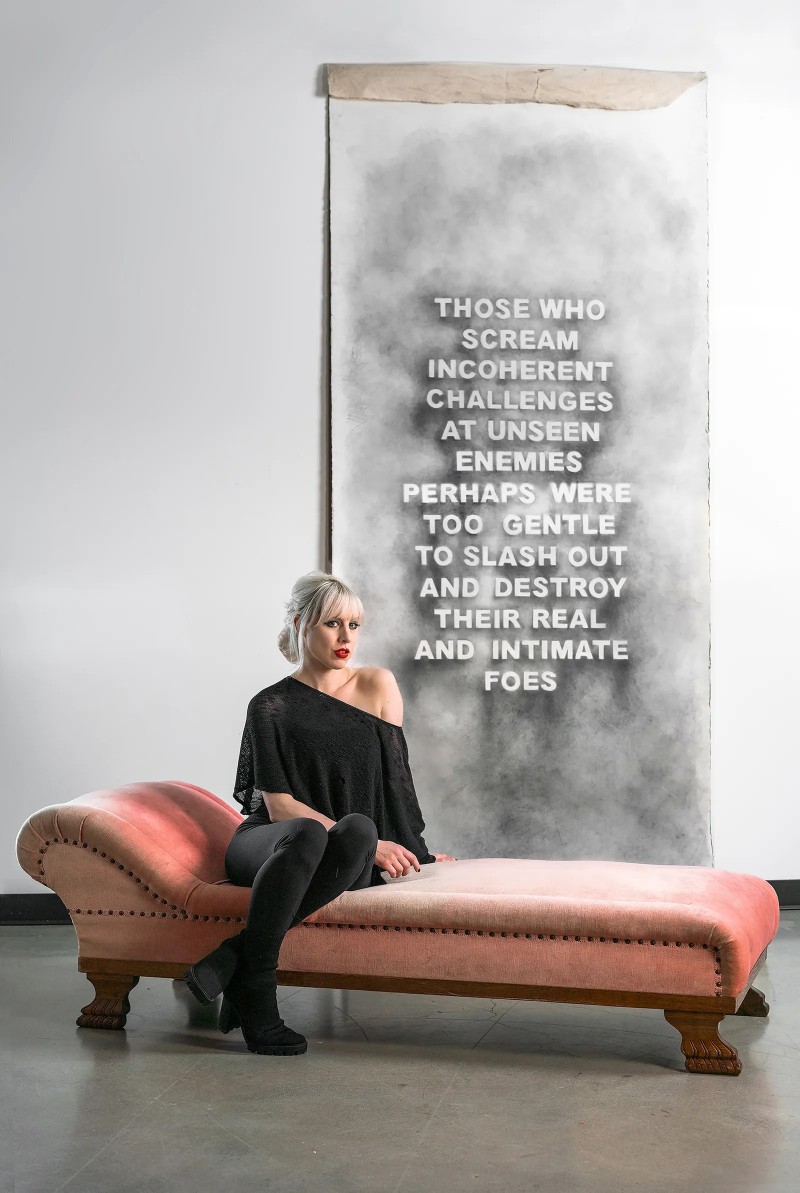
While Banker is one of many creatives featured throughout Telephone, the art project’s third iteration started with a film about fire from Seattle artist Amanda Manitach.
“I had known and respected her visual work, which was often linguistically driven,” Langston said. “In this case, our theory team, composed of professors, scholars, and translation theorists from around the world, suggested starting this game with a nonlinguistic work.
“In past games, I’ve selected starting the message, and I wanted to take my hands off the wheel. I told her, ‘Make a nonlinguistic work about fire.’ No other instructions.”
For Langston, the concept of fire quickly attracted and inspired an eclectic group of artists worldwide.
“The reason we chose ‘fire’ is because there’s an idea that elemental, or to a lesser degree, archetypal concepts would be more stable as they get passed from artist to artist, as every artist in every culture needs a way to express these fundamental concepts,” he said.
Some other highlights of Telephone include a film from New York City photographer-filmmaker Lora Robertson, an instrumental by Bishop, California musician Stelth Ulvang, and a drawing by Seattle artist Ren Riley.
For iterations past and present, one of the most inspiring aspects of Telephone is the “inaccurate” translations that come from one artist’s interpretation of another’s creative work.
“Here in our third game, 10 years later, I find myself more drawn to ‘inaccurate’ translations, which evolve in wild and unpredictable directions,” Langston said. “After all, mutation is an essential element of evolution, and it’s no different for the history of art. Plus, when you played Telephone as a kid, it was the mistranslation that made it fun!”
Langston also appreciates the depth of interaction and connection among the artists featured throughout Telephone.
“These artistic collaborators are total strangers to each other and connected across great distances, and they’re having profound dialogues and interactions. That’s cool,” he said. “I’ve heard it said that ‘the internet is a mile wide and an inch deep.’ This game makes the internet a mile deep!”
Langston hopes patrons absorb that same creativity and connection while viewing the project online.
“I hope they get the sense, even if they aren’t themselves an artist, that they belong to a fully complex network of other people, a network of connections that, if fully illustrated, would include everyone,” he said.
As for the future of Telephone, Langston and his team of volunteers are taking a much-needed break.
“We’ve played three games of Telephone now,” he said. “After each game, we’ve gotten this question: ‘When is the next one?’ It comes from a good place and is taken with gratitude as a compliment.
“But for the eight volunteers and me who absolutely killed ourselves and worked bonkers hours for well over a year to make this freely given gift, [we] need a solid break and a very deep breath. I imagine all of us will finally take the time to enjoy reading a book, watching some football, or [cooking] some dinner with friends. I think it’s time for some chicken tortilla soup.”
 The Stratton Setlist