One Ton Trolley’s Anthony Zack, Bill Arnold, Chris Brown and Jon Johnson celebrate the ’70s rock album era on “Sunday Morning Cigarettes.” Photo courtesy of One Ton Trolley
One Ton Trolley charges full steam ahead into the album era.
The Clarkston, Michigan roots-rock quartet pays homage to the days of listening to a record in its entirety and becoming immersed in the experience on Sunday Morning Cigarettes.
“I wanted to make a 1970s rock album where you got in on the first song and you rode the thing all the way to the end,” said Bill Arnold, One Ton Trolley’s lead vocalist, guitarist and dobroist, about the band’s latest album.
“I was thinking of pre-car keys Bill laying on the floor of his bedroom reading the liner notes to a record. I wanted it to flow … I’m pretty pleased with the order.”
ForSunday Morning Cigarettes, One Ton Trolley arrives in good order, but not without revisiting old routes to the past. The album’s dozen tracks reflect on previous relationships, choices and lessons from a wiser, clearer perspective.
“I don’t really write about personal experiences as much as I try to write about things that I see or hear,” Arnold said. “I’m like an observer that tries to put them … more in first person.”
“I’ve been pushing against myself, and I feel like I’ve been in the weeds my whole life. I’m in a pretty good place now, and I’m heading in the right direction of where I want to be,” said Snyder about his latest folk-pop EP.
“I went to Nicaragua in March, and I got to spend some time in the mountains. Then I got to spend time surfing on the beach and hanging out. Something about [that] just felt like where I wanted to be and what I wanted to do, so that’s my goal.”
As part of that goal, Snyder shares that positive outlook onDown From the Mountain Out to the Sea, which features soft, breathy vocals; concise lyrics; bluesy influences; and percussive, rhythmic, and fingerpicked acoustic guitars.
Those elements create a comforting sonic experience and reflect the hope, encouragement, and determination embedded in the EP’s five tracks.
“I’ve just been feeling a little more in touch with that kind of stuff when I’ve been writing,“ said Snyder, who grew up in Dexter and previously fronted the now-disbanded Dirty Deville.
“When I come across an idea or things that feel right … or I’m just doing what I enjoy, which is playing guitar, I feel more connected to that kind of stuff. I feel like things are in alignment.”
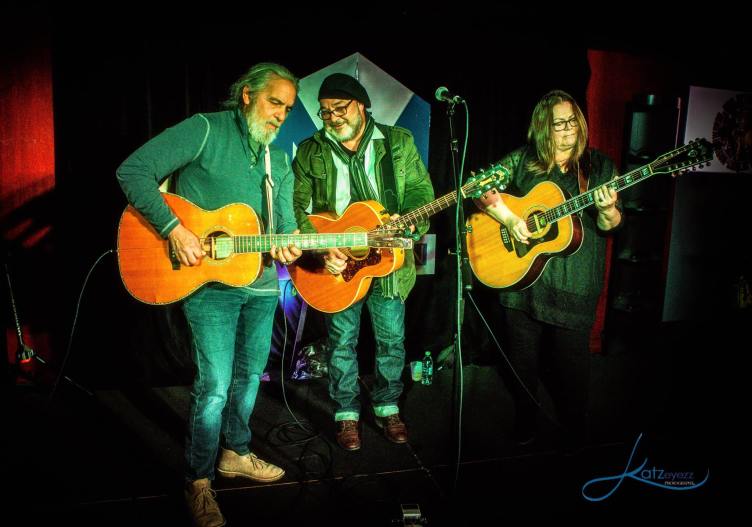
Ash Can Van Gogh’s Billy Brandt, JC Whitelaw and Mary McGuire pause between performances. Photo – Ash Can Van Gogh’s Facebook page
Back in 1986, Billy Brandt and JC Whitelaw placed an ad in the Metro Times looking for a female vocalist and instrumentalist.
The two Metro Detroit singer-songwriters envisioned forming a folk-rock band—now known as Ash Can Van Gogh—that specialized in three-part harmonies.
It wasn’t long until Mary McGuire saw the ad and called Brandt from a payphone at the Inn Season Café in Royal Oak. The Lansing singer-songwriter was working at the vegetarian-vegan restaurant at the time.
“I’m standing there holding the Metro Times, and I put a dime in the phone. Billy answers the phone, and I’m like, ‘Hey, I’m calling about your ad in the Metro Times, and my name is Mary,’ and he’s like, ‘What’s your sign?’” McGuire said.
“That was the first thing he said to me, and I was like, ‘Scorpio,’ and he’s like, ‘Oh, that’s cool; I’m a Capricorn.’ And I’m like, ‘Oh, we’ll get along. I have a moon in Capricorn,’ so then we chatted about our influences and found we were big fans of Crosby, Stills, Nash & Young.”
That first conversation quickly led to Brandt and Whitelaw seeing McGuire perform at Sir Charles Pub in Royal Oak and then singing with her at her house later that night.
The July edition of “The Soundcheck” celebrates the concept of summer through different emotions and experiences—love, authenticity, remembrance, nostalgia and connection. It’s time to think about “Your New Favorite Lover” while you “Stay Behind The Wheel” and later arrive at your destination and receive a warm greeting of Welcome to Pookie’s. There’s also a need to reflect on the life and love of “Willow” and remember what’s For Debbie.
Rhythmic drums, gleaming electric guitar, humming bass and romantic piano wrap listeners in a heated embrace alongside frontman Josh Clemens’ fervent vocals.
He sings, “Ooooh I’m not trying to hide / What you see is what you get / Now you’re the owner of this wreck / Honestly, what did you expect of me / You only get the best of me / You’re begging for the rest of me / Honey, you’re not ready, but come and get it now.”
The track’s infectious, sensual groove is guaranteed to captivate new and current Strange Heart fans. Drummer Bobby Jankowski, bassist-vocalist Mike Schneider, lead guitar-vocalist Mike Leslie and Clemens have won me over, and I know they’ll delight you as well.
Strange Heart also blazes on stage with an eight-piece band (complete with horns), so check them out July 20 at The Whitney in Detroit and July 22 at Eastern Palace Club in Hazel Park.
The Detroit indie-rock singer-songwriter shares that realization on her hopeful new single, “I Have Everything.”
“I think at first glance over and maybe with intention when I first wrote it, you can look at the song as definitely being inspired by loss. Maybe bigger than that … that sadness or loss you feel when things don’t really pan out the way you expect them or hope at the time,” said Pia-Allison Roa, aka pia the band.
“As everyone knows, life doesn’t always go as planned, and usually it goes in a way better than you could have imagined. That realization and affirmation that you have everything you need at this moment in time are what I hope people can reflect on to move forward and let go of what their expectations were.”
Backed by soft drums, thoughtful bass and determined electric guitar, pia the band sheds those past expectations and embraces the present as she sings, “I’m trying not to bum you all out / But every time I open my mouth / I convince myself believe / I have everything I need.”
“By the end of the song and after the huge instrumental, I repeat that phrase [‘I have everything I need’] again a couple of times, and to me, it’s a confirmation of ‘Yes, I actually do believe that I do have everything I need,’” Roa said.
“I find myself so many times being in situations with good friends, or being at the beach on a nice day, or even as silly as eating a good burger and being like, ‘Whoa, yup, I have everything I need right now.’”
Adam Labeaux’s “Brave Face” features earnest lyrics, soulful vocals and ‘70s-inspired folk-rock instrumentation flavored with improvisational jazz and soul. Photo – Natalia Holtzman
Adam Labeaux searches for the true meaning of courage in himself and others.
The folk-rock singer-songwriter and multi-instrumentalist explores the power of tenacity, vulnerability and authenticity on his new album Brave Face.
“It does have a lot to do with these central themes, and these are things I tend to touch on a lot, including the human condition,” said Labeaux, who resides in Ann Arbor.
“I tend to write dark folk, and I gravitate toward this subject matter and a focal point that maybe people don’t want to look at all the time. But I always have hope, and I always feel there’s positivity to come out.”
That positivity and bravery shine across Brave Face’s dozen candid tracks, which feature earnest lyrics, soulful vocals and ‘70s-inspired folk-rock instrumentation flavored with improvisational jazz and soul. Imagine if Labeaux formed a new supergroup with members of Steely Dan, the E Street Band and Toto.
“I’m the first to admit that sometimes I write songs to give myself words of encouragement that I’m not getting from someone else,” said Labeaux about his fourth album. “If nothing else, I find that when I’m at my lowest and when I’m most manic that usually it means I haven’t been writing enough. I haven’t been expressing it, and I really need to get into that space and have that cathartic moment.”
In 2020, Olivia Van Goor formed an unexpected friendship through social media.
The metro Detroit jazz vocalist stumbled upon Caity Gyorgy’s infectious single “Postage Due” and contacted the Canadian jazz singer about including the track in her songbook.
“I couldn’t believe it wasn’t a standard … she was kind enough to send me her music, and so I added that song among others to my repertoire,” Van Goor said.
“It’s important to me to not only keep the tradition alive by doing standards but to introduce my audience to other composers, especially females and especially vocalists. We have never performed together—in fact, we’ve never even met in person.”
That circumstance will quickly change with Van Goor and Gyorgy co-hosting a June 3 duet show at Grosse Pointe Unitarian Church (GPUC) in Grosse Pointe, Michigan.
“Caity reached out a couple of months ago while planning her shows in the U.S. this summer. She proposed a duo show in the Detroit area, and when possible venues fell through for me, I had to figure out how to do it myself,” said Van Goor, who’s producing the show.
“Scott Gwinnell, who is playing the gig with us, recommended the GPUC, and I think it is a fabulous choice. I enjoy so much about her music, but my favorite thing about it is her fresh nod to standards in a very bebopish way. Not a lot of vocalists are doing that, and I am all about that!”
To learn more about her upcoming concert with Gyorgy, I recently spoke with Van Goor about the show’s setlist, collaborators and ticketing options and inquired about her latest single and plans for new material.
Blockhouse Valley’s Ashleigh Glass, Jon Howard, Cody Cooper and Danny Steinkopf feature wistful stories about heartbreak, home and hope on their self-titled debut EP. Photo courtesy of Blockhouse Valley
With musical roots throughout the Midwest, Blockhouse Valley deeply cultivates a flourishing Americana landscape in southeast Michigan.
The metro Detroit quartet of Ashleigh Glass (vocals), Cody Cooper (mandolin, guitar), Jon Howard (guitar) and Danny Steinkopf (upright bass) combines robust elements of Appalachian folk and Tennessee bluegrass with gritty Rust Belt sentiments on their self-titled debut EP.
“Growing up, my prolific and prodigious grandparents helped shape my vision for my musical endeavors. I was exposed to artists like Dolly Parton, Marty Stuart and Chet Atkins, but my personal preferences skewed more toward rock, blues and indie music,” said Cooper, who hails from Sunbury, Ohio, and whose grandparents reside in northeast Tennessee’s Blockhouse Valley.
“When Ashleigh, a West Virginia native, and I started writing music together, we found a lot of shared experiences tied to the trials of living in the Rust Belt. We both lamented witnessing the impact of lost industry and economy on our parents’ and grandparents’ generations and were concerned about how it was shaping our peers and our perspectives in the Midwest.”
In response, Cooper and Glass penned six thoughtful tracks for the EP that reconcile past struggles and beckon future growth. Wistful stories about heartbreak, home and hope soar alongside rich harmonies and fervent acoustic instrumentation.
“The tie to Blockhouse Valley harkens to the short-lived promise of prosperity, the long-term costs lurking beneath the surface, and the ever-enduring splinter of hope that we might learn to do better as we learn from all we’ve seen,” Glass said.
“From this viewpoint, our music has been influenced by a wide range of artists, most notably Chris Thile and his bands Punch Brothers and Nickel Creek. They encapsulate so many elements that we relish, including bluegrass instrumentation that blends nods to their predecessors with truly virtuosic musicianship.”
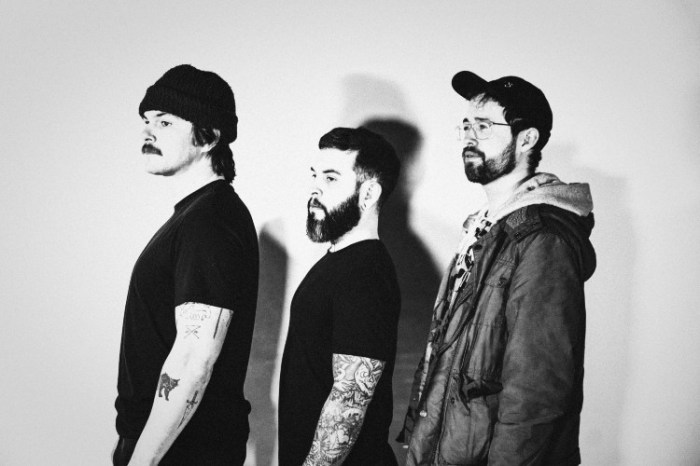
The frontman for the Detroit emo/punk-rock trio chronicles the challenges of working a tough job, preserving a relationship, and tackling guilt and self-doubt across nine raw tracks.
“Using the band as an escape or some form of therapy, I wrote a lot about what I was dealing with. But truthfully, I think it’s the only way I can write—being sad,” Cruz said.
“I can’t be creative when I’m happy. It kinda bums me out because all of our peers write these poppy, catchy tunes, and I write songs that might make people depressed. I wish I could write a catchy song.”
Despite Cruz’s reservations, Easy Beach indeed writes “catchy” tunes—ones that instantly grasp listeners’ hurtling emotions and translate their discouraging realities into cathartic tales of life, love and growth.
Cruz’s fierce vocals and crunchy electric guitars and Laginess’ fearless bass repeatedly elicit that response alongside Sean Tarolli’s thunderous drums. (Bassist Dave Laginess joined the band midway through the album’s recording process.)
While only 24 minutes long, Easy Beach packs a memorable punch with its emotionally charged lyrics and propulsive instrumentation. Released via We’re Trying Records, the album is an efficient, intense therapy session for anyone who needs immediate relief.
“I was talking to Sean and Dave yesterday about this, and even though we’re finally putting the record out, I think we’re all a little jaded. For Sean and me, we’ve been playing these songs since we announced the record two years ago,” Cruz said.
“I couldn’t tell you how many times I’ve played ‘Selena Gomez’ or how many times we’ve recorded different versions of the album. It’s nice to get this thing out, but we’re definitely ready to get working on the next one.”
To learn more about Easy Beach’s creative journey, I recently spoke with Cruz about writing and recording the band’s debut album, exploring the album’s highly personal tracks, playing shows this summer and working on new material.
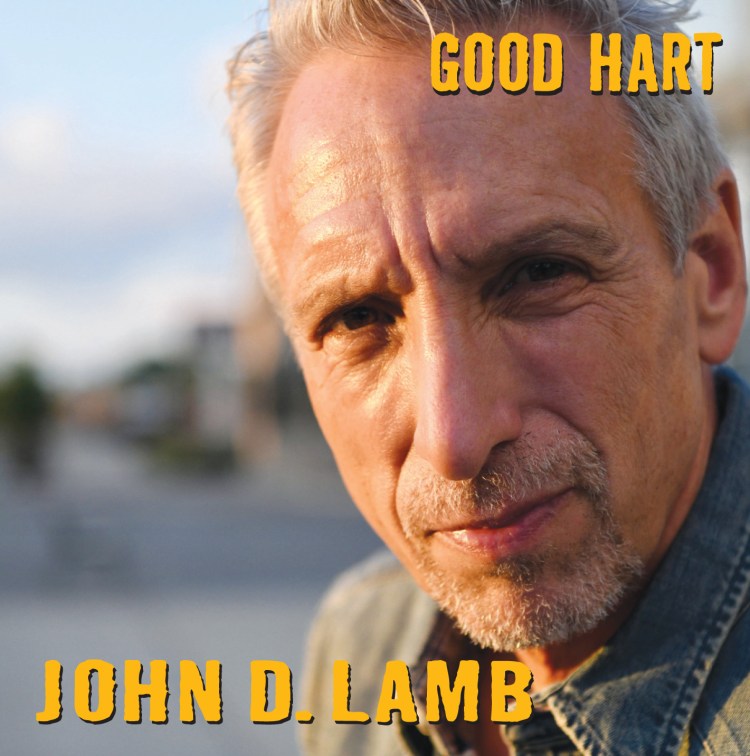
John D. Lamb’s latest album features 12 storied tracks filled with forthright lyrics, humorous and nostalgic reflections, and kinetic ‘70s-fueled instrumentation. Photo – Mark Foril
These days, John D. Lamb views life through a clearer, wiser lens.
The Royal Oak, Michigan folk-rock singer-songwriter and guitarist revisits past relationships, experiences and lessons with gratitude on his latest album, Good Hart, via Mezzanotte Records.
“My executive producer [Bill Vlasic] said, ‘It sounds like you’ve reached a point now where you can look back,’” Lamb said. “And I thought, ‘I suppose, there are some cautionary tales.’”
Alongside those cautionary tales are 12 storied tracks filled with forthright lyrics, humorous and nostalgic reflections, and kinetic ‘70s-fueled instrumentation.
“When I was done with the record, I was trying to think of a title for it, and I was looking for whatever the overall theme might be,” said Lamb, who’s inspired by Gordon Lightfoot, Jim Croce, Warren Zevon and John Prine.
“I had thought about naming it after one of the songs … and I went through a bunch of different titles, but I thought Good Hartwas really the only thing I could call it because that’s where we recorded it.’”
Lamb recorded his fifth album with co-producers Michael Crittenden and Jim Bizer last April at Good Hart Artist Residency in Good Hart, Michigan. They spent two 15-hour days laying down tracks for the album in a beautiful house located 35 minutes southwest of Mackinaw City.
“It’s built for painters and artists, and they recently started having songwriters and composers there,” he said. “I had use of the place for a few days, so I invited Michael and Jim to come up north … we were isolated and just had the lake out of our windows.”
Those picturesque surroundings also allowed Lamb to reflect on the album’s nostalgic sentiment and how time has shaped his own “good heart.”
“I felt that, too. At first, I thought it was kind of audacious to say that, but by taking the ‘e’ out and realizing it’s a town name, I thought, ‘Oh, OK,’” Lamb said. “It wasn’t my first choice, but several people said it has to be that, and I said, ‘OK, you’re right.’”




 The Stratton Setlist