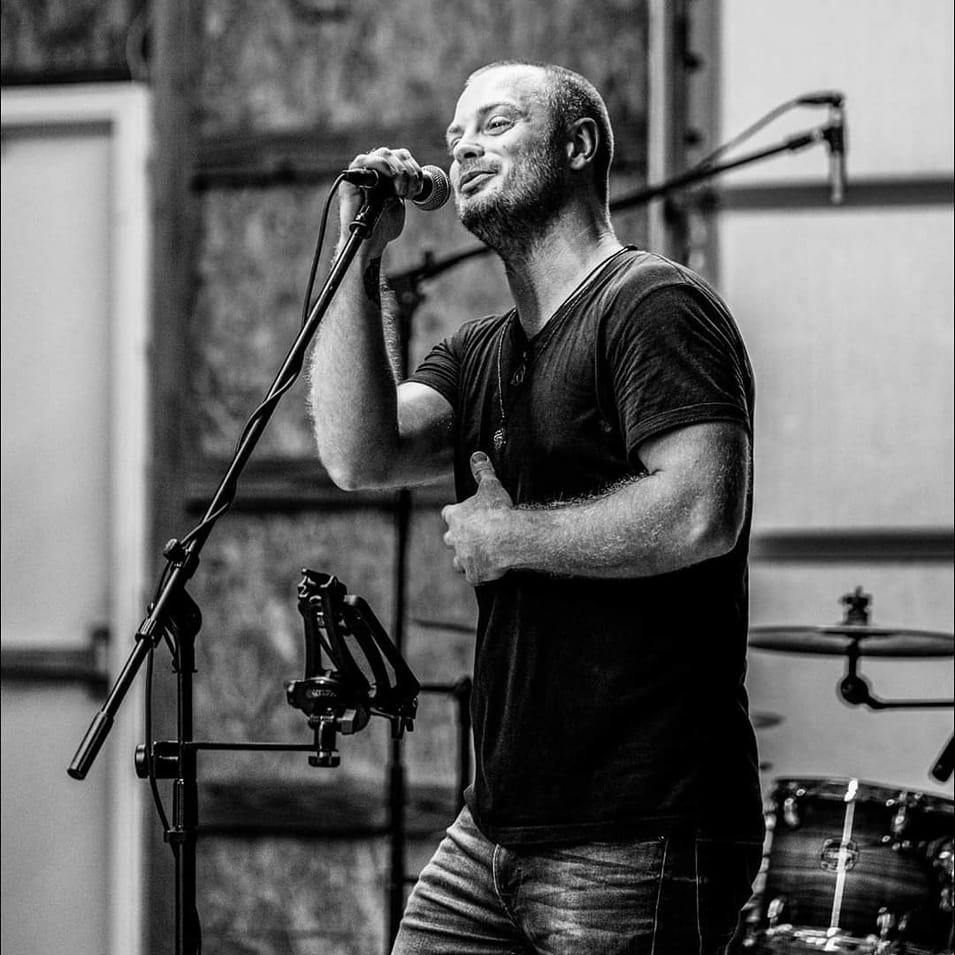
Carolyn Striho shares messages of hope and strength on “I Will Rise.” Photo – Chelsea Whitaker Photography
Carolyn Striho wants to help people rise to the occasion.
The Detroit singer-songwriter captures that empowering sentiment on her latest rock single, “I Will Rise.”
“I wrote ‘I Will Rise’ after the 2017 Women’s March to invoke hope, especially after having had breast cancer, but to connect with all people,” Striho said.
“With so much competition and anger among people, it focuses on love and survival. It also shares messages of hope and strength and encourages people to come together.”
Surrounded by determined piano, acoustic guitar, synth, bass, and drums, Striho sings, “I will rise, my friends, and be alive / We will rise through the pain in our disguise / Smiling instead of crying / It’s so hard we’re trying / Every day is counting time.”
“People would hear it and they liked it. You could see it as a political song or a song about breast cancer and women, but I realized it could be for anybody,” she said.
“I start out by singing, ‘I will rise, my sisters,’ and then I change it to more of a universal reference with the lyric, ‘I will rise, my friends.’”
Zach Pliska and Emily Sturm of VAZUM. Photo courtesy of VAZUM
Editor’s Note: This article originally appeared on the Ann Arbor District Library’s Pulpblog.
VAZUM didn’t expect a Western film to inspire the title of its latest album.
The Jackson duo of Zach Pliska (vocals, guitars, drums) and Emily Sturm (vocals, bass) stumbled upon the phrase “Western violence” while watchingThe Quick and the Dead.
“We had some of the songs fleshed out and usually we go with a ‘V’ in the name for our albums. We were watching [the 1995 film] by Sam Raimi and the rating was ‘R,’ and it said two words: ‘Western violence,’” said Sturm about the duo’s doomgaze album,Western Violence.
“We said, ‘Oh my god, that’s what we’re writing about,’ and it just summed it up. And then we said, ‘That’s what we’re living in … This is how our society expresses itself now.’”
OnWestern Violence, VAZUM reflects on the disintegration and disillusionment of our country and provides a social commentary on the personal, cultural, and political events that impact it.
The album’s dozen tracks explore topics ranging from the opioid epidemic to gun violence to a dystopian future to toxic relationships. It also takes inspiration from VAZUM’s past tours through the southern U.S., the U.K., and France.
“We were driving through Georgia and we went through some areas with houses falling apart,” said Pliska, who’s a University of Michigan alum.
“To see the extent of the poverty and those places you’re driving through, it’s still shocking. Our tours in the U.K. and France were eye-opening with just seeing how different the countries are.”
As part of that perspective, VAZUM bringsWestern Violence’sthemes to life through vigilant lyrics, ethereal vocals, and spellbinding instrumentation filled with goth-rock, post-punk, and shoegaze elements.
To learn more, I spoke with the duo about the album ahead of an August 10 set at Ogma Brewing Co.’s Art Pop ‘24 festival in Jackson.
“My daughter Alyson is off to the University of North Carolina School of the Arts next month, and I’ve been weeping big dad tears on and off all summer,” said the Dexter singer-songwriter and multi-instrumentalist.
Alyson is a singer, and she’ll join her dad for a special show at The Ark on August 8 along with bandmates Chris DuPont, Drew De Four, Brennan Andes, Keith Billik, and Mike Shea.
Brad has also been busy as a lecturer at the University of Michigan, a resident artist at The Purple Rose Theatre Company, touring with actress and singer Patti LuPone, and featuring on her new album, A Life in Notes, playing violin, mandolin, guitar, octave mandolin, and U-bass.
“Patti is an icon and it’s no accident. She’s a legend for a reason and to be on stage with her in front of her adoring fans is electric,” Phillips said. “Summer has been both chaotic, emotional, and wonderful all at the same time! It’s been a big year around here.”
To learn more, I spoke with Phillips about his work and tour with Patti LuPone and his family’s artistic accomplishments.
Major Murphy’s Chad Houseman, Jacob Bullard, and Jacki Warren. Photo – Brett Carlson
For Major Murphy, the best life lessons come in retrospect.
The Grand Rapids, Michigan trio of Jacob Bullard (vocals, guitar), Jacki Warren (bass, vocals), and Chad Houseman (guitar, keys, drums, percussion) learns from past struggles and finds a way forward on Fallout.
“I think that was a conscious goal or intention of mine to create something realistic but wasn’t wallowing in despair,” said Bullard about the band’s new indie-rock album released via Winspear.
“There’s a quote in ‘The Water’ from the Tao Te Ching, and it says, ‘Nothing in the world is as soft and yielding as water. Yet for dissolving the hard and inflexible, nothing can surpass it.’ I read that when I couldn’t see a way out, and it was a difficult time and I didn’t know what to do.”
As part of that introspection, Major Murphy discovers a renewed sense of purpose and seeks clarity for the future.
“Thinking about that softness also being something that could dissolve rock was an idea for me that I found incredibly empowering in the sense that you don’t always need to meet resistance with more resistance,” Bullard said. “Sometimes you have to soften and flow.”
On Fallout, Bullard and his bandmates process change, uncertainty, and growth across eight reflective tracks. The album’s philosophical lyrics, soaring harmonies, and emotive instrumentation provide a cathartic and impactful listening experience.
“The album came together organically from a writing perspective, but at a certain point, those themes became evident to me as well. There are more songs than what ended up on this album, and I curated the selection to be super cohesive,” Bullard said.
“It’s a bit more stylized from a lyrical perspective, and it’s less prose and more poetry from my vantage point. I thought of the music, too, as being more contemporary compared to stuff we’ve done in the past. I wanted the lyrics to be more minimal.”
To learn more about Fallout, I spoke to Bullard about the album’s thematic elements and creative process.
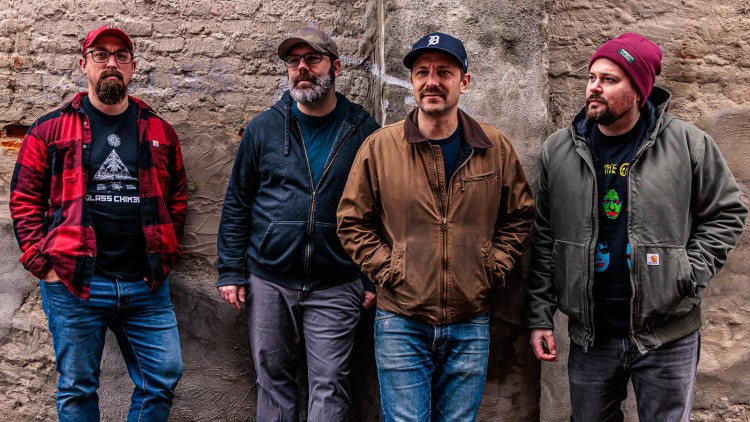
Paul Stiem, Jamus Sumner, Matt Konkle, and Matt Galbraith of Moonwreckers. Photo by Chuck Marshall
After encountering heartbreak and grief, Moonwreckers understands the importance of feeling seen and validated.
The Metro Detroit quartet of Matt Galbraith (vocals, guitar), Matt Konkle (drums), Paul Stiem (guitar), and Jamus Sumner (bass, vocals) explores that emotional need and its evolution on the album, Why Look Here?
“It certainly is autobiographical. At the time, I was married, and we were having issues, and we did eventually divorce. A lot of these songs were written around the time when I was in my early 30s, so shit hit the fan between us and we had been together since we were 18 years old,” said Galbraith about the band’s indie-rock-meets-emo debut release.
“I didn’t know what a world looked like without that, so I was very lost, and it was scary to me what life looked like outside of that relationship. There’s some coming-of-age stuff in there, too, but a lot of it has to do with that relationship, the struggles and the attempts of trying to reconcile things, and then failing and rinse and repeat.”
Moonwreckers deeply examines that trajectory across 12 personal tracks on Why Look Here? The album’s honest lyrics, plaintive vocals, and evocative instrumentation prompt listeners to process their emotions and struggles alongside the band.
“There are so many universal themes here. Everyone’s gone through the experience of having a relationship that didn’t pan out to be what they wanted it to be,” Sumner said.
“Everyone’s gone through the frustration or the disappointment of misaligned expectations and incomplete communication and the moment someone passes or walks out of your life. There’s unfinished business and you have to work through that—except you won’t get an answer to everything.”
To learn more, I spoke with Moonwreckers about their latest album ahead of a July 26 show at Detroit’s Batch Brewing Company.
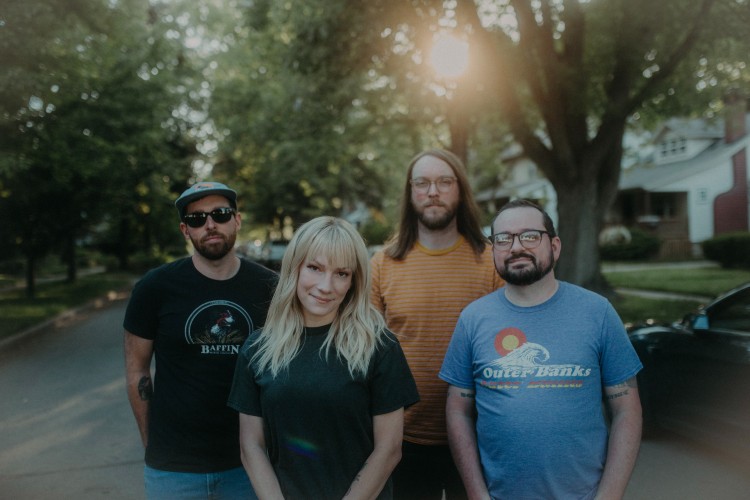
Twin Deer’s Rob Duncan, Megan Marcoux, Bill Kahler, and Tom Skill explore missing a loved one on “Underground.” Photo – Cassie Pietron
When it comes to loss, Twin Deer deeply understands the grief that remains.
The Detroit quartet of Megan Marcoux (vocals, guitar), Tom Skill (guitar), Bill Kahler (bass, synth), and Rob Duncan (drums) explores that overwhelming emotion and the ongoing struggle to move forward on “Underground.”
“It is a pure description of missing someone immensely,” said Marcoux about the group’s new dream-pop single.
“Sometimes the clarity lies in simplicity, like the line, ‘It’s not right you’re not around.’ And in the second verse, we reference how life is fragile. I find that important to mention—not to cause distress—but to remember to value the time we have.”
Backed by cathartic electric guitar, bass, and drums, she sings, “It would be nice to hear the sound / Of your voice saying you were coming around / It would be nice / If I wasn’t exhaling ice / I’m standing on the frozen ground.”
“I hope others will see that there isn’t always some profound thing that needs to be said,” Marcoux said. “Missing someone is already a lot.”
“Underground” also serves as an introspective B-side to Twin Deer’s “Fever Dream,” which was released in June.
To learn more, I spoke with Marcoux about Twin Deer’s latest singles and past releases ahead of a July 13 set at Alley Fest in Flint, Michigan.
“It’s crazy that I’ve taken that long,” said Bizer about his new folk album,About Time. “I’ve done things in between, and the thing I did the most was the duo with Jan, but I wound up in a few different bands and made records with some of them.”
Even as he worked on different projects, Bizer’s songs forAbout Time started brewing in 2005, and they began accumulating.
He eventually landed on 13 tracks for his third solo album and noticed a theme of time had emerged. OnAbout Time, Bizer brings that theme to life through evocative lyrics and soundtracks it with earnest folk instrumentation.
“Not that every single song deals directly with time, but a fair number of them do. I got a kick out of writing ‘Going Nowhere’ about slowing time down and what that could mean and how that would work,” said Bizer, who producedAbout Time and played guitar, bass, and guitjo.
“There’s also the fact that it’s been so long since I put out my last record, and time played a piece of that. And I think of these songs as a time capsule of the last 20 years, so time was so much on my mind as I was putting the record together.”
To learn more, I spoke to Bizer about his latest album ahead of a July 7 show at Livonia’s Trinity House Theatre.
Sunny State’s Chris Reed is releasing a slew of new singles, including acoustic versions of several songs.
With a growing catalog, Sunny State prefers to keep things simple.
The reggae-fusion quartet of Chris Reed (vocals, ukulele, guitar, sax), Julian Perez (lead guitar), Freddie Vega (bass), and James Moreno (drums, percussion) is revisiting and reimagining past singles as acoustic versions—starting with “Solutions.”
“When we first did this song, it was our first single … and the band was split on their happiness of the song. Some said, ‘Oh, this doesn’t sound like the way we play it live,’ and I thought, ‘It does, but it also doesn’t,’” Reed said.
“It was also our first time working with [co-producer/engineer] Ryan Palma in the studio. We were getting to know each other and figuring out how things would sound in the studio.”
Originally released in 2019, “Solutions” captures the San Jose, California band’s vibrant sound and reiterates the importance of unity, gratitude, and freedom in today’s society.
Reed sings, “Your pure voice is on my mind / Through sleepless nights and red wine / We philosophize as we rhyme / Of what can be done in this precious time.”
“This song itself was unique because it was a crowdsourced-lyric song. I was asking people, ‘Give me words that you want to hear, and I’m gonna write a song about it,’ and I did,” he said.
The Ann Arbor, Michigan singer-songwriter, pianist, and producer chronicles a personal transformation while encountering unrequited love on her latest album.
“The album shows that certain people come into our lives to be catalysts and light us up. Sometimes, our imagination is a huge part of the creative process and gets the best of us,” said Baiardi about her sophisti-pop release.
“It’s a beautiful thing to catalyze for music, albums, and songs, but when you come back to reality and the present moment, it doesn’t often translate.”
In her musical realm, Baiardi easily converts that inspiration into a mesmerizing concept album filled with intimate lyrics, cathartic instrumentation, and soulful vocals.
The dozen tracks featured onPhoenix explore the cycle of a potential relationship and the powerful emotions that accompany it.
“It almost felt like this was a fantastical world I had entered, or I had found this portal—like a rabbit hole. While I was making sense of it, the album was coming together,” said Baiardi, who wrote, recorded, and produced the album. “I started to see the early days of it as I was healing and getting into this surrender mode and soothing the heartbreak.”
I recently spoke to Baiardi about the album’s storyline and creative process.
Annie Bacon explores grief in all its forms on Storm. Photo – Cybelle Codish
Editor’s Note: This article originally appeared on the Ann Arbor District Library’s Pulp blog.
When it comes to grief, Annie Bacon doesn’t want people to feel alone.
The Ann Arbor, Michigan singer-songwriter and guitarist views it as a shared emotion that fosters connection and growth with others.
“Something that I’ve done with my art and that I feel like is important is to take on this role and say, ‘I don’t know if anybody understands me, but I’m going to explain what I’m going through in a way that hopefully other people can feel seen and understood,’” said Bacon, who performs under the moniker Annie Bacon & Her Oshen.
“I try to find the places where my experience might be universal and create these little bridges into my experience. That’s one of my philosophical approaches to songwriting: I want to as accurately as possible describe the experience I’m going through in the hopes that it creates a witness for somebody else.”
Bacon masters that honest songwriting approach and explores grief in all its forms on her new folk-rock album,Storm. The record’s 14 poignant tracks take listeners on an emotional odyssey through death, divorce, job changes, the pandemic, and a loss of identity.