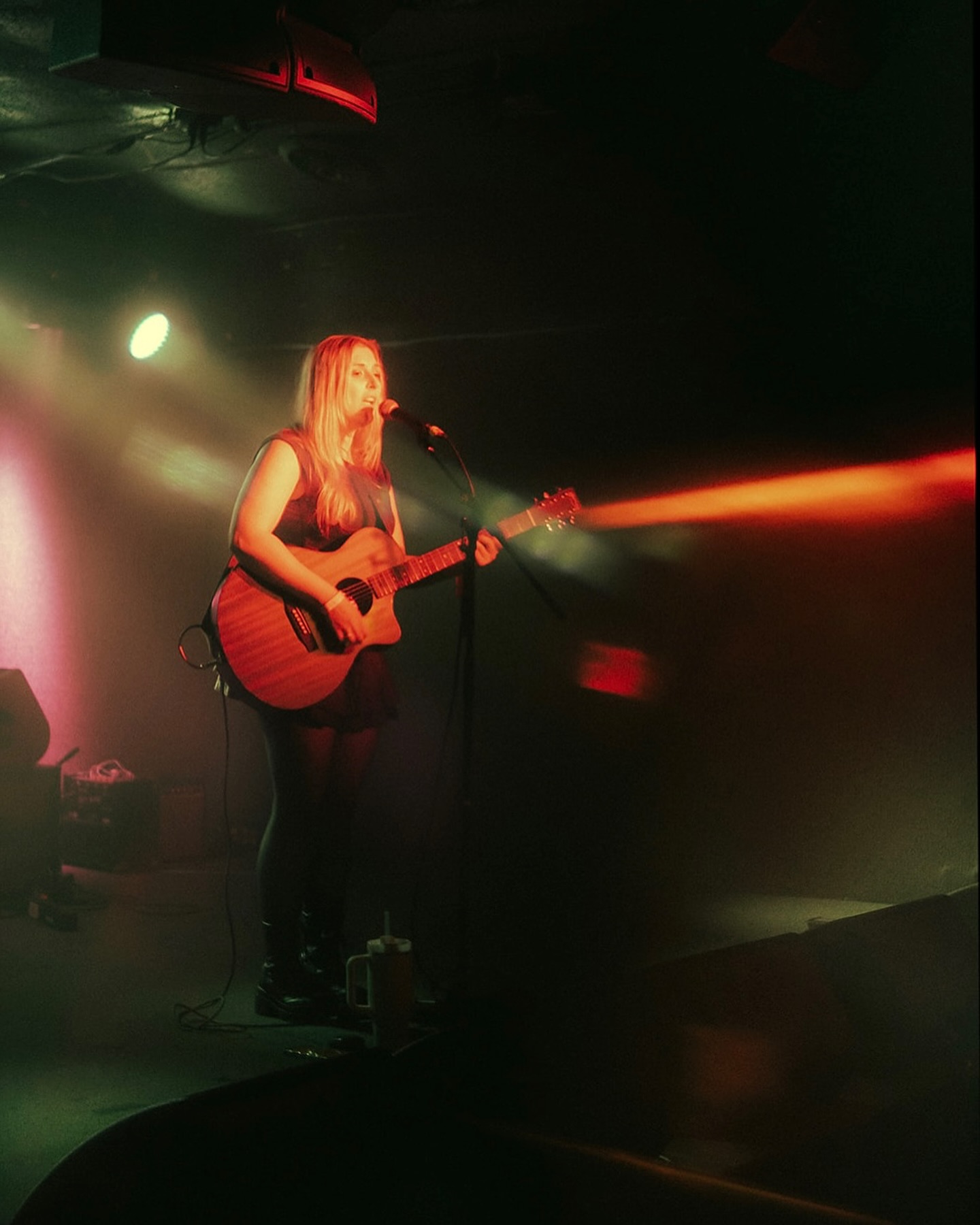
Carolyn Striho shares messages of hope and strength on “I Will Rise.” Photo – Chelsea Whitaker Photography
Carolyn Striho wants to help people rise to the occasion.
The Detroit singer-songwriter captures that empowering sentiment on her latest rock single, “I Will Rise.”
“I wrote ‘I Will Rise’ after the 2017 Women’s March to invoke hope, especially after having had breast cancer, but to connect with all people,” Striho said.
“With so much competition and anger among people, it focuses on love and survival. It also shares messages of hope and strength and encourages people to come together.”
Surrounded by determined piano, acoustic guitar, synth, bass, and drums, Striho sings, “I will rise, my friends, and be alive / We will rise through the pain in our disguise / Smiling instead of crying / It’s so hard we’re trying / Every day is counting time.”
“People would hear it and they liked it. You could see it as a political song or a song about breast cancer and women, but I realized it could be for anybody,” she said.
“I start out by singing, ‘I will rise, my sisters,’ and then I change it to more of a universal reference with the lyric, ‘I will rise, my friends.’”
Zach Pliska and Emily Sturm of VAZUM. Photo courtesy of VAZUM
Editor’s Note: This article originally appeared on the Ann Arbor District Library’s Pulpblog.
VAZUM didn’t expect a Western film to inspire the title of its latest album.
The Jackson duo of Zach Pliska (vocals, guitars, drums) and Emily Sturm (vocals, bass) stumbled upon the phrase “Western violence” while watchingThe Quick and the Dead.
“We had some of the songs fleshed out and usually we go with a ‘V’ in the name for our albums. We were watching [the 1995 film] by Sam Raimi and the rating was ‘R,’ and it said two words: ‘Western violence,’” said Sturm about the duo’s doomgaze album,Western Violence.
“We said, ‘Oh my god, that’s what we’re writing about,’ and it just summed it up. And then we said, ‘That’s what we’re living in … This is how our society expresses itself now.’”
OnWestern Violence, VAZUM reflects on the disintegration and disillusionment of our country and provides a social commentary on the personal, cultural, and political events that impact it.
The album’s dozen tracks explore topics ranging from the opioid epidemic to gun violence to a dystopian future to toxic relationships. It also takes inspiration from VAZUM’s past tours through the southern U.S., the U.K., and France.
“We were driving through Georgia and we went through some areas with houses falling apart,” said Pliska, who’s a University of Michigan alum.
“To see the extent of the poverty and those places you’re driving through, it’s still shocking. Our tours in the U.K. and France were eye-opening with just seeing how different the countries are.”
As part of that perspective, VAZUM bringsWestern Violence’sthemes to life through vigilant lyrics, ethereal vocals, and spellbinding instrumentation filled with goth-rock, post-punk, and shoegaze elements.
To learn more, I spoke with the duo about the album ahead of an August 10 set at Ogma Brewing Co.’s Art Pop ‘24 festival in Jackson.
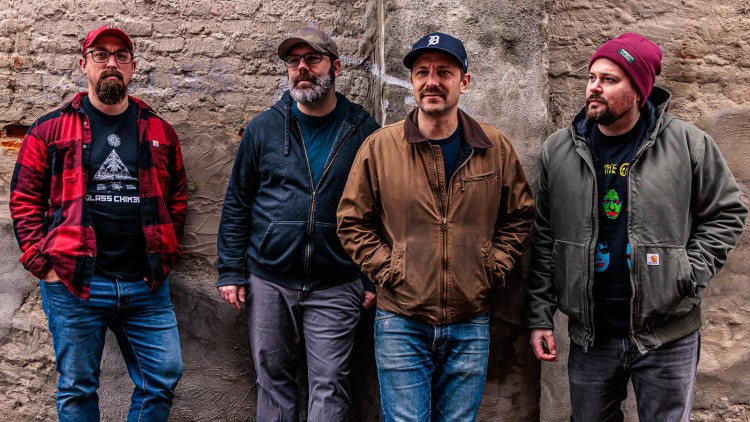
Paul Stiem, Jamus Sumner, Matt Konkle, and Matt Galbraith of Moonwreckers. Photo by Chuck Marshall
After encountering heartbreak and grief, Moonwreckers understands the importance of feeling seen and validated.
The Metro Detroit quartet of Matt Galbraith (vocals, guitar), Matt Konkle (drums), Paul Stiem (guitar), and Jamus Sumner (bass, vocals) explores that emotional need and its evolution on the album, Why Look Here?
“It certainly is autobiographical. At the time, I was married, and we were having issues, and we did eventually divorce. A lot of these songs were written around the time when I was in my early 30s, so shit hit the fan between us and we had been together since we were 18 years old,” said Galbraith about the band’s indie-rock-meets-emo debut release.
“I didn’t know what a world looked like without that, so I was very lost, and it was scary to me what life looked like outside of that relationship. There’s some coming-of-age stuff in there, too, but a lot of it has to do with that relationship, the struggles and the attempts of trying to reconcile things, and then failing and rinse and repeat.”
Moonwreckers deeply examines that trajectory across 12 personal tracks on Why Look Here? The album’s honest lyrics, plaintive vocals, and evocative instrumentation prompt listeners to process their emotions and struggles alongside the band.
“There are so many universal themes here. Everyone’s gone through the experience of having a relationship that didn’t pan out to be what they wanted it to be,” Sumner said.
“Everyone’s gone through the frustration or the disappointment of misaligned expectations and incomplete communication and the moment someone passes or walks out of your life. There’s unfinished business and you have to work through that—except you won’t get an answer to everything.”
To learn more, I spoke with Moonwreckers about their latest album ahead of a July 26 show at Detroit’s Batch Brewing Company.
Seeing the breakdancing prowess of Kelly, Ozone, and Turbo in the films instantly captured my attention and spurred nine-year-old me to experiment with some moves of my own.
While I couldn’t quite emulate the popping, up-rocking, down-rocking, or power moves of the films’ heroes, I embraced a love of dancing and developed my own quirky style over the years.
As I grew up, I danced to the music of Run-D.M.C., Beastie Boys, Salt-N-Pepa, LL Cool J, DJ Jazzy Jeff & the Fresh Prince, Rob Base & DJ E-Z Rock, Young MC, MC Hammer, and others.
By high school, I had started learning about three of the five elements of hip-hop—rapping, DJing, and breakdancing—and would encounter the other two—graffiti and historical knowledge—as an adult.
Known asHip Hop @ 50: Defs, Dates, Divas, Detroit & Dilla, the exhibit celebrates the 50th anniversary of the culture and explores its evolution across music, society, fashion, language, entertainment, and politics.
Twin Deer’s Rob Duncan, Megan Marcoux, Bill Kahler, and Tom Skill explore missing a loved one on “Underground.” Photo – Cassie Pietron
When it comes to loss, Twin Deer deeply understands the grief that remains.
The Detroit quartet of Megan Marcoux (vocals, guitar), Tom Skill (guitar), Bill Kahler (bass, synth), and Rob Duncan (drums) explores that overwhelming emotion and the ongoing struggle to move forward on “Underground.”
“It is a pure description of missing someone immensely,” said Marcoux about the group’s new dream-pop single.
“Sometimes the clarity lies in simplicity, like the line, ‘It’s not right you’re not around.’ And in the second verse, we reference how life is fragile. I find that important to mention—not to cause distress—but to remember to value the time we have.”
Backed by cathartic electric guitar, bass, and drums, she sings, “It would be nice to hear the sound / Of your voice saying you were coming around / It would be nice / If I wasn’t exhaling ice / I’m standing on the frozen ground.”
“I hope others will see that there isn’t always some profound thing that needs to be said,” Marcoux said. “Missing someone is already a lot.”
“Underground” also serves as an introspective B-side to Twin Deer’s “Fever Dream,” which was released in June.
To learn more, I spoke with Marcoux about Twin Deer’s latest singles and past releases ahead of a July 13 set at Alley Fest in Flint, Michigan.
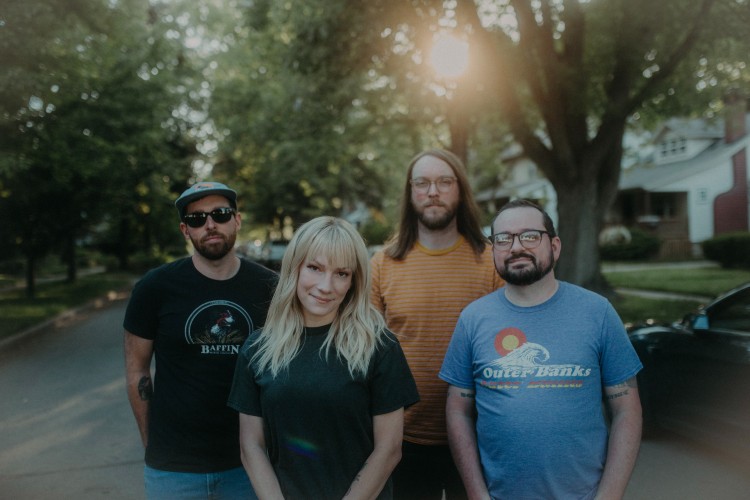
Ursa Day’s Matt Drew, Cormac Egan, Ryan Haley, and Ryan Drew. Photo courtesy of Ursa Day
When it comes to music, Ursa Day has an insatiable appetite.
The Hazel Park, Michigan indie-rock quartet is eager to write, record, and release a growing catalog of new material, including their latest EP, Hyperphagia.
“The big thing that we had as a direction concept-wise for the record was Hyperphagiabeing a state of hunger. What we learned in the name selection process, and we picked this name quite a while ago, is that it happens to bears right before they go into hibernation,” said Ryan Haley, Ursa Day’s vocalist-guitarist.
“After we came out of Habitat, we were excited by that process … and we were hungry to share more projects with everybody else. That direction, whether it was musically or artistically, was a strong driving force behind a lot of the lyrics and what we can do to pepper the feeling of those lyrics throughout a tune.”
Haley and his bandmates Matt Drew (guitar, engineering, production), Ryan Drew (bass), and Cormac Egan (drums) effortlessly achieve that goal on Hyperphagia. The EP’s profound lyrics, fantasy-versus-reality themes, and mighty blues rock-inspired instrumentation entice listeners with six savory tracks and leave them wanting more.
“We’re all different people, and our musical influences are varied. Ryan has a strong allegiance to the pop bass player; he likes James Jamerson and has a feel similar to those happy, melodic solo-ish basslines. Matt is eclectic and has a wealth of knowledge about the indie scene,” said Haley, who’s influenced by Peter Green, Jeff Beck, and Larry Carlton.
“He mixes well with the influence that I have with the British guitar players and Ryan’s pop influence to put us on more of a unique, alternative-based sound. Cormac is one of the most interesting musicians I have ever met as far as tastes go. When I walk into a rehearsal and ask Cormac what he’s been listening to, he’ll talk to you about movie scores and large, elaborate instrumentation … and then he’ll be playing Metallica double-kick-style drums really well.”
Carolyn Striho performs at Scuderie Aldobrandini in Frascati, Italy. Photo courtesy of Carolyn Striho
For Carolyn Striho, a clear, wintry night sky evokes feelings of enchantment.
The Detroit singer-songwriter captures that spellbinding sensation on her latest instrumental single, “Piano Moon.”
“There’s something about playing in A minor on the piano; it’s just one of my favorite ways to write songs. It’s what I was doing with a 3/4 time signature, and I was starting to write that as I heard the melody line,” said Striho, who penned her single in Detroit and Fiuggi, Italy.
“I liked it so much as an instrumental. I had it written out, and it needed something, so this winter I came up with that dramatic middle part. It was also during the holiday season, and I was thinking of Trans-Siberian Orchestra and that dramatic, dark classical feel.”
On “Piano Moon,” she brings that symphonic piano to life alongside wistful cello, haunting electric guitar, and glistening percussion. Part of the song’s inspiration also comes from “Bear Dance” by Béla Bartók.
“I used to play it, and it’s amazing and super avant-garde. It’s a difficult piece, and my mom loved it, too,” Striho said. “She would hear me play it, and I worked hard on that.”
Striho wanted to recapture that magical feeling while recording “Piano Moon” at Inner Door Music with Jason Charboneau (cello), husband Scott Dailey (electric guitar), and Ron Wolf (percussion).
“We had talked about putting violin on it, but when Jason came over and was doing the cello, it was just this moment of inspiration,” she said.
“‘Piano Moon’ is a fierce, yet soft song with a melody line that is memorable, and it unfolds with desire and raw strength,” said Striho, who’s shared a new video for the single. “It will be released later in a second version with vocals.”
Striho is also performing her new music at several live shows with Dailey, including June 8 at the Nor-East’r Music & Art Festival in Mio, Michigan, June 23 with The Orbitsuns at Cadieux Café in Detroit, and July 21 with the Don Was Detroit All Star Revue for the Concert of Colors at the Detroit Institute of Arts.
“We have some great summer shows bringing our eclectic blend of new music,” she said. “We’re excited for Nor-East’r this weekend; for our full-band matinee show with Jason, John Barron, and Todd Glass and The Orbitsuns; and at the amazing Concert of Colors with the wonderful Don Was Detroit All Star Revue.”
Pia-Allison Roa examines personal growth and self-expectations on Getting Better. Photo – Zach Nahshel
Editor’s Note: This article originally appeared on the Ann Arbor District Library’s Pulp blog.
Pia-Allison Roa makes an honest self-assessment on her Getting BetterEP.
The Detroit singer-songwriter who performs as pia the band recognizes the importance of re-evaluating life plans and priorities and making changes along the way.
“These are the four songs that I felt were most ready to be out,” said Roa about her debut EP. “Once we recorded all four and then put it all together, it popped out to me that these are all about overcoming things.”
As part of that process, pia the band examines past situations and relationships through contemplative lyrics and ethereal indie-rock, dream-pop, and shoegaze-folk instrumentation.
“It felt good to get all those out … but then it was even more special looking back at what the songs meant, what they could mean now, and how they can be interpreted by other people,” said Roa, who’s also a clinical pharmacist specialist at Wayne Health.
To learn more, I spoke with Roa about Getting Betterahead of her May 28 show at Ziggy’s in Ypsilanti.
Dylan Dunbar’s “Free Candy” features eight short stories exploring everything from classic battles of good and evil to zombie outbreaks.
Dylan Dunbar is ready to bring some scary good stories to light.
The Detroit guitarist for Jennifer Westwood and the Handsome Devils has released a new book of strange and terrifying short stories called Free Candy: A Horror Story Collection.
It’s the first published work for Dunbar, who discovered a love for writing in 2020 upon tackling an addiction to alcohol.
“I’m now more than three years sober and couldn’t have imagined when I started writing how much of a positive impact it would make in my life—or that I’d be publishing,” he said.
Inspired by The Twilight Zone, Black Mirror, Creepshow, and Tales from the Crypt, Free Candy includes eight intriguing short stories exploring everything from classic battles of good and evil to zombie outbreaks.
Dunbar is celebrating the release of his book on May 9 with a signing at Belle’s Lounge at Valentine Distilling in Ferndale, Michigan. Copies of Free Candy will be available for sale at the event.
Nick Behnan reconciles his expectations of fantasy with reality on “What You Got.”
As a longtime musician, Nick Behnan searches for the right balance between fantasy and reality.
The Detroit singer-songwriter, multi-instrumentalist, and producer straddles those two worlds on his latest pop-soul single, “What You Got.”
“I think the nature of what I do for a living creates pretty drastic swings of highs and lows,” Behnan said. “I feel fortunate to not have to have a 9-5, but the ups and downs and expectations can sometimes be difficult to navigate. It’s the nature of the beast though.”
Surrounded by hypnotic electric guitar, bass, electric piano, and drums, he sings, “It’s a whole new paradigm / Livin’ what I had in mind / So I keep it movin’ all the time / Until I find / Just what I’m tryin’ to do.”
“The new thing everyone in my business is freaking out about is AI, which could threaten the music business as a whole and especially sync licensing for TV, film, and commercials,” Behnan said.
“Hopefully, the right regulations get put in place before it goes bonkers, but it’s like the Wild West right now. I find it’s the most important to stay creative and productive—it’s also a mindset thing.”
To learn more, I spoke to Behnan about his past releases, latest singles, creative process, summer plans, and sync licensing opportunities.