
Editor’s Note: This is the first installment in a multipart series celebrating the 10th anniversary of The Stratton Setlist.
I never planned to be a music journalist, but I’ve been unknowingly training for it my whole life.
My parents and older brother, Steve, served as my coaches, offering me different educational resources along the way—ranging from albums, TV shows, and magazines to concerts and festivals.
Those resources helped shape my love of music, a desire to acquire more music knowledge, an obsession with live music and physical media, and an uncanny ability to remember all kinds of music facts and trivia. It was that lifetime of training that quietly prepared me to eventually seek a profession that combined my passion for music with writing.
Now, nearly 45 years later and a decade into running my own music blog, here’s how it all started.
Disco and Dance
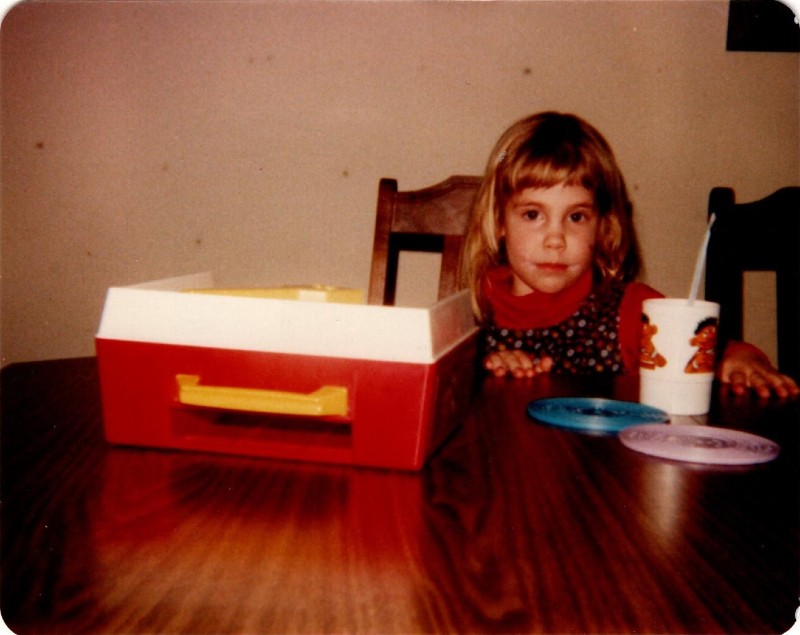
One of my earliest music memories dates back to 1980.
I was four years old and remember jumping on my parents’ bed with Steve while listening to the Saturday Night Fever soundtrack, Donna Summer’s Bad Girls album, and Rod Stewart’s Blondes Have More Fun album. My parents loved disco music and often played that music because they were taking a disco dance class at the Howell Recreation Center around that time.
Disco was some of the first music I had ever heard, and I instantly fell in love with it. It’s no surprise, given that I’ve always loved to dance and later became a fan of TV shows that focused on dancing, including American Bandstand, Dance Fever, and Soul Train.
My parents would tune into at least one of those shows each week, and I would dance in the living room in front of the TV while contestants and participants displayed their moves on screen. I developed a strange rhythm with dancing and could quickly choreograph my own moves depending on the song I heard.
I credit my mom with passing some of that rhythm along to me, although she was much better at it than I am. She was a majorette in high school, and my dad always talks about how well my mom danced in college. The two met at a mixer/dance at Ohio University in February 1964 and immediately hit it off.
Tape World
As a kid, I constantly heard music from my parents’ record collection, my brother’s tape collection, and on the radio in the house and in the car. As a stay-at-home parent, my mom played music around the house while she cleaned, and played music in the car when Steve and I went with her on errands.
Music was always in the background, and I didn’t think twice about it. Hearing different artists, albums, and songs across different eras and genres heavily influenced the variety of music that I listen to and write about today.
My mom played disco, easy listening, country, and what’s now known as yacht rock. Steve played pop-rock, new wave, college rock, classic rock, hip-hop, grunge, and alternative rock. I developed a taste that lies somewhere between the two and added soul, R&B, house, and dance to the mix.
It wasn’t until 1983 that I started seeking out my own music and developed an instant obsession with Michael Jackson’s Thriller. I remember Steve bought the tape, and we would put on our roller-skates and zoom up and down the hallway in our house while the album played on a one-speaker cassette player.
Every time “Wanna Be Startin’ Somethin’” came on, I felt a sudden burst of energy and was ready to skate. I especially loved skating to Michael Jackson’s songs at Rollerama Skating Center in Brighton. I envied the big kids who had the skills to skate on the main floor. I was only seven back then and was learning how to skate in the training rink.
Thriller was also the first album I had bought with my own money. I had to have my own copy, even though Steve had one as well. Being the older brother, he was able to “claim” certain artists and albums before I could. If I bought the same album he had, then I was just the little sister copying her older brother.
Talking Heads and MTV
I also remember seeing my first music video in 1983. It was Talking Heads’ “Burning Down the House,” and the video was on a cable channel called IT, which was one channel that mostly played movies. IT would occasionally play music videos in between movies.
That video fascinated me, and I loved seeing David Byrne’s face throughout it. I also dug the white suits the band members wore and the infectious sound of that song in general.
Another musical highlight included watching America’s Top 10 on Saturday mornings. It was exciting to see what popular songs Casey Kasem would feature across different genres. My favorite part was seeing the videos for each song since we didn’t have MTV back then.
I remember seeing Michael Jackson, Phil Collins, The Romantics, The Police, Janet Jackson, and Billy Ocean, and other artists on that show. It served as a 30-minute crash course in ‘80s pop music each week.
While we didn’t have MTV, my grandmother, who lived in Brighton at the time, did. Going to her apartment was a real treat because we could binge-watch videos all evening or weekend, depending on how long my brother and I would stay with her.
When we didn’t get to her apartment, my grandmother would record MTV’s Top 20 Video Countdown each week on a VHS tape and bring it over to our house on Sundays to watch. She did that each week from about 1984 to 1994. I lost track of how many times she re-recorded over the same VHS tapes.
There were so many influential videos we caught on that show, including Michael Jackson’s “Thriller,” Peter Gabriel’s “Sledgehammer,” Fleetwood Mac’s “Big Love,” U2’s “With or Without You,” and Huey Lewis and The News’ “Stuck With You.”
I didn’t realize back then how well I knew the lyrics to songs featured on MTV’s Top 20 Video Countdown. We would replay that same episode multiple times each week after school. It’s no surprise that I absorbed that information while listening to the songs and watching the videos.
Billboard
Once again, I was getting schooled in the latest music and artists, courtesy of my family. In addition to videos, we read Billboard magazine each week. In the summer of 1987, we scouted for issues at drug stores, supermarkets, party stores, and any other place with a newsstand in Howell and Brighton.
I recall it was my brother’s idea to get Billboard. It was exciting each week to see what songs made it into the top 10 and which ones debuted on the Billboard Hot 100 songs chart and the Billboard 200 albums chart. What boggled my mind was seeing Pink Floyd’s The Dark Side of the Moon on the albums chart in 1988. It had been there consistently since being released in 1973.
We eventually subscribed to Billboard and got it through the mid ‘90s. I studied almost every chart in that magazine and used to cut out articles that mentioned my favorite artists and releases.
Fleetwood Mac
While this all served as supplemental music training material, my heaviest course of study revolved around Fleetwood Mac. In April 1987, my brother brought home a cassette of Fleetwood Mac’s Tango in the Night, and I was instantly hooked. I became obsessed with that band and bought every album that featured Lindsey Buckingham and Stevie Nicks that summer.
When we made trips to the mall, I planned out which album I was going to buy from one of the record stores. By the end of summer 1987, I had acquired Mirage, Rumours, Tusk, Fleetwood Mac, and Live on cassette. Then I bought the records for each of them that fall.
For each album, I absorbed all the songs, studied the lyrics, and read and reread the liner notes. It was through those album analyses that I began listening intently, connecting emotionally to the lyrics and music, and deciphering the meaning of the lyrics and what listeners could take away from them.
I also started reading articles about Fleetwood Mac in Rock Express, Rolling Stone, Creem, Hit Parader, and the fanzine Rumours. I would look for old issues at record shows and order ones from music dealers listed in Goldmine.
Through those articles, I learned about Fleetwood Mac’s history, discography, band dynamics, and creative approach. I became fascinated with the idea of understanding a band’s background and examining music from an in-depth perspective.
I also recorded Fleetwood Mac interviews and performances on TV and replayed them constantly. It made me want to see the band live, and I did for the first time on October 17, 1987, at Joe Louis Arena in Detroit.
In 1988 and 1990, I went to Fleetwood Mac fan conventions in Greensboro, North Carolina, and Virginia Beach, Virginia. While I was only 12 and 14 at those events, I’d sit with other Fleetwood Mac fans at dinner and discuss the band’s catalog.
I remember one conversation distinctly with a group of fans about the pros and cons of Fleetwood Mac’s Bare Trees album from 1972. It didn’t take long to reach a consensus about Bob Welch’s “Sentimental Lady.” It was deemed a fan favorite—both with Fleetwood Mac and with Bob Welch solo.
In a way, I was training for the music discussions I’d have with family, friends, colleagues, and interviewees years later. It allowed me to develop the confidence and courage to ask anyone questions about music and feel like I had something valuable to contribute.
Record Collector
My love of Fleetwood Mac also opened the door to collecting music in different forms: cassettes, CDs, LPs, 7-inch records, 10-inch records, and 12-inch records. I also explored other artists like Pat Benatar, Toto, Starship, Kim Wilde, Janet Jackson, Jody Watley, Joan Jett, and Richard Marx.
The goal was to explore an artist’s entire catalog and slowly build an album collection for each one over time. I still do that now.
I spent a lot of time going to record shows with my mom, visiting independent record stores like Harmony House, and flipping through issues of Goldmine. It wasn’t long before I had a fairly large collection at age 14, with Fleetwood Mac being the predominant focus of it.
One of my favorite Harmony House memories includes going to the Novi store after school in April 1990 to buy Fleetwood Mac’s album Behind The Mask. It was the first album not to feature Lindsey Buckingham, who had left the band in 1987, and included “new” members Billy Burnette and Rick Vito.
A couple of months later, Fleetwood Mac appeared on the syndicated radio show Rockline. As part of the show’s format, listeners could call in and ask guests questions. I remember repeatedly dialing Rockline’s number on my parents’ rotary phone to get into the listener interview queue.
Sure enough, my persistence paid off, and I had a sore index finger, but I got through. I asked Christine McVie, “Why did you name the album Behind the Mask?” She said they already had a song by that name and decided to name the album after it.
Again, more music journalism practice without giving it a second thought back then.
Classic Rock and Grunge
By high school, I had ventured deeper into discovering different artists and started listening to more classic rock, hard rock, and grunge. Some of my favorite acts included Bryan Adams, Rush, Genesis, Eagles, Metallica, Def Leppard, Pearl Jam, and Alice in Chains.
Getting my driver’s license at 16 was a big factor in discovering more music. I had a 1985-and-a-half red Ford Escort with a radio and cassette player in it.
I used to drive all around town after school and listen to cassettes or the radio. Most of those cassettes were ones I had bought from the discount bins at Walmart and Meijer, or I had copied albums from CD onto cassette to play in the car. I embraced that newfound personal and musical freedom to the max in my “go-go” mobile, as my friend Bob used to call it.
I also wrote for the Howell High School student paper, The Main Four, all four years. My first album review was for Pearl Jam’s Vs. in 1993 for The Main Four Attraction, the high school’s quarterly student magazine.
In addition to writing, I started going to a few more concerts in high school from ages 15 to 17. I saw Bryan Adams, the traveling Lollapalooza tour twice—including the infamous 1993 show at Milan Dragway when it was like 100 degrees—Fleetwood Mac, and Rush.
Brian and Rush
Rush was a special concert because it was the first one my husband Brian and I saw together. We had only been dating about two weeks when he surprised me with tickets to the show in March 1994.
I distinctly remember our first phone conversation after school one day. We talked for two hours, and during the conversation, I purposely asked, “Do you like Rush?” And I heard Brian gasp with excitement and say, “Yes!”
Before we started dating, I would see Brian wear Rush T-shirts around school and specifically remember he had one from Rush’s Roll the Bones tour. That was the first Rush album I had ever bought.
Back to the phone conversation, we both talked about how much we liked Rush and the Counterparts album. That must have inspired Brian to purchase tickets for the March 27, 1994 show at The Palace of Auburn Hills.
We went to that show and had a blast. Little did we know, it was the first of many concert adventures for us during our relationship. I lost track of how many times we went back to the Palace over the years to see shows.
Not long before we graduated high school, we took a trip to the Art Institute of Chicago with our English literature class. We walked past the Chicago Tribune building, and I casually said, “I hope to work there one day and be an entertainment writer.”
I didn’t really give much thought to that statement, but in hindsight, I had laid more mental groundwork for becoming a music journalist. It would just take me another 22 years to get there.
 The Stratton Setlist