
In 2021, Bill Arnold and Brandon Still became fast friends.
The Clarkston musician and entrepreneur met through Wiltsie’s, a pop-up listening room that features live performances from Michigan musicians and doubles as a co-working space.
“I started doing shows for Brandon, both solo and then with One Ton Trolley,” said Arnold, who fronts the roots-rock band.
“Had it not been for Wiltsie’s, Brandon and I probably wouldn’t know each other. My whole network changed as a result of Wiltsie’s.”
Arnold and Still also witnessed the instant connections people started making while attending shows at Wiltsie’s.
“My career has morphed into helping small towns build co-working spaces [like Wiltsie’s],” said Still, who works in economic development and runs The Integrated Life Company.
“Our tagline that we’ve fallen into with Wiltsie’s has been transformational music experiences. It’s transforming the places, it’s transforming the people, and it’s transforming the artists in that they actually get to have a connection with people, too.”
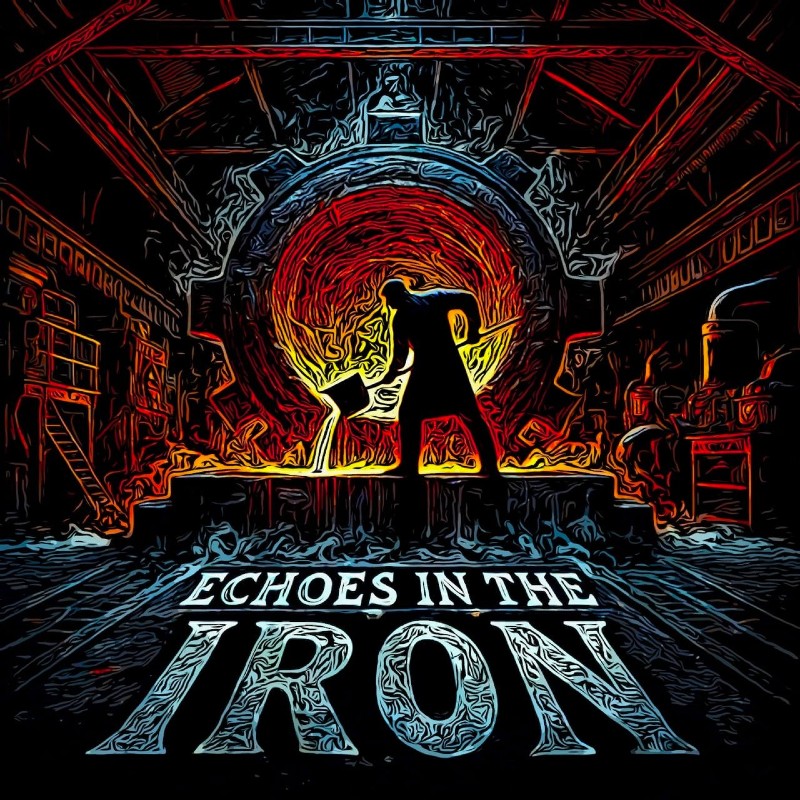
That shared love of music, connection, and community struck a chord with Still and Arnold. By March 2024, they started laying the foundation for Echoes in the Iron, a multimedia project that supports small-town revitalization and builds community through music, storytelling, and entrepreneurship.
The project includes a series of YouTube videos spotlighting small business owners, musicians, and community advocates in Michigan.
“The music is obviously the main focal point for drawing people together and having the emotional spark to get people truly engaged,” Arnold said. “But we want to showcase their town, too, along with the businesses and the history. We want to combine everything … and foster community through all of that.”
I recently spoke with Arnold and Still to learn more about Echoes in the Iron.
Q: How did you select the name for the project?
Brandon Still (BS): Bill’s message of Rust Belt rock speaks to people in the Midwest and further than that as well. [When] you hear his songs, you’re thinking, “That’s about my town, that’s about my life, or that’s about the Midwest hard-working experience.” When it comes to the Rust Belt, you might think, “Well, what came before the rust?” It was the iron … and the echoes are a nod to both the sound and the music, but also the history of those places. And so, to me, the name ties it all together. It’s about history, it’s about people, it’s about music, and it’s about these towns and their champions.
It can be hard to find these places to play as an artist. I think if we were to inspire somebody to turn their barn into a listening room once a month and provide these experiences, we could say, “Wow, once a month they do this music thing. You gotta go check it out.” And all of a sudden, it’s on the radar, people are talking about it, they’re meeting these musicians, and it’s this whole ripple effect. It just starts with these incremental changes.
Q: How has the project grown since March 2024?
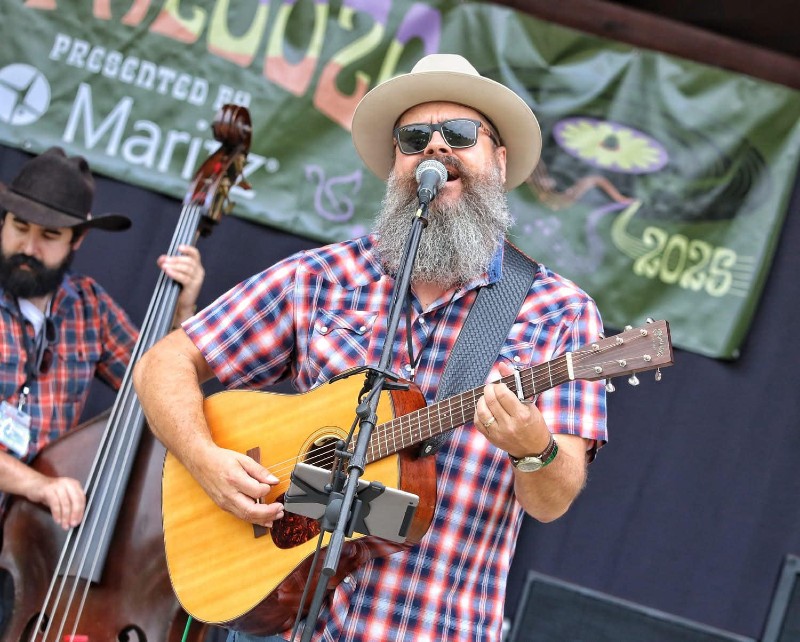
Bill Arnold (BA): We’re creating videos, articles, and social media content to shine a spotlight on untold stories, inspire pride, and foster hope. It will be part storytelling, part documentary, and at the end of the day, we want people to ask themselves these questions: “Why not here? Why don’t we have this here?” And there’s no reason why every town can’t.
Q: What skills do you both bring to the project?
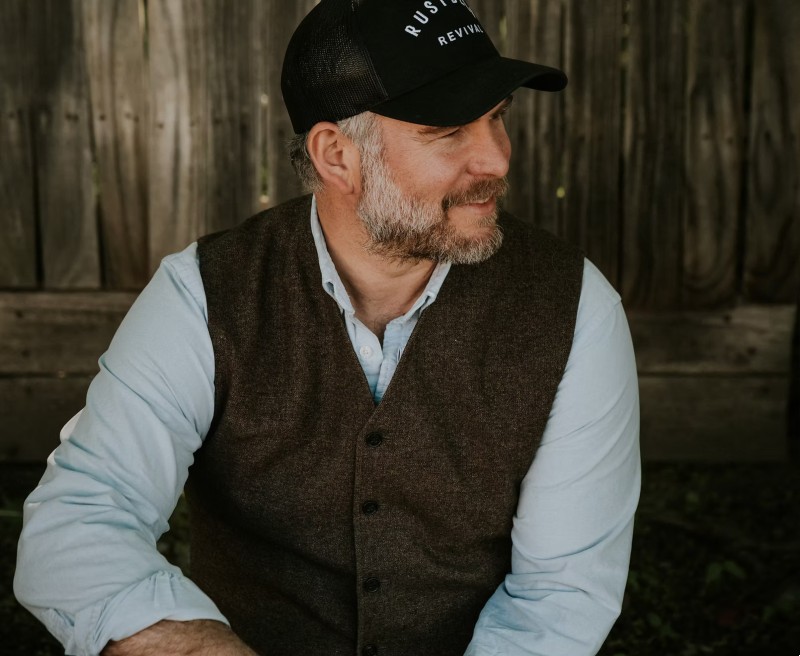
BA: We want to come to this [project] as people who genuinely care about the future of community interaction and use music to do that with whatever tools we have at our disposal. I can write songs and perform them, but Brandon has this incredible writing style and a vision for how they can go together and who to talk to in these places from a different perspective than I do.
We felt like we were a good team from the get-go. We said, “What if somebody did this?”, and then we looked at each other and said, “Why isn’t it us?” Sometimes, the less you know, the more effective, fresh, and unique your perspective can be.
Q: You two co-wrote “Echoes in the Iron,” the project’s theme song. How did it come together?
BS: We said we need a theme song for this [project] and something that ties the ideas together. I had something in my back pocket that I had been working on. I was very nervous to send it to Bill, and for some reason, he liked it. He turned it into a song from just some words on a piece of paper.
BA: I was so impressed by it and thought, “I gotta find the right melody and chord progression for this [song].” I played with it and tried to come up with something new. I had a chord progression that I had been working on for months, but I could not find a home for it. I thought, “Could it be the right thing?” I played almost the whole song the first time and said, “This is divine intervention here. This was waiting for this [song].”
I called Jake Shives [at Tempermill Studio] and said, “Book me a spot. We want to get in and nail this in one night. We’ll track and edit it. You can take it home, mix it, and give it to me when you’re done with it.” Jake did a great job of mixing and mastering it for us. We wanted to have it ready for our content creation.
Q: What are some places you want to highlight for Echoes in the Iron?
BS: We want to highlight somewhere like 20 Front Street [in Lake Orion] and [The Lark Theater in] Cheboygan. Those are towns that really showcase what we’re talking about. They’re trying to revitalize and redefine themselves.
I think there are towns in Southwestern and South Central Michigan that would be a great fit to highlight. We want to showcase places that have done it and are thriving, as well as those that are in the midst of a transformation, and those that want to. They still need a little bit more of a nudge and a spark to make it happen.
Q: You’ve spotlighted small businesses and community spaces in your videos. How do they help support your mission for the project?
BS: Most of the upcoming videos are at businesses [or community spaces]. That’s both a strategic marketing decision and part of our mission. We’re into economic development, so we want to showcase businesses and business owners who not only have cool places, but people like Suzy Camp [of JB’s BBQ & Co. in Ortonville] who shares this mission. She wants to impact her community, too, and she does it through barbecue. We’re also trying to show how music does it, but the end result is that they want the same thing. They want to bring people together and have a [stronger sense of] community.
BA: We can come down and help you do it. If you need a space, and you don’t have a vision for finding that space, we can [help with] that. We can go to these places, walk through these spaces, and say, “This would be a great place for a band to set up. You could have food trucks out here. We could see how this would be a great community-gathering spot.”
When you add music, and I don’t mean just background music, but you make it a listening-room type [environment], [at the end of the night], people will have left meeting [other] people who live down the street from them for the first time. They’ve grown their community exponentially … whether they know it or not.
Q: How do you collaborate with musicians on this project?
BS: While we have an amazing spokesperson, host, and musician in Bill, it’s also about shining a light on other musicians and collaborating with them. If you’ve ever watched Anthony Bourdain’s Parts Unknown, it’s kind of like that, but instead of food, it’s music. Anthony Bourdain always had a couple of chefs that he met with, and they toured together. We want to do that with musicians and find them in these towns. We want to give them an opportunity and a platform that they haven’t had before.
Q: Several musicians are featured in Echoes in the Iron videos. What’s it been like to capture their performances?
BA: When we did Dan Tillery, what a powerful message that he had. He was very much about which songs he wanted to do [at The Crofoot in Pontiac]. They [tell] a story about his recovery and his discovery of God. We are a capture-who-you-are [project], so he had an idea of how he wanted [the songs] to be released. We went with that, and it told a great story. The first song we shot was “My God Saved Me.” That’s the first line of the song, and I felt every single hair go up on my arm.
I’ve known Wil Scott for [several] years, and we want people who don’t know Wil to get to know Wil. I said, “Wil, give me a couple of places where you think you might want to do it. What about your VFW hall [in Fenton] that you hang out at?” He said, “That’s a great idea; I love that idea.”
What we want to do is get to know the people we’re going to film and help steer them into a space that’s gonna resonate with them and the viewers. Mike Ward lived a lot longer in Milford, raising a family. But when I think of Mike Ward today, I think of Detroit. With Mike Ward, we were down at Eastern Market.
With Steve Taylor, we didn’t have a spot with him, but we had been offered the use of Honcho in Clarkston. There are cool spots in there where you know the light is cool. It’s got an interesting look to it. Steve is the most pro guy there is. We were done in 50 minutes, and we shot three one-take, beautiful music videos and a bunch of incredible interview stuff.
For Mary Hartman, it was at the Wixom-Wire House, and we wanted to do [her videos in] the cemetery. Her segment was perfect, as far as pairing an artist with a place. When she did “When I’m Called Home” out in the cemetery, we were doing that with the Wixom family monument right behind her. That one came together beautifully, and of course, I absolutely adore Mary, her songs, her delivery, and everything about her.
Q: The latest Echoes in the Iron videos feature the Kate Hinote Trio. What did you enjoy most about filming those videos?
BA: Kate is unbelievably talented, and the trio is just amazing. We had them at Clarkston Buskfest, and everybody absolutely loved them. Reggie Harrison and I also host an event called “Meet Me at the Moosetree” in Lake Orion. It’s a facility operated by the Orion Art Center, and it’s a pottery studio. It’s this beautiful room. The “Meet Me at the Moosetree” events are a lot of what Echoes in the Iron is all about—capturing places like this. It’s about the convergence of art, music, and community. We had Kate [and her trio] play at this one.
Q: Collectively, these artists sing about resilience and humanity along with hope and growth. How do these themes help inspire a Midwest music genre?
BS: We have shirts with the hashtag, “Midwest is a genre.” You hear these artists, and all of them are hard to put into a bucket. Are they Americana? Are they folk? Are they pop? We’ve said they’re Midwest and wonder, “Well, what makes it Midwest?” To a certain extent, it’s the lyrics and themes they talk about. I don’t think you get as much of that on the coasts or down in Miami. It’s different and doesn’t sound like the story of those places. If the whole idea takes off, that the Midwest has a sound of its own, I think we can turn people onto that.
Q: What else have you learned while working on the project?
BA: We’re trying to find more locations. We’re trying to find people who have a vacant space that would fit the aesthetic of what we’re trying to do, whether it’s an old barn, an old factory, an old store, or an old house that’s under renovation. Brandon recently put out a call for spaces. Before we [visit] these towns, we will do our due diligence and find places ahead of time. Brandon is an expert at reaching out to these kinds of places. That’s something I think we’re going to get better and better at.
Q: What do you hope people take away from Echoes in the Iron?
BS: I hope people learn about the project, and yes, we want them to watch these videos on YouTube. We want them to subscribe, but more than that, we want them to get inspired. We have this message of “what if?” We really want to spark that question in people’s minds: “What if I took a next step with this? Or what if I called Brandon and Bill and figured out what they could do in my town?” The music videos are a passion, and we love them.
One of the reasons we love it is because it’s about something more. I think that shines through anyway, but as people learn about us, I never want them to think we’re one-dimensional. There’s a boots-on-the-ground real mission behind this [project].
 The Stratton Setlist