The singer-songwriter and multi-instrumentalist delves into complex emotions, ranging from confusion to heartbreak to frustration, on his latest EP.
“In today’s world, these emotions will find you at some point,” said Perrone, who’s based in Livonia, Michigan. “I find it fascinating how people, including myself, deal with them in different ways.”
He also unearths the mental health struggles people face when they’re coping with change and searching for closure.
“Directly or indirectly, experiences from our past help us to cope,” Perrone said. “Finding a resolution in times of trouble is an interesting topic to me that I felt was worth exploring.”
Perrone’s baritone vocals evoke feelings of anticipation and longing in fans as they process their experiences while listening to Bend Until It Breaks. The EP’s five tracks feature contemplative lyrics, haunting instrumentation, and elements of indie rock, alt rock, shoegaze, and post-rock.
To learn more, I spoke with Perrone about the EP ahead of a November 15 show at the Ghost Light in Hamtramck.
DASHpf’s Peter Felsman gets nostalgic on “Things We Used to Make” EP. Courtesy photo.
In August 2021, Peter Felsman traded Brooklyn for Marquette.
The indie-folk singer-songwriter had relocated from New York City to Michigan’s Upper Peninsula for an assistant professor of social work position at Northern Michigan University.
While adjusting to that change, Felsman had started writing songs for what would become Things We Used to Make.
“It is beautiful in Marquette, but the pace of life was a huge contrast to Brooklyn, where I had moved from, and I had more space to reflect on the last few years,” said Felsman, who records and performs as DASHpf, about his latest EP.
“A lot of the songs focus on making meaning of the past to help move forward, and they did. I was able to make a lot of amazing memories in the U.P. and [find] fodder for new albums.”
Felsman explores the EP’s overall theme through five concise tracks, which feature honest lyrics, soulful vocals, and earnest instrumentation.
“Thematically, this EP feels very nostalgic,” he said. “It is past-focused in a way, but it is fundamentally a hopeful album.
“[The track], ‘Witch in California,’ is a song about attending an Acceptance and Commitment Therapy Bootcamp and committing to be a better person! ‘Nicole’ is a song about missing my friends, but ultimately motivated the creation of the [EP] with my friends.”
A year ago, Felsman made another professional move from Northern Michigan University to Oakland University.
I recently spoke with Felsman about the inspiration behind Things We Used to Makeand his new role in academia.
The Grand Rapids, Michigan band celebrates meeting the right person and planning for the future on its latest Heartland-rock single, “Good News.”
“Lyrically, it’s a mix of finding the right person and feeling secure in that,” said JD Waldvogel, the band’s lead vocalist and guitarist.
“The big thing I want people to take away from listening to us or seeing us live is joy and happiness. We played a show recently where they asked for our bio, and it said, ‘We play bright alternative rock.’ And then on the pamphlet, they said, ‘King Ink—bright rock,’ as our descriptor. I said, ‘I’ve never heard of that genre, but I think we’re starting a new one.’”
Waldvogel captures that positive attitude and upbeat sound with bandmates Becca Coberly (guitar, bass), Evan Coberly (guitar, bass, saxophone), and Sean DeWard (drums) on “Good News.”
He sings, “Cut to you, cut to me / Living in harmony / Not gonna waste my chance / Let’s rewrite history / Hope you’re fine with hyperbole / And maybe in your eyes / Maybe you can see through my disguise / The whole damn world is our stage / Let’s start a new page.”
“I really wanted to feel that from a song, which is just like a sense of joy and a sense of things are good, and that is OK,” Waldvogel said. “I also wanted there to be a sing-along part in there. That song has been a benchmark, or a signpost, saying, ‘Where do we want to go from here?’”
To learn more, I spoke with Waldvogel, Becca Coberly, and Evan Coberly about the band’s background and latest single.
The indie-rock collective is embarking on a short Midwest tour, which runs October 11 to 16.
The tour includes shows in Grand Rapids and Lansing, Michigan, as well as Chicago; Davenport, Iowa; and Fort Wayne, Indiana. It will also celebrate a milestone for one of The Soods’ side projects—Elroy Meltzer.
“This one will just be Steven [Meltzer] and me,” said Jason Roy, frontman and co-producer for The Soods, who’s based in Grand Rapids.
“It actually marks 10 years this year since we started Elroy Meltzer together, so we actually will be doing some songs off those first two albums. Steven still actively writes, records, and performs as Elroy Meltzer and has an album coming out on October 10 called 9 Out of 10 Ain’t Bad that people should check out as well.”
For its tour, The Soods have prepared an extensive setlist filled with new songs, old favorites, and covers.
“I think we have rehearsed about 25 or 26 songs, five covers ranging from Bruce Springsteen to Gorillaz, and then a pretty even split of Soods songs and the aforementioned Elroy stuff,” Roy said. “We’re pretty excited to play five unreleased ones as it’ll be the first time we played a few of them.”
I recently spoke with Roy about the collective’s tour and recent releases.
After getting Lyme disease last year, Ryan Cassata is thankful to be back on the road.
The Los Angeles singer-songwriter felt isolated because of having a chronic illness and recalled experiencing that same feeling as a trans youth years ago.
“I’m excited to be feeling well enough to be back out on the road,” said Cassata, who’s still fighting the illness, but is stable enough to be touring.
“The sense of isolation that the disease has caused me reminds me of how I felt as a trans teenager: isolated and feeling like I was the only one going through it in the world. There’s also a lack of understanding that happens with both chronic illness and being trans.”
Cassata also explores those themes on his latest album, Greetings From Echo Park. He wrote most of the album while battling Lyme disease and includes 14 cathartic tracks that reflect on queer identity, trauma, uncertainty, and survival.
“So if you’re queer/trans, chronically ill, disabled, or experiencing feeling different, or being othered in any way, you may relate to the lyrics on this record,” he said.
“There are many songs that also reflect the queer experience, like “QUEER american DREAM.” I wrote that song about the state of the nation and the quest for trans equality. I sing a lot about how hard it feels right now to be trans.”
Pat Deneau, Bob Zammit, and Megan Marcoux of The City Lines. Photo by Crista Deneau.
Editor’s Note: This article originally appeared on the Ann Arbor District Library’s Pulpblog and has been expanded for this publication.
Pat Deneau sings about the adrenaline rush he gets from work and music on the song “Hits the Same.”
The musician-firefighter’s heart pounds as he climbs on a firetruck with the Ann Arbor Fire Department, or sets foot onstage with The City Lines and sings, “I don’t know what I’m doing here / But my heart is racing / Is this the price to feel so alive?”
“When I’m singing those lines, I’m almost picturing like I’ve got the hose line in my arm, and I’ve got my buddy on my back pushing me in and the fire’s pouring overhead,” said Deneau about the anthemic opener from the Ann Arbor trio’s new album, Prescribed Fires. “It feels exactly the same as flipping the standby switch on the amp, and the volume control is up and the cymbals wash.”
“Hits the Same” also sets the compelling narrative for The City Lines’ third album, which explores parenthood, career, mental health, heritage, and the environment.
Through that narrative, the alt-rock band shares cathartic experiences that confront the past and promote future growth. Metaphorically, it’s akin to a prescribed fire, an environmental stewardship practice that relies on controlled flames to restore health to ecosystems.
“And so we’re writing honest music about what this is like,” said Bob Zammit, drummer for The City Lines. “I accept that some people are not going to connect to it because it’s theoretical for them—they’re not in that space. But my sincere hope is that for some people who are, there’s not 100 records released in Southeast Michigan that cover the same topics.”
Prescribed Fires examines those topics through existential lyrics, heartfelt vocals, and bold instrumentation.
“We’re talking about some heavy stuff here, but the production on the record is so upbeat,” Deneau said. “It sounds kind of late ‘90s, early 2000s rock, and I think that’s a cool juxtaposition. I think that worked out really well for this collection of songs.”
Deneau, Zammit, and Megan Marcoux (bass, flute, vocals) will soon share that new collection of songs during an October 24 album release show at Ziggy’s in Ypsilanti.
I recently spoke to Deneau and Zammit about Prescribed Fires ahead of the band’s show.
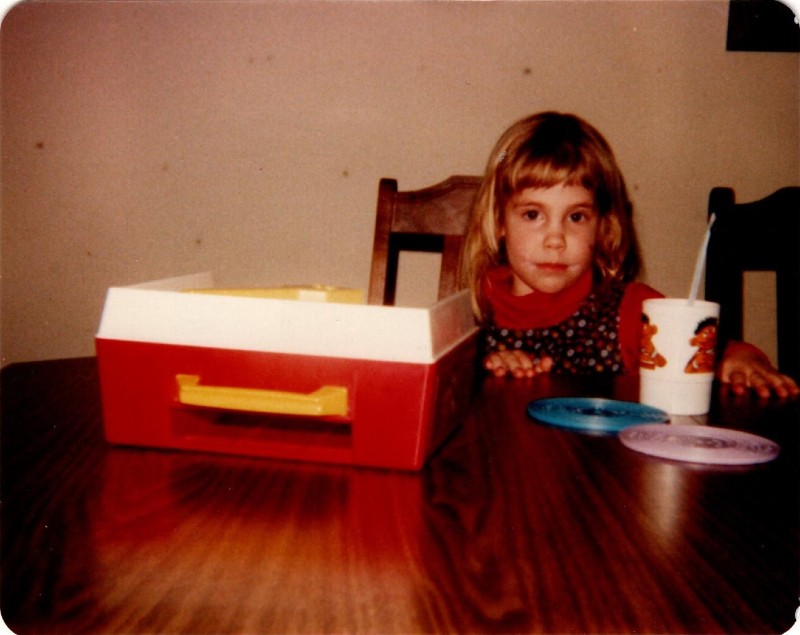
At age 5 with my first record player, a Fisher-Price Change-A-Record Music Box Record Player
Editor’s Note: This is the first installment in a multipart series celebrating the 10th anniversary of The Stratton Setlist.
I never planned to be a music journalist, but I’ve been unknowingly training for it my whole life.
My parents and older brother, Steve, served as my coaches, offering me different educational resources along the way—ranging from albums, TV shows, and magazines to concerts and festivals.
Those resources helped shape my love of music, a desire to acquire more music knowledge, an obsession with live music and physical media, and an uncanny ability to remember all kinds of music facts and trivia. It was that lifetime of training that quietly prepared me to eventually seek a profession that combined my passion for music with writing.
Now, nearly 45 years later and a decade into running my own music blog, here’s how it all started.
“It was well-received, and we had so much fun performing together that we decided to turn it into something,” Ankley said. “I suggested the name Triana, which means ‘three rivers.’ Since we are three different women with three different styles, it seemed fitting.”
Nearly a year later, Ankley, Chenard, and GlenBrooke are fusing their country, Americana, blues, and rock influences together for Triana’s rich, harmony-driven sound. The trio will share that sound during a September 13 performance at Trinity House Theatre in Livonia.
“We all come from different musical directions, which seem to blend together,” Ankley said.
To learn more, I did an email interview with Ankley about Triana ahead of the show.
Trey Simon works through heartbreak on “Jesus Hold My Baby.” Photo – Noah “Santo” Juuhl
Trey Simon understands the grief that comes from a miscarriage.
The Rochester Hills, Michigan, singer-songwriter and guitarist processes that emotion and mourns that loss as a father on “Jesus Hold My Baby.”
“Ignorantly, you think you’re invincible,” said Simon about his latest Christian Americana single. “Everything with [our first son] Wisdom went so smoothly and perfectly, so we said, ‘Let’s do it again.’ We were expecting the same thing, and then seeing my wife go through that was one of the hardest things I’ve ever walked through.”
Two months into their second pregnancy, Simon and his wife, Lindsey, lost the baby and struggled with how to move forward.
On “Jesus Hold My Baby,” Simon sings, “I don’t know how we can move on / How do we ever try again? / I never wanna relive the heartbreak / Can there be a second chance?”
“When you love somebody and something’s wrong, you want to fix it with everything,” he said. “This is one of those things that I felt like I had to endure with her, and it was something I couldn’t fix. The thing that amazed me was that [roughly] one in [four] pregnancies, a miscarriage happens. I never knew that, I never dreamed of this happening—I never thought it would ever happen to me.”
Fortunately, Simon and Lindsey worked through their heartbreak and were able to conceive again. Their second son, Canaan, was born in July.
“We decided to go for it, and we had a healthy pregnancy,” Simon said. “It’s been beautiful, but it gave me a whole new perspective and a real heart for people who experience child loss and experience miscarriage. I really want to be a champion of those things and a supporter. Hopefully, this song can be a source of healing for many.”
The Americana band embraces the growth and wisdom that comes from personal and professional challenges on It’s Alright.
“A lot of it was the decompression of our days and things that were weighing on us,” said Ashleigh Glass-Cooper, Blockhouse Valley’s vocalist, about the Metro Detroit band’s latest album.
“It also was thoughts we were having and things that were racing through our minds that we were able to capture in those times and hold onto for moments where we could make something better out of them.”
Glass-Cooper traded those thoughts and feelings with husband, musical partner, and mandolinist-guitarist Cody Cooper during their daily commutes home from work.
“It wasn’t that we sat down and said, ‘Let’s write songs about this,’” she said. “We tend to talk about [things] on our commutes, and our brains get a chance to decompress in ways that we don’t always set time apart for otherwise.”
Those conversations laid the groundwork for It’s Alright, which features eight tracks filled with soulful vocals, clever lyrics, and infectious instrumentation.
“We gave them a structure, a context, a musical home that we could potentially share with other people,” Glass-Cooper said. “And we think [the songs] are really relatable because we don’t want to dwell on all of the negativity. We don’t want to give it more power through what we’ve done, but we do want to provide that release.”
To learn more, I spoke with Glass-Cooper and Cooper about the album, its themes, and the creative process behind it.