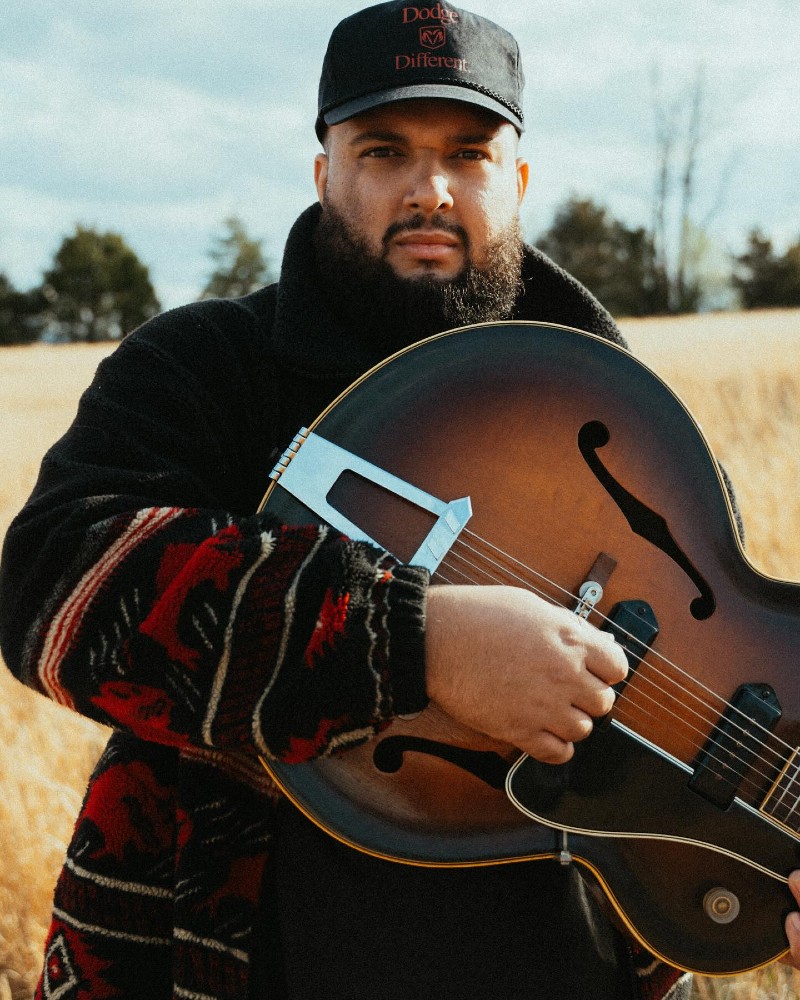
The singer-songwriter and multi-instrumentalist delves into complex emotions, ranging from confusion to heartbreak to frustration, on his latest EP.
“In today’s world, these emotions will find you at some point,” said Perrone, who’s based in Livonia, Michigan. “I find it fascinating how people, including myself, deal with them in different ways.”
He also unearths the mental health struggles people face when they’re coping with change and searching for closure.
“Directly or indirectly, experiences from our past help us to cope,” Perrone said. “Finding a resolution in times of trouble is an interesting topic to me that I felt was worth exploring.”
Perrone’s baritone vocals evoke feelings of anticipation and longing in fans as they process their experiences while listening to Bend Until It Breaks. The EP’s five tracks feature contemplative lyrics, haunting instrumentation, and elements of indie rock, alt rock, shoegaze, and post-rock.
To learn more, I spoke with Perrone about the EP ahead of a November 15 show at the Ghost Light in Hamtramck.
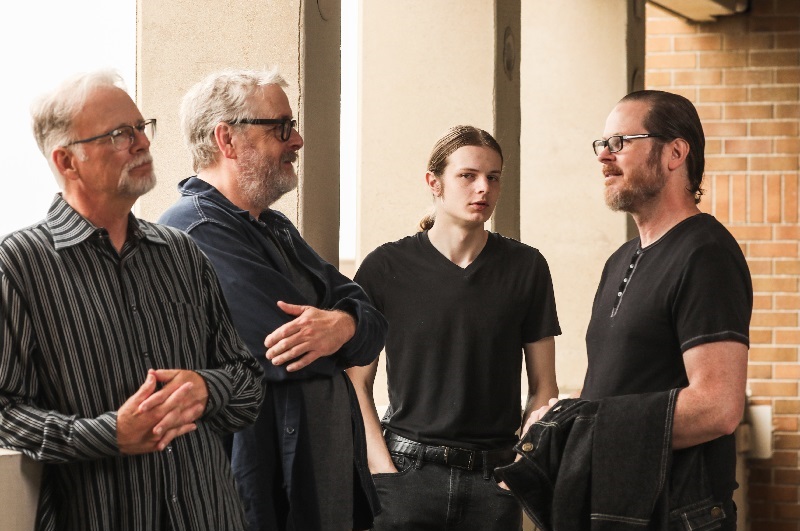
Pat Deneau, Bob Zammit, and Megan Marcoux of The City Lines. Photo by Crista Deneau.
Editor’s Note: This article originally appeared on the Ann Arbor District Library’s Pulpblog and has been expanded for this publication.
Pat Deneau sings about the adrenaline rush he gets from work and music on the song “Hits the Same.”
The musician-firefighter’s heart pounds as he climbs on a firetruck with the Ann Arbor Fire Department, or sets foot onstage with The City Lines and sings, “I don’t know what I’m doing here / But my heart is racing / Is this the price to feel so alive?”
“When I’m singing those lines, I’m almost picturing like I’ve got the hose line in my arm, and I’ve got my buddy on my back pushing me in and the fire’s pouring overhead,” said Deneau about the anthemic opener from the Ann Arbor trio’s new album, Prescribed Fires. “It feels exactly the same as flipping the standby switch on the amp, and the volume control is up and the cymbals wash.”
“Hits the Same” also sets the compelling narrative for The City Lines’ third album, which explores parenthood, career, mental health, heritage, and the environment.
Through that narrative, the alt-rock band shares cathartic experiences that confront the past and promote future growth. Metaphorically, it’s akin to a prescribed fire, an environmental stewardship practice that relies on controlled flames to restore health to ecosystems.
“And so we’re writing honest music about what this is like,” said Bob Zammit, drummer for The City Lines. “I accept that some people are not going to connect to it because it’s theoretical for them—they’re not in that space. But my sincere hope is that for some people who are, there’s not 100 records released in Southeast Michigan that cover the same topics.”
Prescribed Fires examines those topics through existential lyrics, heartfelt vocals, and bold instrumentation.
“We’re talking about some heavy stuff here, but the production on the record is so upbeat,” Deneau said. “It sounds kind of late ‘90s, early 2000s rock, and I think that’s a cool juxtaposition. I think that worked out really well for this collection of songs.”
Deneau, Zammit, and Megan Marcoux (bass, flute, vocals) will soon share that new collection of songs during an October 24 album release show at Ziggy’s in Ypsilanti.
I recently spoke to Deneau and Zammit about Prescribed Fires ahead of the band’s show.
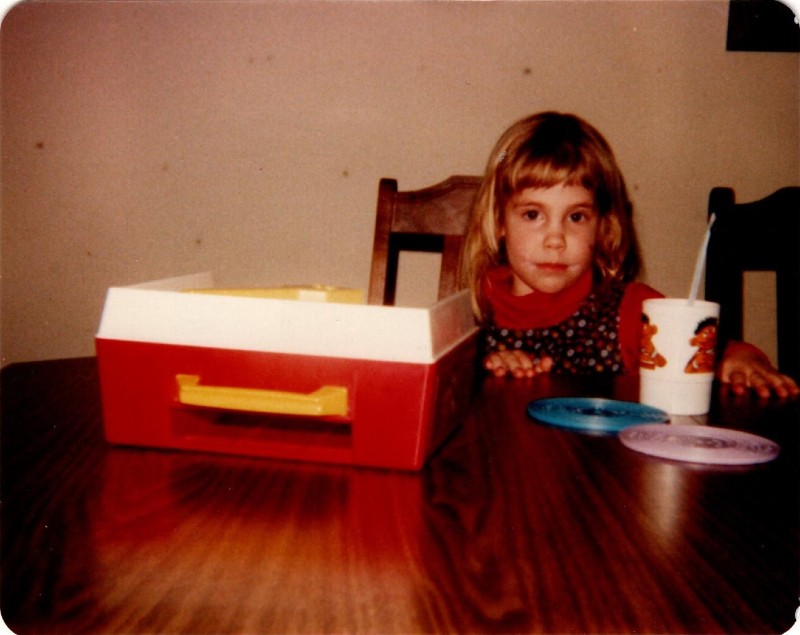
At age 5 with my first record player, a Fisher-Price Change-A-Record Music Box Record Player
Editor’s Note: This is the first installment in a multipart series celebrating the 10th anniversary of The Stratton Setlist.
I never planned to be a music journalist, but I’ve been unknowingly training for it my whole life.
My parents and older brother, Steve, served as my coaches, offering me different educational resources along the way—ranging from albums, TV shows, and magazines to concerts and festivals.
Those resources helped shape my love of music, a desire to acquire more music knowledge, an obsession with live music and physical media, and an uncanny ability to remember all kinds of music facts and trivia. It was that lifetime of training that quietly prepared me to eventually seek a profession that combined my passion for music with writing.
Now, nearly 45 years later and a decade into running my own music blog, here’s how it all started.
Trey Simon works through heartbreak on “Jesus Hold My Baby.” Photo – Noah “Santo” Juuhl
Trey Simon understands the grief that comes from a miscarriage.
The Rochester Hills, Michigan, singer-songwriter and guitarist processes that emotion and mourns that loss as a father on “Jesus Hold My Baby.”
“Ignorantly, you think you’re invincible,” said Simon about his latest Christian Americana single. “Everything with [our first son] Wisdom went so smoothly and perfectly, so we said, ‘Let’s do it again.’ We were expecting the same thing, and then seeing my wife go through that was one of the hardest things I’ve ever walked through.”
Two months into their second pregnancy, Simon and his wife, Lindsey, lost the baby and struggled with how to move forward.
On “Jesus Hold My Baby,” Simon sings, “I don’t know how we can move on / How do we ever try again? / I never wanna relive the heartbreak / Can there be a second chance?”
“When you love somebody and something’s wrong, you want to fix it with everything,” he said. “This is one of those things that I felt like I had to endure with her, and it was something I couldn’t fix. The thing that amazed me was that [roughly] one in [four] pregnancies, a miscarriage happens. I never knew that, I never dreamed of this happening—I never thought it would ever happen to me.”
Fortunately, Simon and Lindsey worked through their heartbreak and were able to conceive again. Their second son, Canaan, was born in July.
“We decided to go for it, and we had a healthy pregnancy,” Simon said. “It’s been beautiful, but it gave me a whole new perspective and a real heart for people who experience child loss and experience miscarriage. I really want to be a champion of those things and a supporter. Hopefully, this song can be a source of healing for many.”
Discipline’s Chris Herin, Mathew Kennedy, Henry Parmenter, and Matthew Parmenter. Photo – Bryant Stuckey
Discipline understands the struggles of navigating the online world.
The prog-rock band weighs the permanency of having a digital footprint with the instant gratification of using new technology on “Breadcrumbs.”
“In my mind, the origin of it was also this notion that when we look at ourselves, we change during our lifetimes,” said Matthew Parmenter, Discipline’s frontman and multi-instrumentalist, about the title track from Breadcrumbs.
“And here we are in this age where so much of what we do is captured, and now, how do we each get to have that luxury that I had as a person growing up, which is to make mistakes and to learn a little from them and to change as we grow. How do we do that when everything we do or utter is recorded forever online?”
Discipline explores that thought as Parmenter sings, “Should we have known / Might we have chosen for ourselves / Now it’s the platform decides / What survives archives our lives.”
“I fear that it leads us to having to become like extreme versions of ourselves, because once you say it, you gotta live up to it,” said Parmenter, who’s based in Metro Detroit. “You can’t let it go. You can’t wake up the next day and say, ‘I probably shouldn’t have said that.’ It’s gone, it’s there. So these were some of the thoughts that generated that particular song.”
In addition to the title track, Parmenter and his Discipline bandmates—guitarist Chris Herin, bassist Mathew Kennedy, and drummer Henry Parmenter—shine on their latest album, Breadcrumbs.
Parmenter’s haunting vocals and philosophical lyrics, along with the band’s spellbinding instrumentation, take listeners on a contemplative journey across five tracks.
To learn more, I spoke with Parmenter about his background, the band, and the album.
Arc1c is future-oriented on “Blip in Time.” Photo – Brandon Russell
William Carey is ready to leave the past behind.
The Detroit producer, composer, and multi-instrumentalist feels relieved after recovering from a recent bout of Crohn’s disease.
“When you’re finally out of it, it feels so incredibly freeing, and that’s where this EP came from,” said Carey, who performs and records as Arct1c—pronounced Arctic—about Blip in Time.
“It feels freeing to create and freeing to write, knowing that I’m on the other side of this and that everything’s gonna be good. I’m gonna be good for a while, and it felt good to write like that.”
On Blip in Time, Carey provides a cathartic and spiritual electronic journey about experiencing a temporary setback and acquiring newfound strength for the future.
“Because a year ago, I was in a hospital, and I had to get a blood transfusion,” he said. “I finally got past that little final portion, and I’m not gonna let those last couple of years hold me back from anything now.”
The EP’s five electronic instrumentals sonically reflect Carey’s shifting mindset during his health struggle. While going through the tracks, he quickly trades disappointment and self-doubt for hope and resilience.
“All that is just a blip in time,” he said. “It’s in the past, and now I have to transfer all of my energy towards the present and the future.”
To learn more, I spoke with Carey about his background and latest release.
Shannon Lee, Andrew Pfeiffer, Hillary Finchum-Sung, Jeff Brach, Christopher Georges, David Roof, and former bassist Jamie Sass. Not pictured: current bassist Kevin Howard. Courtesy photo.
Editor’s Note: This article originally appeared on the Ann Arbor District Library’s Pulpblog.
The Ann Arbor-Metro Detroit band provides a cathartic outlet for processing feelings—ranging from hope to heartbreak to euphoria—on its latest album.
“A lot of the music that I write, it all comes from a very emotional place,” said Jeff “J. Michael” Brach, frontman for the Americana-jam rock band, about Where We Belong.
“When I’m at my peak creatively and writing a lot of music, which I’m actually doing more of right now, it’s when I’m going through difficult things.”
Brach examines a spectrum of emotions while rediscovering his purpose—both personally and vicariously—across eight tracks.
“Universally, the music that I love, you can identify with it, even if you’re interpreting it differently,” he said. “We all come from our perspectives, but you can universally tap into certain things that are being said.”
Brach’s relatable songwriting comes to life alongside the spirited instrumentation of The Heavy Burden, which includes lead guitarist Andrew Pfeiffer, drummer Christopher Georges, vocalist Shannon Lee, keyboardist David Roof, vocalist-violinist Hillary Finchum-Sung, and bassist Kevin Howard.
“Once I started listening and focusing on the lyrics, I [don’t] think of us as the heavy burden, but that’s the funny joke part of it,” Georges said.
“A lot of the songs have heavy, emotional tones sometimes, even though they’re light in their presentation and fun and groovy. There’s also this behind-the-scenes bit of toil and heartbreak, and that story-work in there. It’s delivered nicely and sweetly almost to the ear.”
The folk singer-songwriter, historian, and storyteller is driven by curiosity and a desire to understand, express, and connect with listeners.
“I want to know something,” said Juno, who lives in Metro Detroit. “I want to say something; I want to feel something. And I want the listener to feel something, too.”
Whether he’s writing and singing about women working in cigar factories or calling for the release of a wrongly imprisoned activist, Juno’s songs hit an emotional and thoughtful mark.
“I’m a topical folk singer with songs often inspired by front-page headlines, historical events, museums, or personal stories shared by everyday people,” he said.
“My music, whether personal or historical, aims to honor the power of storytelling and connect people to both the past and present.”
His engaging stories and songs are best heard in intimate settings, like coffeehouses, taverns, small theaters, and house concerts.
“House concerts are a favorite setting at this stage of my career,” said Juno, who hails from Flint and has been writing and performing since the early ‘80s.
“Intimate and conversational spaces allow me to set up songs, tell their stories, and create memorable, meaningful events with listeners up close.”
I recently spoke with Juno about select songs from his catalog and his upcoming plans.
Low Phase’s Miles Ferguson, John Bomer, and Caleb Waldvogel. Courtesy photo
Low Phase understands the evolution of a relationship.
The Grand Rapids, Michigan band chronicles a budding romance and its growth over time on So Pretty It’s Perfect.
“I’m getting married in September,” said Caleb Waldvogel, the band’s lead vocalist-guitarist. “The whole EP is covering the beginning parts of our relationship and then falling into that decision. It’s been really inspirational. When you plan a wedding, you go through a lot of the relationship and a lot of the timeline.”
That timeline stretches across the EP’s six tracks, which include vulnerable lyrics, heartfelt vocals, and hopeful instrumentation. Waldvogel and his bandmates, drummer Miles Ferguson and bassist John Bomer, soar thematically and sonically on their indie-rock release.
“The three of us have been best friends for over a decade, and we’ve been playing music together for that long,” Bomer said. “We’ve known [Caleb’s fiancé] Jenna for as long as they’ve been together, so seeing that relationship come to a full bloom has been inspiring. We wrote a lot of these songs on the EP in the winter, but I think they’re turning out to be summer jams.”
As newly minted summer jams, the songs on So Pretty It’s Perfect will stand the test of time.
“The EP’s title is supposed to reflect the end of our story,” said Waldvogel, who met his fiancé in high school. “Everything you’ve been through, everything you’ve said, everything you’ve done has all been perfect. You created it with this other person and it’s all been worth it. Take a second to look at that timeline—it’s so pretty and it’s so perfect.”
The Ann Arbor singer-songwriter follows her instincts and unleashes her authentic self on Wild in Me.
“It’s been a big journey,” said Merritt, aka Jess Oberholtzer, about her new folk-rock-soul EP.
“Over the past five years or so … I went through a divorce, the pandemic, and coming out. It’s been a real transformative time. I look back, and I’m so grateful that I took those steps because I feel so much closer to my true self now. Even though things are a little bit scary as far as what the future holds, I just feel solid in myself.”
Merritt embraces that bold mindset through an honest and inspirational collection of songs about self-discovery, growth, and freedom. The four tracks on Wild in Me come to life through soulful vocals, cathartic lyrics, and soaring instrumentation.
“I tend to write about things that are closely held and deeply felt,” said Merritt, who previously performed as Jess McCumons.
“I feel happier after I feel something intensely, even if it’s challenging. To me, revisiting and sitting in those feelings, even if they’re not sunshiny all the time, actually does feel very healing, cleansing, and empowering.”