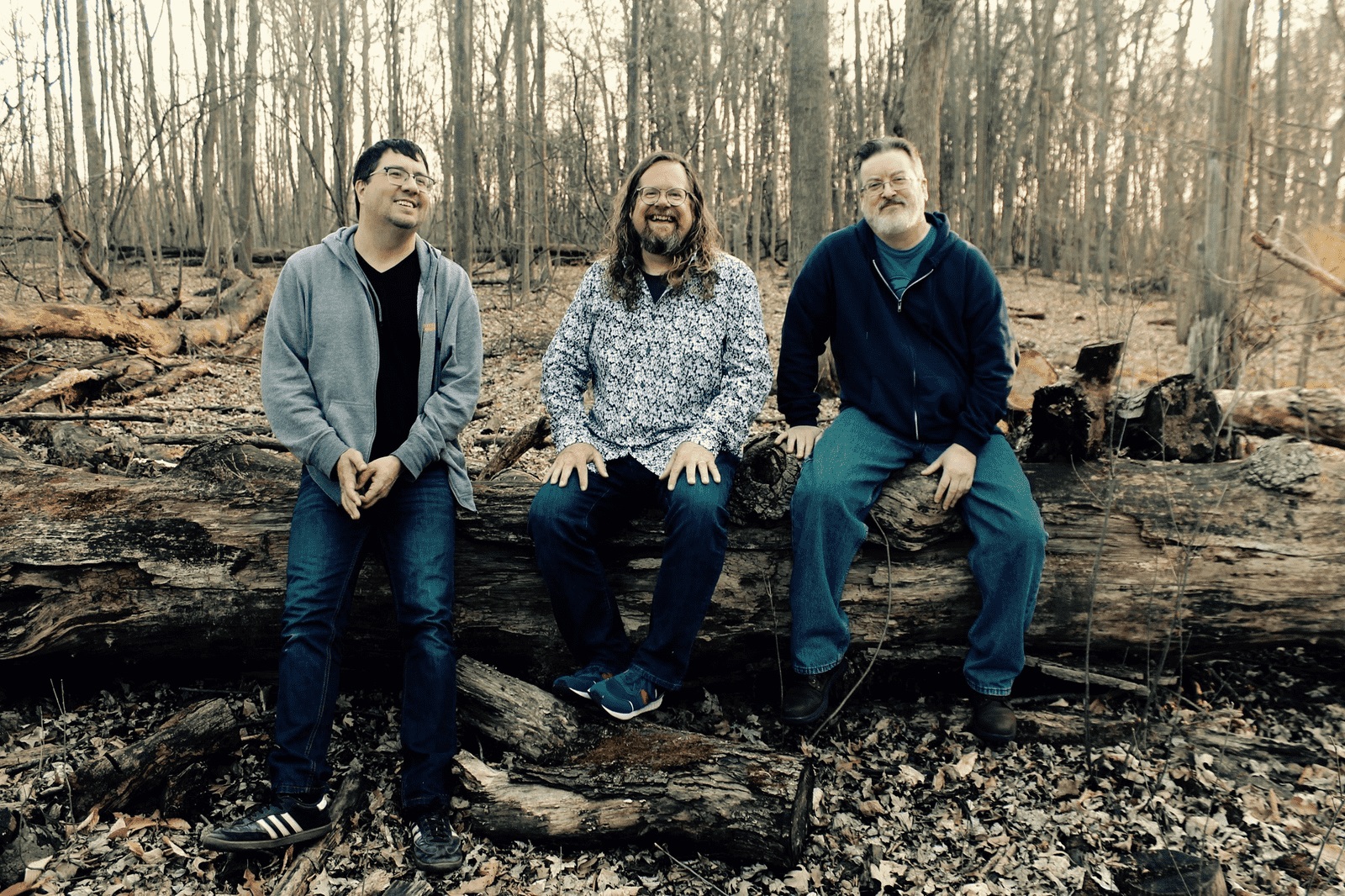
The Dropout’s “Bubble Boy” EP shares insightful tales of overcoming addiction, finding renewal and instilling vitality in others.
The Dropout instantly transforms any space into a nonstop, explosive dance party.
The Orlando, Florida indie pop, post-EDM singer-songwriter and saxophonist employs fierce grooves, infectious hooks and lush soundscapes on his latest EP, Bubble Boy, to get fans moving.
“This (EP) has more of a dancey vibe, and it feels more like a pop EDM-like crossover. It has pop song structures, but EDM sort of tones underlining live instrumentation and my vocals. It feels like Dropout songs, but they have an energetic, live feeling,” said Ficker, who’s originally from metro Detroit.
The Dropout captures that contagious, hopeful spirit across six dazzling Bubble Boy tracks, which chronicle a highly personal journey filled with insightful tales of overcoming addiction, finding renewal and instilling vitality in others.
“I like to think by the time the songwriting happens, the learning is already done. It’s almost like the life experiences have been chewed on and now I’m fully digesting them. I definitely tried to be more intentional about the inspirational themes, but if I had to write about everything I learned this year, this might end up being a lot of text to read through,” said Ficker with a laugh.
As a follow-up to 2018’s magnetic, groove-filled Old Parts, New Beginning EP, The Dropout spent three years writing and recording Bubble Boy’s tracks in his home studio. He nailed the saxophone, guitar and vocal parts while collaborating remotely with longtime friend Bob Lemon, who provided the project’s hypnotic, spirited beats.
“We grew up in the same area and had mutual friends, but never really crossed paths. (Bob) reached out to me one day online with a remix of an older song I did (‘Old Parts, New Beginning’), and I was blown away. We immediately started working together on new music and haven’t stopped since,” Ficker said.
“The most important music to me is my music and the music of my friends because it’s the soundtrack to my life. It makes me think of old venues like the Genesis, the old Sanctuary, Toepfer House and Elijah’s (Q-Nails),” said Yost, who’s based in Detroit.
“It also makes me think of our friendships and our time together as a family. Starting Kickpop Records is about releasing music for me and my friends and to maintain the catalogs of a few artists so their music will always be out there to listen to.”
Yost launched Kickpop Records, a small DIY label, during the pandemic and released his first project, KP-005, or Kickpop Records Sampler No. 1, on 10-inch vinyl earlier this summer. While the vinyl release quickly sold out, listeners can still spin the compelling, cerebral project via Spotify.
“KP-005 (or Kickpop Records Sampler No. 1) is just a little taste of what you might expect to hear in the future from Kickpop Records. The first three songs (Logan Gaval, Blank Tape Tax and For Once in My Life) all stick to a theme and were recorded on a Tascam Portatstudio. The last two songs are from out-of-print records of the two bands I drummed and wrote for – The Flaks and Broadacre,” Yost said.
“The idea for the (compilation) came from Broadacre bassist Matt Farrett. Matt and I were talking about releasing the nine-song Broadacre project, and he suggested we test the waters on a (compilation) first.”
Audra Kubat and Jessica Care Moore challenge the nation’s antiquated, divisive legacy on “Gray Glory Parade.”
Audra Kubat boldly brings the gray undertones of the red, white and blue to the surface.
The Detroit indie folk singer-songwriter brilliantly unravels the antiquated, divisive Confederate legacy, traditions and mindset that still permeate our racial, social and political fabric on her latest single, “Gray Glory Parade.”
“Originally, the song was called ‘The Next American Revolution,’ and it was so bold in a way. I was exploring other titles, and then it hit me this line, ‘Gray Glory Parade,’ and it had this really strong ring to it,” Kubat said.
“‘Gray glory’ is sort of the southern pride around the uniforms of the Civil War. The first lines of the song, ‘Sculpted and praised/A gray glory parade/Hollow men disgracing pedestals,’ show this pride and glory around a misunderstood history, like sort of a parading around. I thought it was a stronger title than the other one.”
Throughout “Gray Glory Parade,” Kubat thoughtfully unstitches each worn, destructive gray thread as luminous acoustic strums, reflective synth and tranquil bass provide newfound strength and hope. She reveals, “Our silence now is damaging/Time for a reckoning/A great awakening/The next American revolution.”
“The revolution is that we have to deal with a falling apart first. I’m ready for the fall-apart part to happen in a bigger way, and the scary thing is so many comforts and things that we’re used to will have to change to make the real change that is needed,” said Kubat, who started writing the track during a July 4, 2020 trip to Washington, D.C.
“There’s so much to address, and it’s going to be so painful for everyone. That’s why it’s taking so long, and it takes so much self-steadiness to be able to stand up and say, ‘My lifestyle is not only destroying other people’s lives, but the environment and social structure beyond that is so flawed, that it really must be taken out thread by thread.’”
Kubat continues removing each thread as she reflects, “Yet I’m quiet and listless/Do no more than bear witness/But it’s not enough as warm blood runs from broken bodies.”
“Prior to that trip, I had been trying to write a song in response to the things that were going on, and everything I wrote just seemed so flimsy. I couldn’t find the right words, and I also felt like it was a big undertaking to try to share what I was feeling and without it sounding uninformed and as an observer,” said Kubat, who also included lyrics from the national anthem throughout her track.
“I really didn’t know how to do that at the time, and it wasn’t coming. When my partner and I went to D.C., we were walking among the protests that were going on and sharing space with folks there. Going to the monuments and being a part of everything else that was going on along with the tourists and seeing the capital was an interesting juxtaposition.”
That juxtaposition inspired Kubat to think about the American flag unraveling and how that served as a timely metaphor for the nation’s growing racial, social and political tensions. She quickly wrote “Gray Glory Parade’s” first three verses, but struggled to find the last line.
“It took me a couple of weeks to come up with the line, ‘The silence is victory beckoning.’ If we don’t have to shout anymore about it, that’s us being victorious,” Kubat said.
Magenta Moody, right, and James Miller bring a rock feel to the alternate version of “Coffee and Reefer.” Photo – Dominic Smalls
For Magenta Moody, each day starts with a chill morning routine.
The Roseville EDM-dream pop artist combines java and Mary Jane to soothe the senses and calm the mind on her latest carefree, reggae-inspired single, “Coffee and Reefer.”
“I love to make a nice cup of hazelnut coffee, pack a raw cone and head to my balcony to start my day. I have a beautiful balcony, and the trees are so dense that you can’t see the surrounding neighbors or anything for that matter,” said Mercedes Jefferson, aka Magenta Moody.
“It’s just trees, sunlight and a couple of very vocal birdies. Coffee picks me up and warms my soul while smoking soothes my nerves and clears my mind, so the combination is magical.”
Moody quickly creates a magical three-minute “Coffee and Reefer” escape for listeners as stormy beats, jingling tambourine, placid synths, light hand claps and breezy bass seep into the body and mind.
She shares, “I know I’ve been really sketchy/Bad decisions seem so tempting/I’m just you, and you’re my best me/You’re my best me/I’d like to meet ya/Coffee and reefer/Hot like a fever/I’d like to meet ya.”
“The song is meant to be a light, feel-good song, and I want people to start their day on a bright and chill note. I wrote ‘Coffee and Reefer’ on the aforementioned balcony, of course. Besides my car, it’s my favorite place to write,” Jefferson said.
Moody also released an alternate version of “Coffee and Reefer,” which features guitarist James Miller playing thoughtful, deep-tone electric strums alongside her echoey vocals.
“I was looking for a guitarist to a do a show with me, and James responded to an inquiry I posted. We’ve been jamming ever since. As we practiced in my living room, I showed him my version of the song,” Jefferson said.
“His interpretation of the song that he played in response to hearing it was so beautiful. He asked if I had recorded yet and insisted on being part of it. I think he adds a groovy, yet alternative vibe, and his instrumentation fits perfectly with the lyrics.”
Moody recorded both versions of the track at Parallel Sounds Studio in Sterling Heights with engineer Tony Boguth. The original version features production by SYBLYNG and mixing by Mark Ringold Jr., aka Krypto Divine, while the alternate version is mixed and mastered by Boguth.
With both versions of “Coffee and Reefer” out, Moody wants to record a video with a “That ‘70s Show” concept and feel.
“It could be some friends and me sitting in a circle getting a smoke session in like they do in every episode. I’d love to work with Joe Hendo again or Tiffadelic Media to make the vision come to life. They both are great with creative direction and execution,” she said.
George Montrelle shares his gratifying journey of true love and commitment on “Paradise.” Photo – Steve Selvaggio (c) 2020
George Montrelle elegantly celebrates a life filled with love, beauty and tranquility.
The Ferndale rock-soul singer-songwriter and guitarist shares that personal mindset on his latest electrifying single, “Paradise,” as a romantic, grateful ode to his longtime partner.
“I’ve had that song more since the beginning of my relationship with my partner, and I wanted to validate how much I appreciate his love for me. This was one of the songs I felt strongest about early on, and I’ve been showing it to people for a while now,” said George Wilson, aka George Montrelle.
Montrelle beautifully chronicles his gratifying “Paradise” journey of true love and commitment as propulsive drums, crashing cymbals, fiery electric guitars and galvanic bass surround him.
He reveals, “Here for you till the end/Amaranthine love my friend/The very heart on which you can depend/Here for you for the rest our lives without a stress/Baby, forever, we will love no less.”
“I’ve tried to record this song a handful of times, and I finally just said, ‘I just need to get this done.’ I decided not to overanalyze it, but I also gave it my best,” said Wilson, who recorded and produced the track in his home studio.
For Montrelle, “Paradise” not only acknowledges the growth of his relationship, but also the evolution of the track from the stage to the studio. In 2018, he started performing a live version of “Paradise” with a full band before audiences at the Detroit Institute of Music Education (DIME).
“I didn’t have a steady band all the time, so when I wanted to put this song out, I was either gonna hire a drummer and record all the guitars myself, which I did. Or I was gonna track the drums using the sequencer in Ableton, and that’s what’s on the release,” Wilson said.
“I tried to embody what might feel good on stage, and I tried different arrangements. I also developed the verses so it felt progressively fluent throughout the whole song and understood how the drums and guitars needed to work while the vocals sat through everything.”
The Fraser folk rock singer-songwriter and guitarist will return to his family’s old stomping grounds to perform Friday night at the Polish Village Café.
“It feels pretty nostalgic to be playing in Hamtramck since my mother was raised there. She graduated from St. Florian High School. My grandparents lived in Hamtramck until they reached their 80s, and I have memories of visiting there when I was a child,” Alter said.
“Some of those memories are captured in my song, ‘Hamtramck.’ I grew up in suburban East Detroit, which was a very different environment. When visiting Hamtramck, my siblings and I were exposed to a very different culture, even with my grandparents speaking another language through much of our visit.”
Alter quickly revisits his childhood on 2018’s “Hamtramck” as sentimental acoustic strums, sunny electric guitars and ruminative bass repaint loving scenes from the past. He reflects, “Visit from suburbia/Dropped into this urban dream/It’s a new diversity/In the streets with rising steam/I feel this city claiming me.”
“I think that experience gave me an appreciation for the many cultures that make up our nation. I released the song, ‘Hamtramck,’ on Bandcamp a few years ago. Since then, I have played it as an acoustic piece, and I plan to release a new version similar to my live performance on a new album I’m working on now,” said Alter, who also performs as part of the soul-jazz-rock duo After Blue with Katie Williamson.
“It’s been just about a year since John Lewis passed. I think the impact of the equal justice protests of 2020 still resonate today, but unfortunately at a somewhat lower volume. I want to continue to put a light on John Lewis’ life and that cause in my own way,” he said.
The Detroit rock trio of Jeremy Porter (guitar, vocals), Gabriel Doman (drums, vocals) and Bob Moulton (bass, vocals) seamlessly fuse energetic live performance footage with colorful animation to illustrate “Put You on Hold’s” storyline about a girl becoming captivated with city life.
“I wanted to go for a bit of a throwback to the Aerosmith videos with Alicia Silverstone – sort of a very loose plot about a party girl that maybe worked with the song, but didn’t necessarily follow the song’s lyrics to a tee,” said Porter, who worked with director-photographer David Kellogg on the video.
“There are nods to the lyrics here and there, and in general, like the song, it’s about a crazy night out for a not-so-crazy girl, but the concept and its tie-in to the lyrics aren’t overthought. We glammed the look of the band up a bit for shits ‘n giggles to do something different, get out of our comfort zone and have some fun.”
Porter and The Tucos demonstrate that glamorous fun while dressing head-to-toe in white or black and adorning sunglasses and scarves, thanks to stylist Alessandra Lipman. They proudly sport those hip stage fashions in a darkened gym located at the Plymouth Arts & Recreation Complex (PARC).
“PARC is an old high school here in Plymouth that’s been converted into an art space with studios that local artists can rent and stuff like that. I wanted something big like a high school gym, and it just seemed perfect,” said Porter, who’s partnering with Ghettoblaster Magazine to premiere the video today.
“I also like to keep my money in my community when possible and support the arts when I can. David and I met the manager there, and she showed us around, and we agreed it was our spot. The gym has the feel of the ‘Smells Like Teen Spirit’ video a bit, which I liked.”
In tandem with the band’s live performance footage, the “Put You on Hold” video includes compelling animated characters and background scenery by Jones William. It explores the main character’s social outings with friends as well as her dating life and city adventures.
“(Jones) answered a Craigslist ad and was honestly one of the very few worth following up with. We never talked, just through email, a language barrier was an issue, and I wasn’t sure what I was gonna get. In the end, he delivered, and I was pleased with the work he did,” Porter said.
The band’s “Put You on Hold” video ultimately came together with Kellogg, who brought a “youthful, enthusiastic energy” to the camera.
“I met David through Instagram when we were recording. His work caught my eye, and he ended up doing all of the photography, including the cover, for the record. And even though he’s younger, he still gets the ‘70s/‘80s references we were throwing out – he’s well-traveled, so to speak,” Porter said.
“He didn’t have much to do with the concept or animation part, but he was very involved in scouting and choosing the location and everything that went into the performance part – lighting, setup, direction and all that. He and I also edited it together.”
Matthew Milia’s “Keego Harbor” captures a beautiful legacy of life unchanged in the metro Detroit suburbs. Photo – John Hanson
For Matthew Milia, Keego Harbor represents a nostalgic, metro Detroit road trip from youth to adulthood and back again.
The Detroit indie folk singer-songwriter and Frontier Ruckus frontman eloquently drifts through deep childhood recollections, gritty suburban landmarks and dichotomous neighborhood adventures on his well-crafted second solo album.
“This has been a lifelong obsession, especially with the suburban world. It’s inspired by the fact that the suburban experience is not monolithic. It’s all these mingling beautiful dualities and contradictions of the human experience that live in this space,” said Milia, who grew up in Keego Harbor.
“I’m juxtaposing Pontiac and Bloomfield Hills because those places are contiguous, and they couldn’t be more different. That’s a hard thing for people that don’t live in this area to understand. My endless personal quest is to give as much vivid description and detail of these contradictions that I’ve experienced.”
Throughout Keego Harbor, Milia intricately constructs snapshots of mundane Michigan experiences – junk mail, rotten mulch and phone chargers – and static places – party stores, drive-thru lanes and nail salons – across 10 introspective tracks to capture a beautiful legacy of life unchanged.
“I think this record is a bit more about generational inheritance. My parents met in Keego Harbor at a place called the Back Seat Saloon that’s no longer there, and the first placed they lived together was in a little loft above a house. The age I am now is when they were doing all that. It’s a bit of time travel while seeing myself as my parents and all the things that entails,” he said.
While much of Keego Harbor remains in the rear-view mirror of the mind’s eye, another portion welcomes the uncertain future with outstretched arms. It’s a matter of looking toward the past to better understand who you’ve become and where you’re headed, whether that’s in a city or a suburb.
“I’m also thinking on another level about my experience in the music industry. It’s such a weird commerce to toil in, and my life since 2006 has been writing these songs and making these records with my friends and putting them out into the world and seeing where they take me,” Milia said.
“I think that a major trope of this record is the recalibration of one’s dreams and expectations. And knowing that immense beauty and surprise can be hiding there. Once you recalibrate what you think you wanted or were working toward, you might just find something even more rewarding.”
The Legal Matters’ Andy Reed, Chris Richards and Keith Klingensmith chronicle the pandemic, politics and personal struggles on “Chapter Three.” Courtesy photo
The Legal Matters brilliantly shine a light during a lingering time of uncertainty.
The mid-Michigan and metro Detroit power pop trio of Andy Reed, Chris Richards and Keith Klingensmith combines sunny melodies, lush harmonies and spirited instrumentation over a dozen contemplative tracks chronicling the pandemic, politics and personal struggles on Chapter Three.
“Music lovers value music even more now than they did before the pandemic. We hope people enjoy this record, and that it’s another decent thing that’s come out of this crappy time. We want people to put their ears on it and give it a chance, and we think there’s a little bit of something there for everybody,” Reed said.
Now available via Klingensmith’s Futureman Records, Chapter Three serves as The Legal Matters’ third infectious, compelling release since 2014. Each track provides an intimate, thoughtful perspective about moving forward in today’s ambivalent, precarious world.
“This record was mentally one of the most helpful things through all of this because it gave the three of us a chance to work on something that we really enjoy doing. We’re ridiculously pleased with the results,” Reed said.
Skywerth blends metal, psych rock, industrial, prog and hip-hop on “Waves.” Courtesy photo
Last spring, Skywerth watched a bewildered nation quickly unravel before his stunned eyes.
The Detroit multi-instrumentalist, producer and songwriter felt overwhelmed by the social, economic and political upheaval arising from the COVID-19 pandemic.
“I had just watched Ahmaud Arbery getting shot down in his own neighborhood and the music industry crumbling overnight all while looking at the incredible divide and conspiracy theories being pushed on social media,” he said.
That lingering frustration, disappointment and anger prompted Skywerth to pen his latest striking multi-genre, emotional-fueled single, “Waves,” featuring Hamtramck indie folk duo Jackamo.
“It was so apocalyptic, so I just wrote exactly what I was observing. Social media is tailored for you, so if anything pops up on your feed that is outside of your belief system, it’s going to stick out like a sore thumb, and your friends are going to say it’s wrong, too. No matter what it is, you are constantly being told that you’re right.” he said.
Now available on all streaming platforms, “Waves” elegantly rises with the genre-bending tides of metal, psych rock, industrial, prog and hip-hop into a symphonic tsunami. Thumping drums, tingling cymbals, swirling electric guitars, crawling bass and expansive synths quickly engulf listeners in a welcoming sense of relief and escape.
Skywerth reflects, “Alone in the waves with your eyes open wide, living in a paradise/Stare into the light/Hands upon the shore, eyes are getting sore/Here we are, caught in the eye of the storm/As the rain starts to fall, as the rain starts.”
“Lyrically, it’s a bit of a pessimistic song. If the song can make two people put their phones down and reconnect with one another in real life for two days, then it would make the year for me,” he said.
Skywerth also forges a beautiful musical connection with Jackamo’s Alison and Tessa Wiercioch, who provide somber, thoughtful harmonies on “Waves.”
“I fell in love with Jackamo the moment I heard them. We have mutual friends, and they also work with Steve (Lehane) at Rustbelt Studios. After writing the lyrics, I knew Ali, Tessa and I could do something pretty cool,” he said.
Along with Jackamo, Skywerth collaborated with Eric Hoegemeyer (soundscapes, synths), Matt Voss (drums) and co-producer Steve Lehane (bass, drum machines, production) on “Waves,” which initially started as an instrumental track.
“After the pandemic hit and I wrote the lyrics, I had this sort of organized chaos. Instead of being consumed by this confusion surrounding me, I had all my thoughts and observations laid out on something that was familiar and felt like home to me,” said Skywerth, who recorded the track at Royal Oak’s Rustbelt Studios and credited Lehane with transforming “Waves” into a vocal track.
“It wasn’t a conscious decision to weave all of these (multi-genre) elements together. I’ve got a bit of ADD, so when something sounds the same for several minutes I get bored. I need to change things a bit to keep me interested. I think the dynamics of the tune help outline the emotions felt from the pandemic.”
Skywerth brings those heavy emotions to life in his wistful new video for “Waves” as he ponders the pandemic’s ongoing impact with Alison Wiercioch in Hamtramck. Filmed and edited by Sara Showers and Cheyenne Comerford, the video also features footage of Skywerth performing live inside a vacant Magic Bag in Ferndale.
“We started tossing around ideas for a video in late 2020, and we shot at The Magic Bag in February. It was quite unsettling being in the venue during the pandemic. We also shot in Hamtramck back in the spring, and it was a group of friends running around with a camera,” he said.