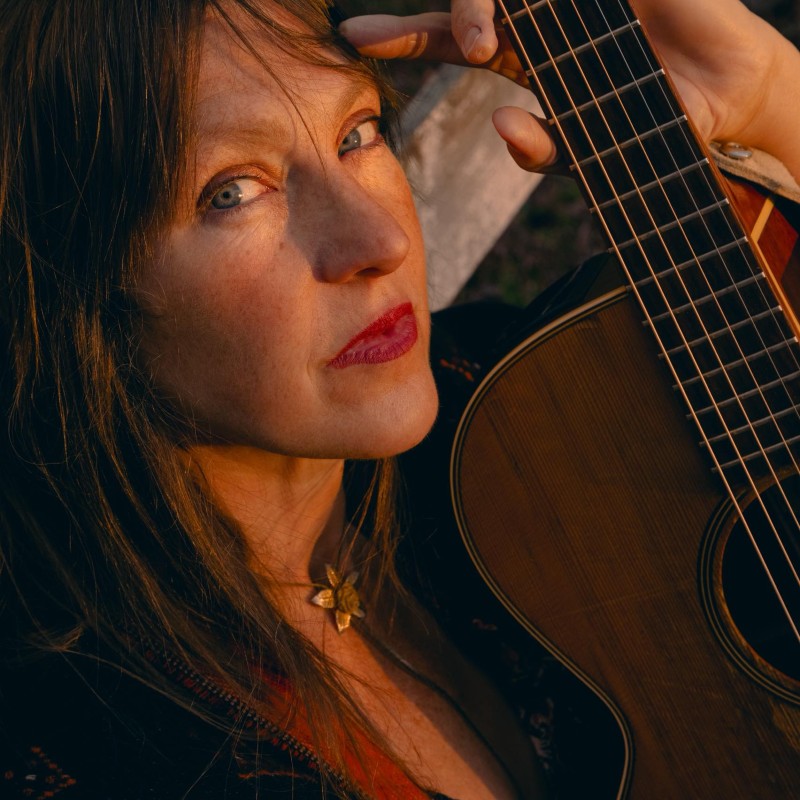
Friday marks the 25th anniversary of both 9/11 and Kitty Donohoe’s folk song, “There Are No Words,” which pays tribute to the fallen heroes, family members, and friends we lost that day.
Donohoe, an Ann Arbor, Michigan, singer-songwriter, wrote the song in response to the day’s tragic events.
On the song, Donohoe sings, “In one single hour in one single day / We were changed forever, something taken away / And there is no fire that can melt this heavy stone / That can bring back the voices and the spirits of our own.”
“I think it’s the hope of every artist to create something that affects people in a strong way, and I’m honored that ‘There Are No Words’ has played a part in the healing process of our country for so many people,” wrote Donohoe on her website.
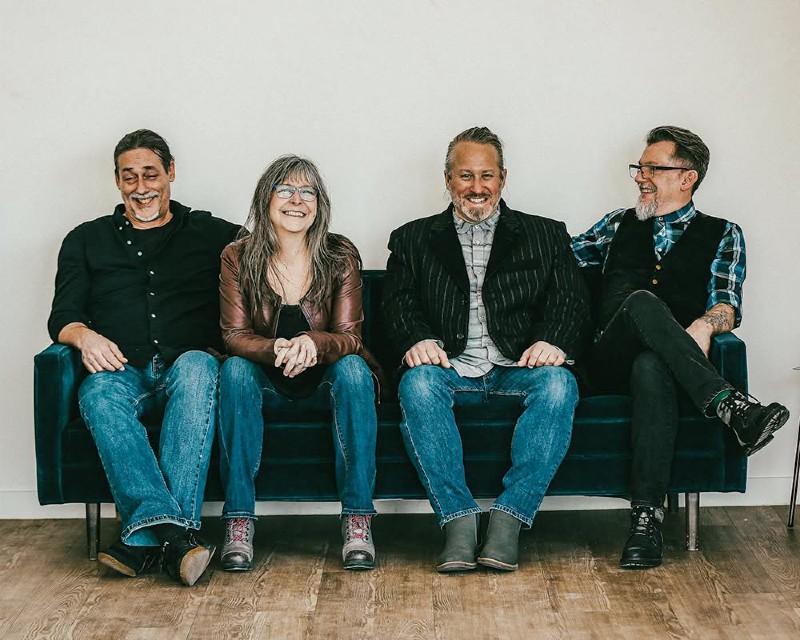
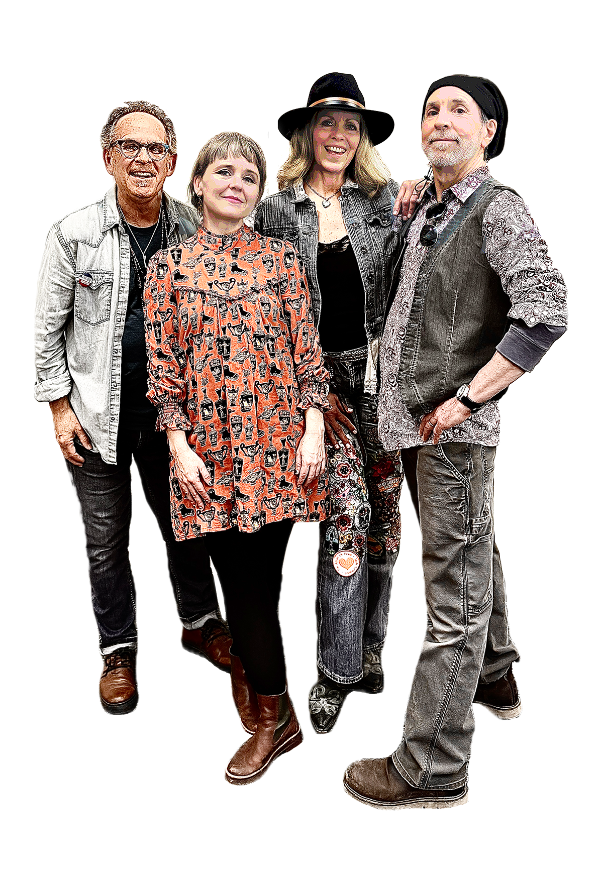
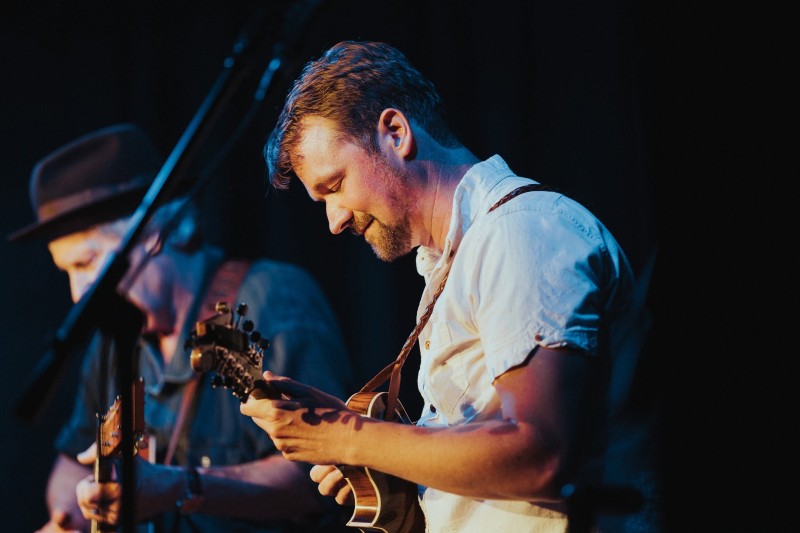
Rod Capps, Annie Capps, Ozzie Andrews, and Jason Dennie. Photo – Jen Prouty.
For Annie and Rod Capps, self-improvement is a lifelong process and commitment.
The Chelsea, Michigan, couple explores that concept and the lessons they’ve learned on their latest folk album, Never Done.
“I’m always trying to do better, be better,” said Annie Capps. “I don’t always succeed, but the best kind of growth is that which creeps up on you after a long time of doing a lot of inner work.”
As part of that inner work, the duo examines the impact personal growth and wisdom have on them over time. They also reveal epiphanies about past behaviors, decisions, and actions that surfaced while writing the 10 tracks for Never Done.
“It’s almost as if a light bulb goes off and those self-improvements start to show themselves in real ways,” said Annie Capps. “I write what I’m feeling, and my lyrics often reflect a combination of reality—the kind of person I am—and the kind of person I want to be.”
Annie Capps (songwriting, vocals, guitar) shares those self-reflections through lyrics that range from personal and anecdotal to conversational and humorous.
“Part of the healthier version of self-reflection is not to take myself so seriously, especially when lamenting the mistakes of my youth,” she said. “I guess I’m in the season of life where reflecting on the past is natural, but I’m also looking at it through a more compassionate lens.”
Through another lens, Annie and Rod Capps (guitar, viola, vocals) view Never Done as a milestone of sorts—it’s their 10th studio album.
They recorded the album in their Chelsea home studio and at Ann Arbor’s Big Sky Recording with bandmates Jason Dennie (mandolin, vocals), Dan “Ozzie” Andrews (bass), and Michael Shimmin (drums, percussion).
“Fast forward, I think we have gotten very comfortable with certain musicians and certain ways of recording,” Rod Capps said “I think we’ve learned what we can do and what works and what doesn’t.”
To learn more, I spoke with Annie and Rod Capps about their album ahead of an August 27 show at The Ark in Ann Arbor.
“There are plenty of songs out there that people are writing and singing that are calls to action, but then, the action to me is not always what I’m looking for,” said Dave Boutette, who co-wrote “Walk Up This Hill” with Mike Ward.
“Mike’s songs have a unifying air about them; they have a unifying core, and frankly, that’s why he’s part of this project is because he brings people together, and his songs do that, too.”
Eighteen months ago, Boutette recruited Ward to pen the single after Geoff Michael, the owner-engineer of Big Sky Recording Company, suggested writing a social-commentary song.
“In our local music community, he felt like something was missing,” Boutette said.
“Given the tone of our times, there wasn’t enough social commentary and protest stuff out on the airwaves to the level that he would like. He tapped me to make it happen, and I said, ‘Well, I know the guy who’s going to write the song—Mike Ward.’”
Editor’s Note: This article originally appeared on the Ann Arbor District Library’s Pulpblog.
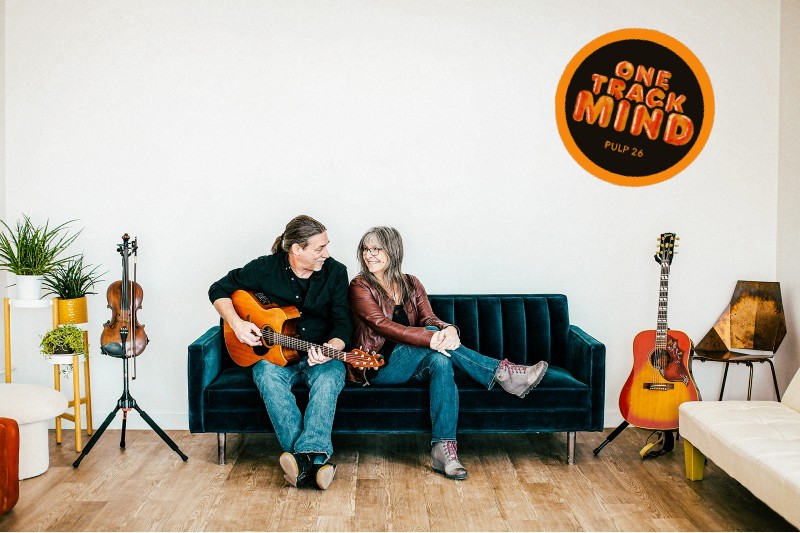
One Track Mind features a Washtenaw County-associated artist or band discussing a single song.
Standout Track: No. 2, “Pardon My Dust,” from Annie and Rod Capps. The Chelsea couple’s latest folk album, Never Done, is about self-improvement and the lessons they’ve learned on their journey of personal growth.
On “Pardon My Dust,” Annie Capps sings about self-reinvention and uses construction-based metaphors to show that her work is never done. Those references come from driving back and forth to Chicago over the years. “I think this song in particular is more about how we need to be kinder to ourselves and others who are struggling with life and all the challenges and curve balls it throws us along the way,” Annie Capps wrote in an email interview. “Also, those who have done any kind of therapy will understand that you have to tear down stuff to rebuild something better. Thus, the self-destruction reference. Not all self-destruction is necessarily bad if it reveals what needs fixing.”
Mike Green intentionally wrote a song about blind spots.
The Ann Arbor, Michigan, singer-songwriter wanted to explore that concept while working on new material for what would become his second album, Blind Spot.
“I hardly ever do that,” Green said. “Usually, I play with ideas, and it starts to coalesce into something. But then, I have to really craft it. Sometimes, the song ends up being very different from how I started, so I try to follow the creative muse.”
That creative muse led Green to the song, “Blind Spot,” which acknowledges accepting and loving someone despite their flaws.
Backed by carefree electric guitar and organ, Green sings, “You have a blind spot when it comes to all my faults, maybe you don’t just care / I’ve made enough mistakes to fill a goddamn vault, you gotta be aware / So if it’s true, you love me, too, well, that just prove the same thing’s wrong with you.”
“I had a version of the song with a whole verse about Trump,” he said. “And then I had a love song version. I brought it into the songwriting group, and they said the other one is funny, but doing it as a love song, it has more legs to it.”
“Blind Spot” soon became the title track for Green’s new folk album, which features 13 tracks about identifying and understanding different gaps in life.
“A lot of writers will say truth doesn’t have to be factual truth; it has to have emotional resonance,” Green said. “There are a lot of love songs, and I write about [experiencing] joy and depression, paying attention, and [recognizing] the resilience coming through all of that.”
Green easily conveys those truths and emotions through anecdotal lyrics, warm vocals, and earnest instrumentation.
“In a lot of ways, [my songs] start out autobiographical, but I don’t want to write in great graphic detail about my own life,” he said. “I have to draw on what I understand.”
I recently spoke with Green about the inspiration behind Blind Spot.
The folk singer-songwriter shares that rawness and honesty with people during her live performances.
“When I get done with a set and someone tells me they cried, I think, ‘Yes, I have done it!’” said Kubat, who lives in Detroit’s NW Goldberg Neighborhood. “There are so few public spaces where that kind of release is encouraged, but I believe we so desperately need to have more shared healing opportunities.”
Luckily, that opportunity is right around the corner: Kubat is playing March 6 for “Friday Night Live,” an ongoing music series at the Detroit Institute of Arts that features local artists and other acts.
“The March 6 show will mostly be intimate and stripped back,” she said. “I want the words front and center for the audience, then for the melody to show up, then the supporting music, and finally resonance.”
Kubat’s show will feature new material and past favorites with several special guests.
I recently caught up with Kubat ahead of the show.
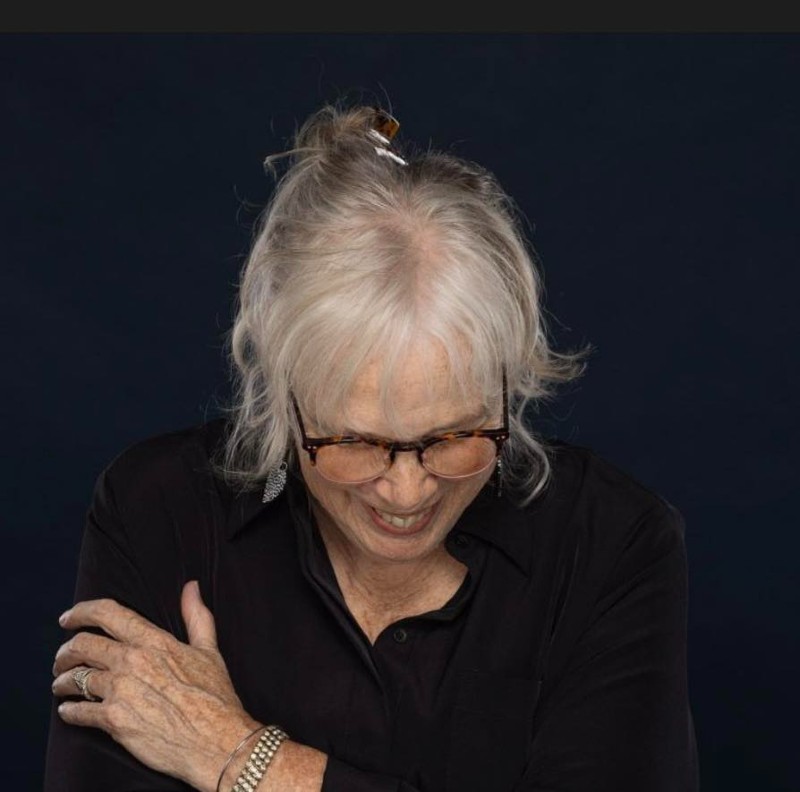
Jan Krist. Photo taken from Jan Krist’s Facebook page.
Jan Krist doesn’t mind sharing different perspectives.
The folk singer-songwriter gets candid about religion, politics, history, and relationships on Since You Asked Me.
“It does feel cathartic to be able to go ahead and say some of this stuff,” said Krist about her latest album. “It feels a little scary, too, to say what you’re thinking.”
The album’s title track explores having an honest conversation with an acquaintance about being banished from a church.
“I said, ‘Tell me about your experience with the church,’ and he said, ‘Well, since you asked me …,’” said Krist, who had the conversation at a writers’ retreat in Washington.
“And then he launched into this story about when he was young, he had a relationship with a young woman there in the church, and they both made mistakes. But he ended up getting banished, and he lived in Alaska in a little town. It really was hurtful for him to feel this heavy judgment every time he walked into a local place.”
Backed by somber acoustic guitar and cello, Krist sings, “You can’t claim the higher ground / When you’re pushing people down / And barring mercy’s door / And what are we thinking?”
“I have not had that experience, but I’ve had many experiences being in churches,” said Krist, who recently relocated to South Lyon from Fort Wayne, Indiana. “I’ve been Christian since I was 16, and I was a worship director at a church. And I’ve been to all kinds of churches, from high church to evangelical.”
The title track is one of 17 songs on Since You Asked Me, which features emotive instrumentation, narrative lyrics, and serene vocals. Each track immerses listeners in a different time period and provides compelling characters against a rich backdrop of folk music.
To learn more, I spoke with Krist about select tracks from the album and the creative process behind it.
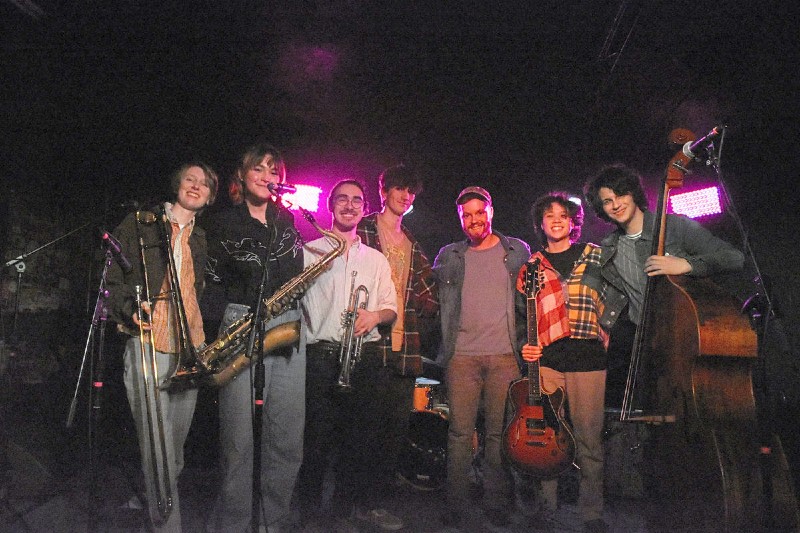
From left: SC Klein, Em Spencer, Elena Bressler, Liam Charron, Jack Harris, Corazon Szell, and Andres Soto of North Ingalls. Photo taken from North Ingalls’ Bandcamp page.
Editor’s Note: This article originally appeared on the Ann Arbor District Library’s Pulpblog.
“One Track Mind” features a Washtenaw County artist or band discussing one song from their latest release.
Standout Track: No. 1, “North Ingalls Street,” from North Ingalls. The seven-piece band’s debut release, To Be Loved Back, is about finding love through different relationships. On “North Ingalls Street,” singer-songwriter Corazon Szell finds refuge and community at a house on 213 North Ingalls Street in Ann Arbor. A U-M alumna and a player for the women’s rugby team, she lived there with the team for two years before graduating in 2025. “Before I even lived there, it was a place that always had its doors open. A place where I could go to escape my dorm and hang out with my friends that I had made on the team. And when I moved in, I wanted to continue the idea that all are welcome. ‘North Ingalls Street’ was inspired by that idea. The idea that no matter what is going on in your life—good, bad, happy, sad—there will always be a place for you to come and share, and to feel safe doing so. The memories that I have in that house with my roommates, my friends, and my family, hosting potlucks, board game nights, movie nights, bonfires, and more, are some I will never forget.” Continue reading “One Track Mind — North Ingalls, “North Ingalls Street””→
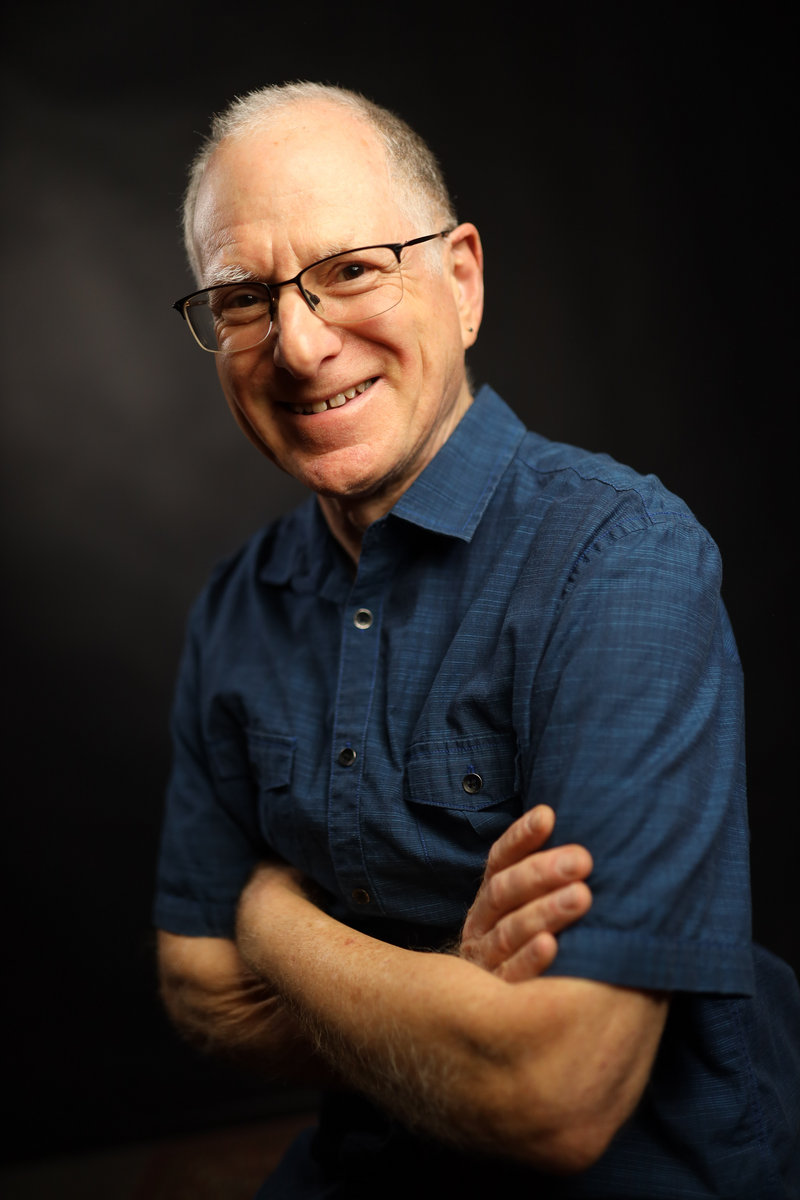
David Barrett prefers to tell stories instrumentally.
The composer-guitarist captures defining moments and memories on his latest instrumental folk album, Guitar Stories From the Midwest.
“It’s not a coincidence I call it Guitar Stories because most of them for me have a plot to the story,” said Barrett, who’s based in Ann Arbor, Michigan. “Most of them grew out of a baby being born, a forlorn moment, or a whimsical time. They start from a place and go somewhere.”
The album’s 14 songs celebrate going to the circus, attending a family wedding, traveling on a train to Chicago, enjoying a sunrise, playing soccer in a park, and relishing notable places in Michigan.
“For me, whether it be a song or a composition, I always say, ‘A good song is one you want to hear again,’” said Barrett, who also composes on the piano. “If you’re not taken somewhere, then you’re playing a typewriter.”
Barrett’s cinematic and inspirational guitarwork invites listeners to embark on past and present adventures in their mind’s eye.
“It starts with a heartbeat, and hopefully, you carry that heartbeat and take people somewhere,” he said. “If I do that, it’s a good day in the neighborhood.”
To learn more, I spoke with Barrett about his background and latest album.
After getting Lyme disease last year, Ryan Cassata is thankful to be back on the road.
The Los Angeles singer-songwriter felt isolated because of having a chronic illness and recalled experiencing that same feeling as a trans youth years ago.
“I’m excited to be feeling well enough to be back out on the road,” said Cassata, who’s still fighting the illness, but is stable enough to be touring.
“The sense of isolation that the disease has caused me reminds me of how I felt as a trans teenager: isolated and feeling like I was the only one going through it in the world. There’s also a lack of understanding that happens with both chronic illness and being trans.”
Cassata also explores those themes on his latest album, Greetings From Echo Park. He wrote most of the album while battling Lyme disease and includes 14 cathartic tracks that reflect on queer identity, trauma, uncertainty, and survival.
“So if you’re queer/trans, chronically ill, disabled, or experiencing feeling different, or being othered in any way, you may relate to the lyrics on this record,” he said.
“There are many songs that also reflect the queer experience, like “QUEER american DREAM.” I wrote that song about the state of the nation and the quest for trans equality. I sing a lot about how hard it feels right now to be trans.”