
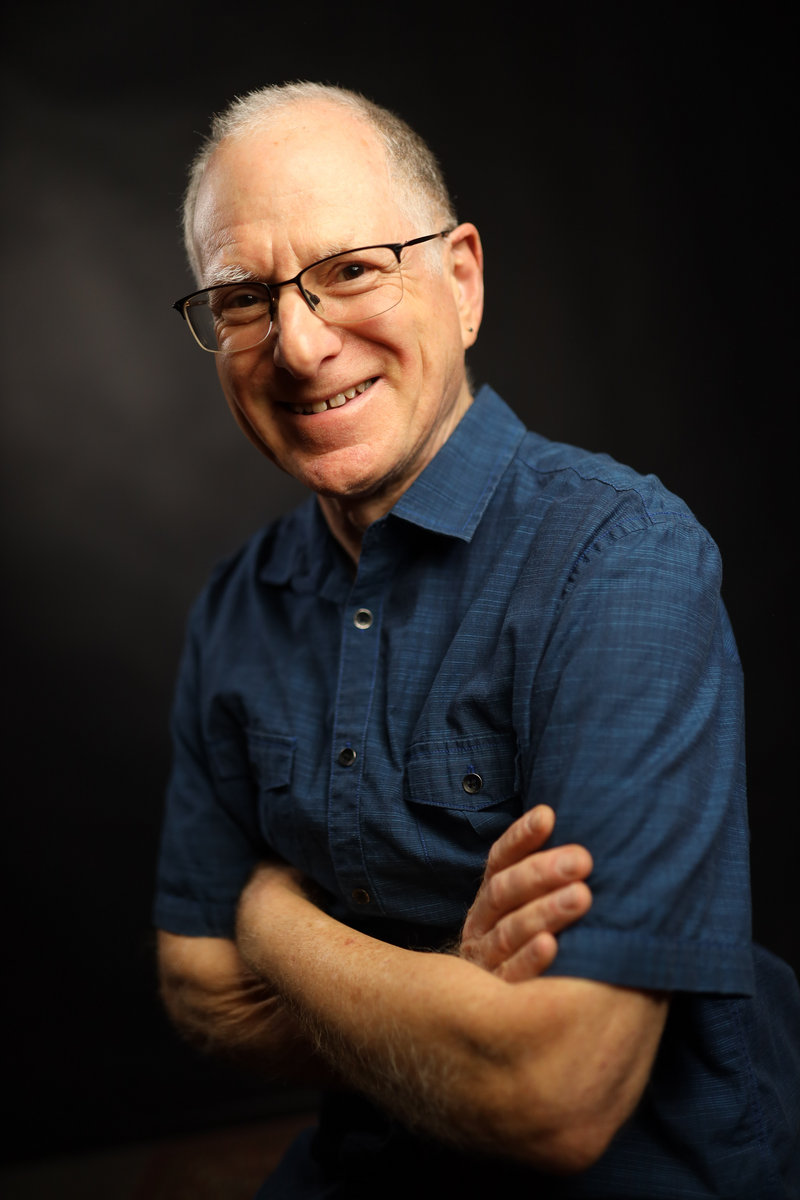
Mike Green intentionally wrote a song about blind spots.
The Ann Arbor, Michigan, singer-songwriter wanted to explore that concept while working on new material for what would become his second album, Blind Spot.
“I hardly ever do that,” Green said. “Usually, I play with ideas, and it starts to coalesce into something. But then, I have to really craft it. Sometimes, the song ends up being very different from how I started, so I try to follow the creative muse.”
That creative muse led Green to the song, “Blind Spot,” which acknowledges accepting and loving someone despite their flaws.
Backed by carefree electric guitar and organ, Green sings, “You have a blind spot when it comes to all my faults, maybe you don’t just care / I’ve made enough mistakes to fill a goddamn vault, you gotta be aware / So if it’s true, you love me, too, well, that just prove the same thing’s wrong with you.”
“I had a version of the song with a whole verse about Trump,” he said. “And then I had a love song version. I brought it into the songwriting group, and they said the other one is funny, but doing it as a love song, it has more legs to it.”
“Blind Spot” soon became the title track for Green’s new folk album, which features 13 tracks about identifying and understanding different gaps in life.
“A lot of writers will say truth doesn’t have to be factual truth; it has to have emotional resonance,” Green said. “There are a lot of love songs, and I write about [experiencing] joy and depression, paying attention, and [recognizing] the resilience coming through all of that.”
Green easily conveys those truths and emotions through anecdotal lyrics, warm vocals, and earnest instrumentation.
“In a lot of ways, [my songs] start out autobiographical, but I don’t want to write in great graphic detail about my own life,” he said. “I have to draw on what I understand.”
I recently spoke with Green about the inspiration behind Blind Spot.
Q: Many of the songs on Blind Spot are hopeful. How does hope find its way into your songwriting?
A: I try to be careful with not overdoing it, but I find that I want the songs to resolve in a kind of positive way. And sometimes that’s not necessarily interesting; I don’t want it to be like a Hallmark or Hollywood ending. I don’t want to go that far, but I don’t want to leave people [in that way]. I can’t leave people in that dark place.
Q: “Dancing in the Kitchen” is about cherishing time with family and reliving memories. How did a songwriting prompt and familial experiences inspire this song?
A: It came out of the Diamonds in the Rust songwriters retreat two years ago. We were each assigned a particular place, but the assignment was to describe that place and then have a conversation with somebody. I was assigned a mother’s or grandmother’s kitchen—and boom!—it came to me.
The story is made up, but it’s based on my grandparents’ relationship. They were married for 70-something years, and they were in love with each other the whole time, but my grandfather had dementia at the end. I can’t quite picture them dancing, but they probably did at some point. That part I made up, but my pop-pop was crazy about Ella Fitzgerald. I can picture him saying, “Oh, she sings like an angel.”
There are parts about it that all three of the retreat leaders, Annie [Capps], Jan [Krist], and Jim [Bizer], helped with specifically. And as I get to those points in the song, when I’m performing it or singing it to myself, I’ll remember, “Yeah, this is Annie’s idea; this is Jan’s idea; this is Jim’s idea.”
Q: “Elena” is about a woman experiencing depression. How did you explore that idea in this song?
A: That’s like the mysterious things that come out of the ether. I was trying to come up with a guitar line based on some stuff that I heard David Wilcox play. I was David’s agent for several years, and David’s playing is so much more advanced than what I even understand. The little guitar motif came from that, and it suggested these ideas.
I just started writing these pieces, and I remember bringing [the song] into the songwriting group before it was a coherent song. [Singer-songwriter] Pat Clinton really encouraged me, and he said, “You have to craft this into something because you have the beginning of something.” I pictured a relatively young woman still living in her parents’ house, and it’s just chemical depression. It doesn’t matter that she has people who love her, and she’s not poor. She has a place to stay, but she’s just sad.
When the song started to take shape, it was pretty and interesting, but Pat said, “Think about some of the stuff Joni Mitchell used to write. Besides the meaning of the language, the way that syllables are strung together—they’re just gorgeous. Alliteration makes them almost show off the pretty lines.” I just kept crafting it that way, and then I added the tremolo on the guitar and made it pretty. It’s just a character study. I think there are songs that don’t have to have a literal meaning to have some kind of emotional resonance. That’s the way that song feels to me.
Q: “Lenny Bruce (Staring at the Sun)” pays tribute to the late stand-up comic and how he was ahead of his time. How did Bruce and his activism spark this song?
A: There’s a really good film made about him. It’s called Lenny, where Dustin Hoffman plays him. Lenny Bruce is also a character in The Marvelous Mrs. Maisel. Every once in a while, he does a little bit of performing, but he’s like a very famous person on the scene who encourages Mrs. Maisel to do her thing.
I was aware of him, probably in high school, and I remember reading his short autobiography. But all the political stand-up comics, they all stand on his shoulders—people like Chris Rock and George Carlin. He came first, and he really pushed the envelope.
At the second songwriters retreat, we were given a two-part prompt, and the overall theme was truth. And the second part was the word “luminous.” You know how you come across people who just sort of glow? I always describe them as if it’s like light coming out of their heads. It’s like they’re almost too intense to be around, and I thought of Lenny Bruce.
He was willing to look at stuff that nobody else would. He’d be at Carnegie Hall improvising for two hours, and some of it is brilliant, and some of it gets really weird. It’s a rabbit hole, but he deals with racism in a way that people did not do in the early ‘60s. It was really pushing it.
The idea came fully formed, and then I heard a Richard Thompson guitar. That’s where that opening [part] comes from, and the electric guitar in that song is Bill [Edwards]. He really had fun putting that arrangement together.
Q: “You and Me” questions our future as a nation and searches for ways to unite people. How does this song give you some hope about the future?
A: It didn’t come from a prompt, but it started out very differently. This was an interesting one to work on—the evolution of it. I remember Chris Smither saying, “When I can’t think of what to write about, I’ll just play this really routine blues riff and see what words kind of come out.” I started out with the idea of: “I’d like to write a song, but I have no idea what to say.”
And that’s where the first line came from, and then I ended up going down a political track where I had lines about Trump and what a maniac he is. I performed that version at an open mic once, and it felt cathartic, but it also felt juvenile.
At that point, I was getting ready to do a fundraising concert for this big community gardening organization up in the U.P. I was talking with the guy who founded the organization, who was way to the left himself, but in order to make this organization work, he had to work with people of all political purposes because it was not a political organization.
And so we had these long conversations about stuff like that while I was writing this song. It made me really think: “Where am I going with this? How do we talk to each other?” In some ways, it feels naïve because it’s almost impossible for people to talk with each other and come to terms now. But eventually, we have to, if we don’t want the country to completely split apart.
Q: “Starting Again” focuses on leaving the past behind and celebrating small victories. Why did a friend’s situation prompt you to write this song?
A: It’s from somebody that I’m close with, and watching his life, it could have gotten really bad. He worked his way through it, and it was a marvel of a thing to watch. Everything is great now, but it could have been a lot worse. The line, “One pillow, one side of the bed,” means that the relationship ended really suddenly. That one feels really personal, and my favorite lines are: “This world’s a thing of beauty when it passes through your hands / You make it shine with light from overhead.” That feels really true to me.
Q: How did the songs for Blind Spot start with a songwriting group?
A: Every one of these songs went through that process where they all got tweaked, some of them heavily, and some of them were finding the two phrases in a song that didn’t quite work. It’s amazing what you can change by taking out a syllable … and that’s my tendency, to have too many words. It’s really fun to go through a song and say, “OK, now I’m going to look for every syllable I can remove from this song.”
Q: What did producer Bill Edwards do to shape the album’s production?
A: We started in September, and we finished recording in January. Bill had asked me if he could do it. It was a real collaboration. It was nice because we had gotten to know each other through a songwriting group, and then we just started getting together. While he’s a producer, Bill is also a songwriter, so he understands that part. There was a little part on “Lenny Bruce” when we were getting ready to record, and he said, “Consider this little change of the song itself, so change a phrase.” He contributed things in that way.
We discussed how each song should sound, what kind of instrumentation it should have, and what we could really afford to do. Bill plays many instruments and understands what can be recorded in the studio, especially when it comes to software. It also helps to be really comfortable because when I perform in public, it’s different than just practicing in my own music room. I have to be really comfortable to give it the best performance, and I felt that way with Bill almost all the time.
In some of the sessions, we would just work on one song, and then he’d start adding the electronic drums and bass. I’d do my guitar part, and I’d do a few takes. Then, I’d do the vocal part, and he would stitch things together if I got one phrase wrong in one take. Some of them, we got them all the way through, and there were minor tweaks. After the first few songs, he would work on his parts.
Q: Blind Spot includes collaborations with Annie Bacon and Rod Capps. What did they bring to their respective songs?
A: Annie Bacon recorded her vocals herself and then sent in the tracks for “Dancing in the Kitchen,” “Starting Again,” and “A Single Leaf.” Rod did the same thing with bass on “Elena” and “Starting Again” and guitar on “Better Than That.”
I love his bass playing, especially on “Elena,” it’s just so pretty. It’s really like a duet with another instrument. When I first saw Diamonds in the Rust at a festival out near Manchester, [Michigan], I liked everything [Rod] did, but his bass playing just made everything sound better.
Q: You’re starting to perform with Bart Moore. How did you meet him?
A: I met Bart online through a songwriting group. I also saw him at the Folk Alliance Region Midwest conference a couple of years ago. At the [last] FARM conference, we met up and spent some time together. We keep in touch now, and when he shows up for the online [songwriting group], it’s really fun because he brings in great songs, but he also gives good, clear feedback.
Q: What can people expect from your April 4 show with Bart Moore at Ann Arbor’s North Star Lounge?
A: The show is called Chasing the Feckless Muse: The Dark Art of Songwriting. We’re going to play the songs that celebrate what’s beautiful and weird in our lives. We plan to ask each other questions, but it’s probably not going to be as formal as the How’d You Write That? [shows].
It’s more about the actual craft and for those interested in the creative process. We’re going to talk about what we like to write about, but we’ll focus on the extremes—what’s especially beautiful or what’s especially messed up. There are plenty of both. We’ll also probably harmonize with each other and play some guitar together.
Q: What plans do you have for later this year?
A: I’m going to keep writing, and I want to keep getting better at that. The [show] that I did with Washtenaw Literacy [back in November] meant that I was working with an organization that brings out its own constituents. I’ve started reaching out to other organizations where the shows will be a different slant. That’s really one thing that I want to start doing. If I could play a couple of shows a month, I’d be really happy.
Mike Green and Bart Moore perform “Chasing the Feckless Muse: The Dark Art of Songwriting” on April 4 at North Star Lounge, 301 North Fifth Avenue, Ann Arbor, Michigan. For tickets, visit North Star Lounge’s website.
 The Stratton Setlist