
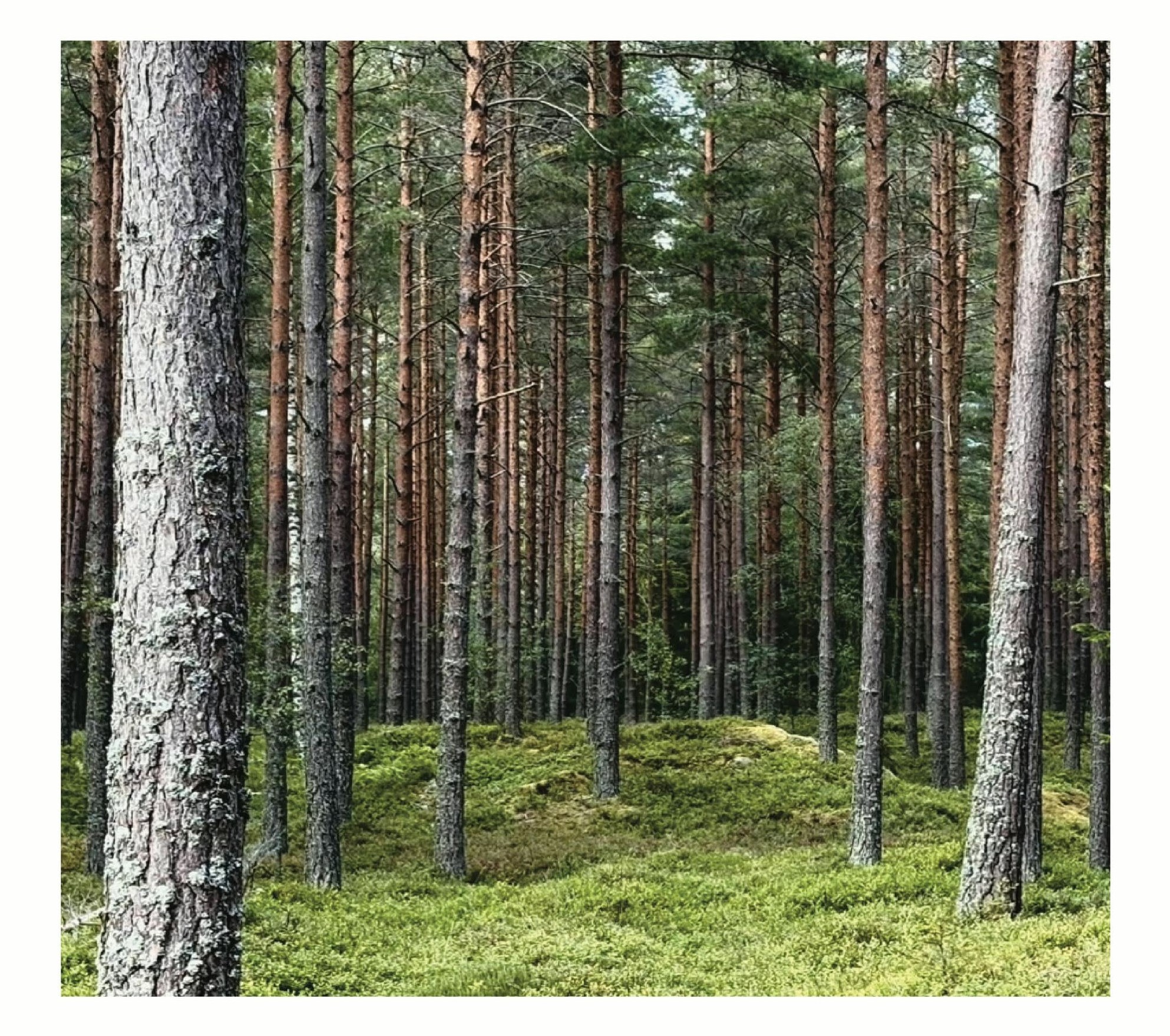
Last summer, three friends got lost in a musical moment.
That moment featured musicians Myles Boisen, Martin Öhman, and Jill Rogers gathering together for a single studio session in Yrde, Sweden, to collaborate and see where their imagination would take them.
“The three of us had agreed to meet at Martin’s recording studio, [Skogen Studios], … but there was no plan, no agenda,” said Boisen, a guitarist, composer, improvisor, and recording engineer based in Oakland, California.
“We didn’t even know we were about to make a record. In a sense, we agreed to wander together, but that was really the extent of our preparation. Along the way, we challenged and revealed ourselves to each other in surprising ways, a real ‘getting-to-know-you’ thing.”
What resulted from that session is an experimental music album by the new U.S.-Sweden trio, Boisen | Öhman | Rogers.
Released on Mellanrum Records, Lost in the Woods, or Vilse i Skogen in Swedish, features three long-form improvisational tracks and one short vocal track.
“There was no discussion at all about what to play,” said Rogers, a musician, educator, and record label founder based in San Francisco.
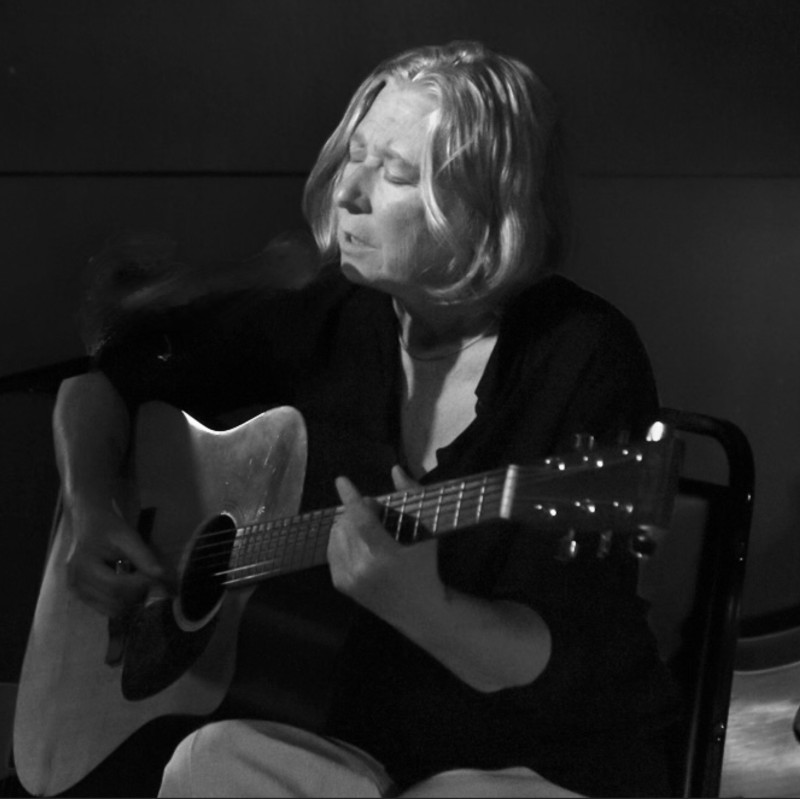
“I was noodling around with … a song [that] my band, Ex-Juncos, had abandoned, and we were off! When that improvisation reached its end, we relaxed for a moment and started in again—no discussion or planning, just listening, playing, conversing.”
Sonically, Lost in the Woods provides a contemplative soundtrack for embarking on a journey of self-discovery and processing the emotions, changes, and challenges that accompany it.
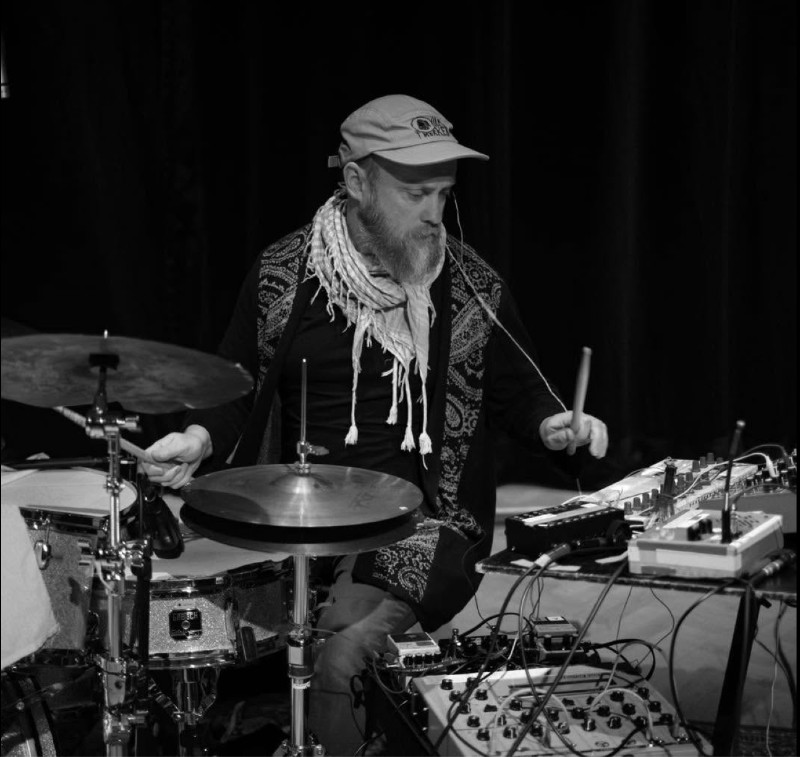
“The woods and nature are a big part of our lives as Swedes,” said Öhman, a drummer, an electronics and multidisciplinary artist, and studio owner based in Yrde, Sweden.
“Roaming in the woods is something most Swedish kids do as a part of everyday life, especially in the more rural parts. Perhaps that’s what makes us a bit introverted, or in other, more positive words, thoughtful, or ‘eftertänksamma’ in Swedish. I think nature does that to you.”
To learn more, I did an email interview with the trio about their latest album.
Q: What inspired you to create Mellanrum Records, a label that spotlights the experimental music scenes of the San Francisco Bay Area and Southern Sweden?
Jill Rogers (JR): At the beginning of 2024, I bought a farmhouse in rural Southern Sweden—my family of origin is Swedish. One of my first thoughts was: How can I share this with my friends and community, most of whom are musicians, many of whom are involved with outside, improvised, and experimental music?
I thought about how to invite bands and composers from the Bay Area to do residencies at the house and started thinking about some kind of structure or program to make that happen.
In the summer of that year, I met Martin Öhman in Sweden. Martin is this incredibly creative artist, a drummer who also plays electronics, [as well as] a playwright, a painter, a filmmaker. He’s deep in the experimental music scene there, so the idea of bringing Bay Area artists to Sweden became an exchange for also bringing Swedish artists to the Bay Area.
But honestly, that felt like a huge administrative task, so I started from the endpoint—a label that would host music from those communities, with an eye toward having artists play in both places.
Q: How did your Swedish heritage inspire the name of your label?
JR: Although my family was Swedish, and I visited there many summers as a kid, my relationship with Sweden was dormant for over 30 years—from about the time that my relatives there passed on. But in the summer of 2024, I visited a friend from the Bay Area whose fiancé had a summer house there.
Not only did I fall deeply in love with Sweden—it was like all this childhood, ancestral history, and connection woke up—but I also found that I could still speak Swedish. Not quite fluently, but passably.
When I was thinking about a name for the label, I knew it should be in Swedish, and Mellanrum seemed to hold the whole concept so perfectly, an in-between place. Geographically, between Sweden and California, and musically, between sound and song, between composition and improvisation.
Q: How did the three of you meet each other?
JR: I’ve known Myles [Boisen] for over 30 years. We met in the late ‘80s when I was booking an experimental and sound music series with Gino Robair at an art gallery, where I worked as an executive director, and Myles was in some of the bands. Myles and I have played music together for a long time.
We were in an alt-country band in the ‘90s called Cactus Motel, and we played in a honky-tonk band called Crying Time for a decade, ending in 2025. I’ve sung with his jazz group, the Miniwatt String Trio, and with Orchestra Nostalgico, an ensemble of top-shelf musicians gathered loosely around film music, especially [Ennio] Morricone, [Nino] Rota, and the [James] Bond themes. I met Martin in Sweden only recently … and we became fast friends.
Martin Öhman (MO): Getting to know Jill and Myles was really one of those weird once-in-a-lifetime things. I have an American friend who’s lived in Sweden for the past 20-plus years. He texted me last year to say he had a friend from the Bay Area who had bought a house in Tranås, where I live.
“She’s a musician, and her partner is part of the experimental scene in the Bay Area,” he said. I can safely say I’m one of perhaps two people in Tranås who’s into experimental music. It’s a very small town. I lived in Gothenburg for about 17 years, so most of the people I play with live there or in Stockholm.
So I was really surprised to hear this and was really excited to meet this person. And, as Jill mentioned, we became fast friends, which, as some say, is not always easy with a Swede.
Q: How does each member help contribute to the creative vision and sound of the group?
JR: I think Martin brings a really playful and adventurous approach to drums and percussion, part punctuation, part declaration. Myles has a long history of playing improvised music, and he was a member of The Splatter Trio, an important group in the Bay Area through the ‘90s.
He’s such a good listener and not afraid of empty space. I’m new to improvisational music, and I’ve absorbed so much from him and his approach. Being more of a songwriter, I think I also bring some structural and melodic elements.
Q: In hindsight, what was it like to create Lost in the Woods / Vilse i Skogen?
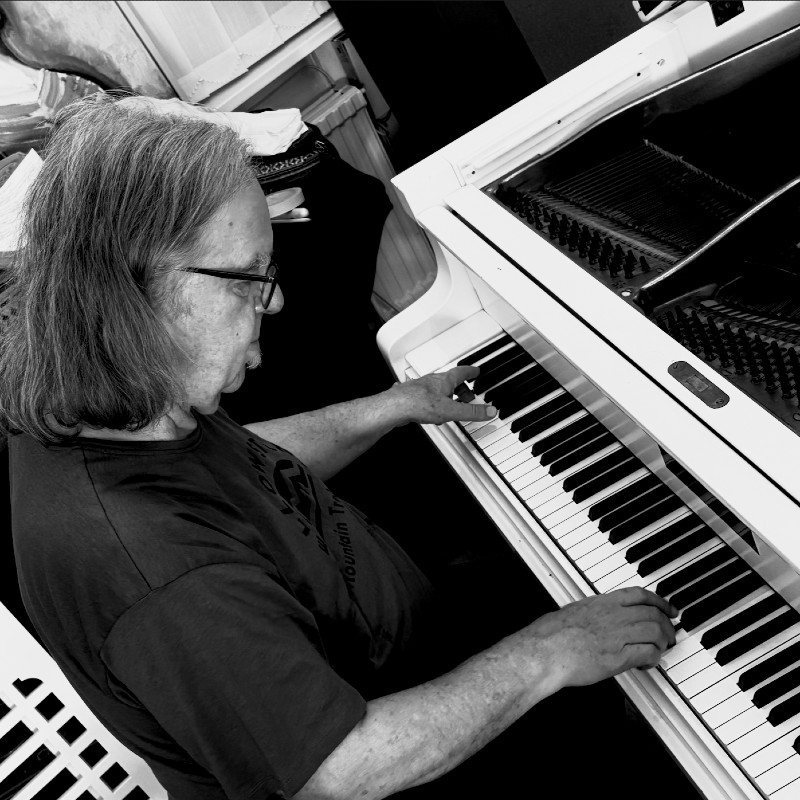
JR: Martin had invited us out to his studio in Ydre just to check it out. While we were there, marveling at the gorgeous space, the myriad keyboards and guitars, the painting, the mixing board—previously owned by Eurythmics—Martin set up a couple of mics and pressed record. I had picked up an old parlor guitar, Myles sat down at this beautiful white piano, and Martin sat down at his kit.
Myles Boisen (MB): For me, as a lifelong improvisor, that question recalls the J.R.R. Tolkien line, “Not all those who wander are lost.” I recall that day in the studio in Sweden so clearly.
Personally, I am amazed at how well it worked out, how coherent the pieces were. Jill had never improvised on acoustic guitar in the studio before; I had never played a prepared piano in an ensemble—although I have made a solo prepared piano record—and Jill and I had never heard Martin play before. But it really came together as a unique and feral acoustic adventure.
I also want to point out a less obvious meaning for Lost in the Woods. Martin’s studio, Skogen Studios, which means “the woods” in Swedish, is full of instruments—old organs, pedals and gadgets, synthesizers, electric guitars, etc. Normally, I would have been drawn to these electronic noisemakers, but I sat down at his all-white grand piano and was captivated by it.
Jill picked up an old acoustic guitar, and with Martin on the drums, we were all playing wooden acoustic instruments. The sounds just gelled immediately, and despite the temptation to switch around to some of these fun plugged-in toys, we stayed “in the woods” for the whole session. That was purely an acoustic focus, which is an essential part of the wandering we did that day. Jill did add some electric guitar later, [and] I’ll let her explain that.
MO: To me, it’s always interesting to meet people from other cultures, from other countries. As someone who plays a lot of improvised music, American culture has, of course, influenced me a lot. But like with everything, I think culture and surroundings influence you a lot. We’re from different places in the world, but we share some kind of thoughtfulness that transcends borders, and it comes across in this recording.
Q: “In or Out of Around Town” reflects feeling out of your element and finding yourself in random places. How did you arrive at the mysterious, haunting, and contemplative moods that are featured throughout the track?
JR: I love that’s what you get from that song! It was the second improvisation, and I think we were trying to stretch to find more, different, unexpected sounds from our instruments. [It’s saying], “Where else can we go? How far? Where does the path lead?”
It’s certainly true that Myles and I, Myles especially, were out of our element, or out of our usual environment, anyway. Martin’s studio is incredibly inspiring, and I know that the space itself had a strong effect on the session.
Q: “Lost in the Woods” prompts listeners to examine their lives—past, present, and future—as they hike through a forest. How did you capture such a variety of sounds that range from serene and magical to anxious and ominous?
JR: The landscape in the part of Sweden where we were, and much of the country, is very forested. I had spent the previous five weeks walking through the woods, from my house to the nearby lake, or just the daily walks in the area. The photo on the album’s cover is from one of those walks. Even the drive from my place to Martin’s studio is largely an hour’s drive through the woods.
So that contemplative woods-walk feeling was definitely present. And Andrew K. Lau’s lyrics to “Deserter’s Union Local 612” are about being in the woods, literally and metaphorically. I hadn’t put that together at the time of the recording session, but while listening back to the recordings, it all came together.
Q: “Tin Cans Tied to My Boots” represents the struggles with stepping outside your comfort zone and taking risks. How did you create an environment that conjures feelings of fear, excitement, and uncertainty for the listener?
JR: This was the third piece we recorded. It’s more percussive; the vibe is more confrontational or aggressive, more clattery. As it happens, the guitar track that we recorded was corrupted, though you can hear a little bleed on the piano track.
When we were back in Oakland, I added acoustic and electric guitar tracks to the piano and drum tracks—improvisations over improvisations. I think the electric guitar lends an ominousness that reflects back onto what Myles and Martin were playing.
Q: The lyrics for “Deserter’s Union Local 612” include the song titles of the three long-form improvisational tracks. How did the lyrics from Andrew K. Lau inspire the titles of those tracks?
JR: The titles were taken from the lyrics, and they seem to me to describe or frame the pieces they name. I love Andrew’s song so much. He felt it was too personal or too songwriter-y for Ex-Juncos, and I was really happy he consented to having it appear here. I was also happy to be able to highlight a couple of his lyrical ideas: “in or out of around town” is so nonsensically descriptive, and “tin cans tied to my boots,” who hasn’t felt like that?
Q: Tell me about the recording process for the album.
MB: As a recording engineer who has done a lot of improv records, I can tell you that most improvised music sessions start in one of two ways—either with a “Big Bang,” or the opposite—a tentative, often awkward introduction of the personalities, which slowly ramps up into something more energetic and listenable. Jill’s decision to start with a composed song was surprising and nonintuitive, to say the least.
But as I mentioned before, it brought a shape and focus to the recording right from the start, and that focus did not fade as the day progressed. Personally, I remember making conscious decisions to drop out or play at a lower dynamic, mainly out of curiosity to keep an ear on what Jill was going to come up with next.
Jill left a lot of space, too. Martin was also a very polite and attentive playing partner, often sparse or quiet, but coming in strongly when it was needed.
That sonic openness, which I feel is a strong and accessible characteristic of this record, allows room for thought-out and spontaneous ideas and motifs to arise and develop, rather than getting buried. Even the subtle ideas can be heard, sometimes repeating or sustaining to create mini-compositions in the texture. This is another unique and important feature of this session.
MO: I’m very fond of minimalist music. I’ve listened a lot to the music of Morton Feldman over the last couple of years, and I think we captured that kind of temper with this music. Music that doesn’t really follow the standard form, but is more a state to be in.
I love that kind of improvising and have always been very fond of silent playing, and both Jill and Myles seemed to like that approach as well. It takes courage to not fill every space with sound, to listen to the silence and let silence be a sound.
Q: Why did you close the album with a vocal track?
JR: Originally, I was planning to release the three improvisations on their own, but then I thought the vocal version [acted as] a frame, or a lens, for those [three] pieces. It tied them together conceptually.
Q: How did “Deserter’s Union Local 612” come together at Guerrilla Recording?
MB: As we sat down at our instruments and hit the “record” button, Jill started playing her ex-Juncos song, “Deserter’s Union.” Most improv sessions do not start with a mellow, folky song with vocals! But I knew that song, being the recording engineer on the Ex-Juncos record, and began to play along.
After five to 10 minutes, the song began to break down and evolve into something else, and that’s where piece two, “Lost in the Woods,” which was the first piece chronologically, begins on the CD.
So, “Deserter’s Union” is like a palimpsest, or a “ghost text,” a sketch that’s erased or scraped off the paper, and then written over. The original song was edited out of the ensuing recording, but it was truly the starting point for this musical meeting. And after some deliberation, Jill decided to record a vocal track over a snippet of the acoustic guitar from Martin’s studio and include it at the end.
Q: What does the future look like for you as a trio?
JR: Myles has other summer plans this year, but Martin has talked about visiting the Bay Area later this year. When we’re all in the same place again, I’m sure we’ll record. If whatever we record hangs together, we’ll definitely release it.
Q: Jill, how do you see Mellanrum Records evolving in the future?
JR: I’m so excited about Mellanrum Records. I really do see it as a home for experimental musicians from both regions and as a way to foster connections between the two communities.
I’m in the process of developing relationships with U.S. and international writers and DJs interested in this kind of music and will be sending releases their way. I’m well connected to the Bay Area scene and can book shows for bands on the label, and I’m exploring venues and festivals in Scandinavia that are open to experimental music.
I just signed a fantastic band—Levitator Trio—to the label, and they have a release coming out in September. The band is made up of Mark Clifford on vibes, Safa Shokrai on bass, and Kjell Nordeson on drums. We’ve got a show scheduled here, and I’m hoping to get the band to Sweden next summer, both to record at Martin’s studio and to perform in Gothenburg and Stockholm.
Q: What plans do you have for your own projects outside of the trio?
JR: Musically, Ex-Juncos is my primary project. We’ll be recording in Sweden with Martin this summer. We also have a pretty wild experimental album, Interstitial Business, in the can. That’ll come out on Mellanrum Records later this year. I’m also part of a trio called Trillian Welch, which includes two other local women singers and me performing the music of Gillian Welch but in three-part harmony and with a full band. It’s a really sweet project.
I’m also in a super fun Balkan-flavored goth-rock-and-soul band called Bela Ruino—or “beautiful ruin” in Esperanto. I play rhythm guitar and sing backup harmonies. Lila Sklar, who heads up that band, is a ridiculously talented violinist and charismatic singer, and the rest of the band is off the hook. It’s a joy to be in that band and be a sideman in it! I haven’t let go of the Sweden-Bay Area musicians’ exchange. If a fat pot of grant money falls in my lap, that’ll be a go, too.
MB: Right now, I’m migrating Guerrilla Studios to my home, which is a big task. It’ll be interesting to see how the move affects the work I take on. Musically, I’ve been focusing on jazz for the past few years, playing guitar with the Miniwatt String Trio and with a great jazz/cabaret singer named Angela LaFlamme. Orchestra Nostalgico has an annual show—that’s still happening.
MO: I play regularly with a couple of bands, the post-indie-jazz group Klabbes Bank and the Gothenburg-based saxophone and live electronics virtuoso Lisen Rylander Löve. Aside from that, I’ll be playing a few gigs down in Europe with a new free improv band called Knast, consisting of voice artists Casey Moir and guitarist Finn Loxbo. At the moment, I’m also writing a book, so my summer plans are to write quite a lot and see where that takes me.

