
Editor’s Note: This article originally appeared on the Ann Arbor District Library’s Pulp blog.
One Track Mind features a Washtenaw County-associated artist or band discussing a single song.
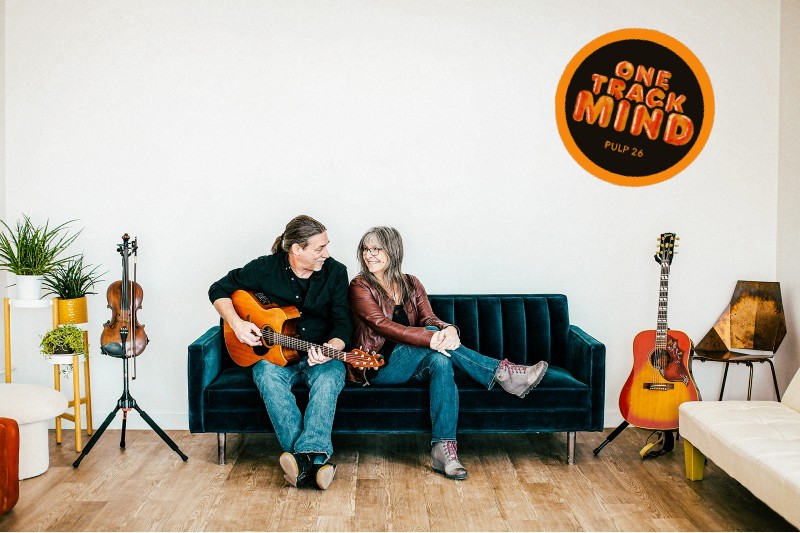
Standout Track: No. 2, “Pardon My Dust,” from Annie and Rod Capps. The Chelsea couple’s latest folk album, Never Done, is about self-improvement and the lessons they’ve learned on their journey of personal growth.
On “Pardon My Dust,” Annie Capps sings about self-reinvention and uses construction-based metaphors to show that her work is never done. Those references come from driving back and forth to Chicago over the years. “I think this song in particular is more about how we need to be kinder to ourselves and others who are struggling with life and all the challenges and curve balls it throws us along the way,” Annie Capps wrote in an email interview. “Also, those who have done any kind of therapy will understand that you have to tear down stuff to rebuild something better. Thus, the self-destruction reference. Not all self-destruction is necessarily bad if it reveals what needs fixing.”
Musical Motivation: “Pardon My Dust” features a ‘70s-inspired sound, which is reflected in Rod Capps’ bluesy guitar work. “Well, we were both coming of age in the ‘70s, so it makes sense that we’ve tapped into those influences,” wrote Annie Capps. “But I have to credit Rod for the way he treated this one. I fell in love with his guitar part. His heroes were the blues/rock guitarists of that era, but he would also say he’s just trying to serve the song. I’m always trying to stretch myself with different rhythms, strumming, and picking patterns, and this one had that sort of frantic energy.”
Conversation Piece: The tracks on Never Done have humorous lyrics, reflecting Annie Capps’ conversational and lighthearted songwriting style. Each song sounds like you’re having an insightful conversation with a close friend. “Part of the healthier version of self-reflection is to not take myself so seriously, especially when lamenting the mistakes of my youth,” she wrote. “I guess I’m in the season of life where reflecting on the past is natural, but I’m also looking at it through a more compassionate lens. And I love the idea of my songs being a conversation. Though not intentionally, I have long since leaned into that style.”

