
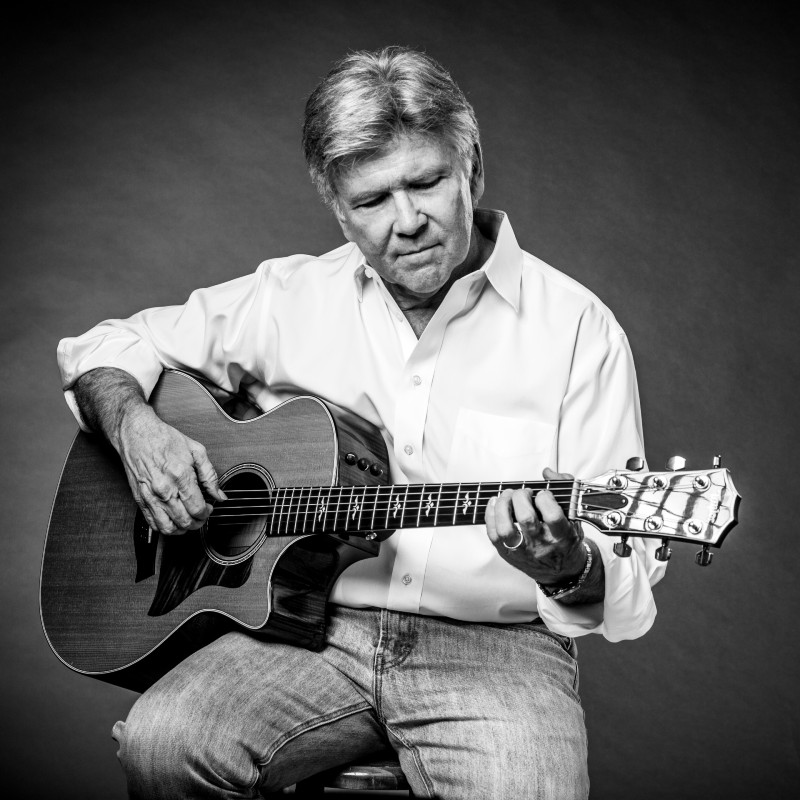
 Craig Jameson. Photo – Camera Creations Photography
Craig Jameson wants to boost people’s energy.
The multigenre singer-songwriter and guitarist invigorates listeners with his latest instrumental single, “Grasshopper 2.0.”
The bluesy song features upbeat slide guitar, bouncy bass, and marching drums that mimic a grasshopper’s vigor and momentum.
He created that infectious rhythm with producer and bassist Andy Reed and drummer Donny Brown.
“That song is meant to energize,” said Jameson, who’s based in Midland, Michigan. “When you listen to it, it’s meant to pump you up. It’s about this insect that’s racing through the underbrush, and you can picture that because of the bouncy, jumpy rhythm.”
Before doing “Grasshopper 2.0,” Jameson previously recorded and released “Grasshopper” as a slide-guitar single in June 2024.
“It is a remake of the song that I did with Dana Nielsen,” he said. “I did it strictly myself … but I’ve always heard it with a really intense bass and drum part. It’s always been in my head, but I didn’t know anyone I could do that with at the time. It’s [also] good as a standalone piece.”
Once Jameson relocated from Southern California to Midland with wife Chiqeeta in September 2023 for family reasons, he met Reed and started working with him at Reed Recording Company in Bay City.
“I reached out to Andy and said, ‘Go to my newly created website and listen to some of my single guitar pieces. You let me know if I have the right quality to work with you,’” said Jameson, whose music encompasses rock, folk, blues, and Americana. “He came back fully encouraging. I started with a single instrumental with him and then did a song with drums.”
After recording several songs with Reed, Jameson decided to revisit “Grasshopper” with bass and drums, leading to “Grasshopper 2.0.”
“I really think it goes where it’s supposed to,” he said. “It’s kind of a little barn burner.”
I recently spoke with Jameson about his background and catalog of songs.
Q: How did your musical journey start in Orange, California?
A: I started playing guitar between ages 10 and 11. I don’t even know how I got my first guitar; I probably told my mom and dad that it would be cool [to play guitar]. I got a really cheap nylon-string guitar, and they set me up with lessons. My lessons were very boring because I was playing songs like “Three Blind Mice.”
The epiphany came for me when I met a neighbor guy who was three years older than me. He was playing by ear, and he was playing Creedence Clearwater Revival songs. I said, “Can you show me how you do that?” Once he showed me “Proud Mary,” a simple song that I knew, I was off and running. I played it over and over, and that’s how I developed facility.
Then I asked him, “How do you pick these songs out by ear?” He showed me the trick of hearing the root note of a chord and said, “Find it on the low string, and then build a barre chord around it and you’re done.” For me, that was like opening the floodgates. I just started listening to everything that way while hanging out in my room and learned song after song.
Now, I didn’t start writing songs until a lot later. For me, it was enough to say, “Wow! I can play an Allman Brothers song.” Then I graduated from chords to lead solo work.
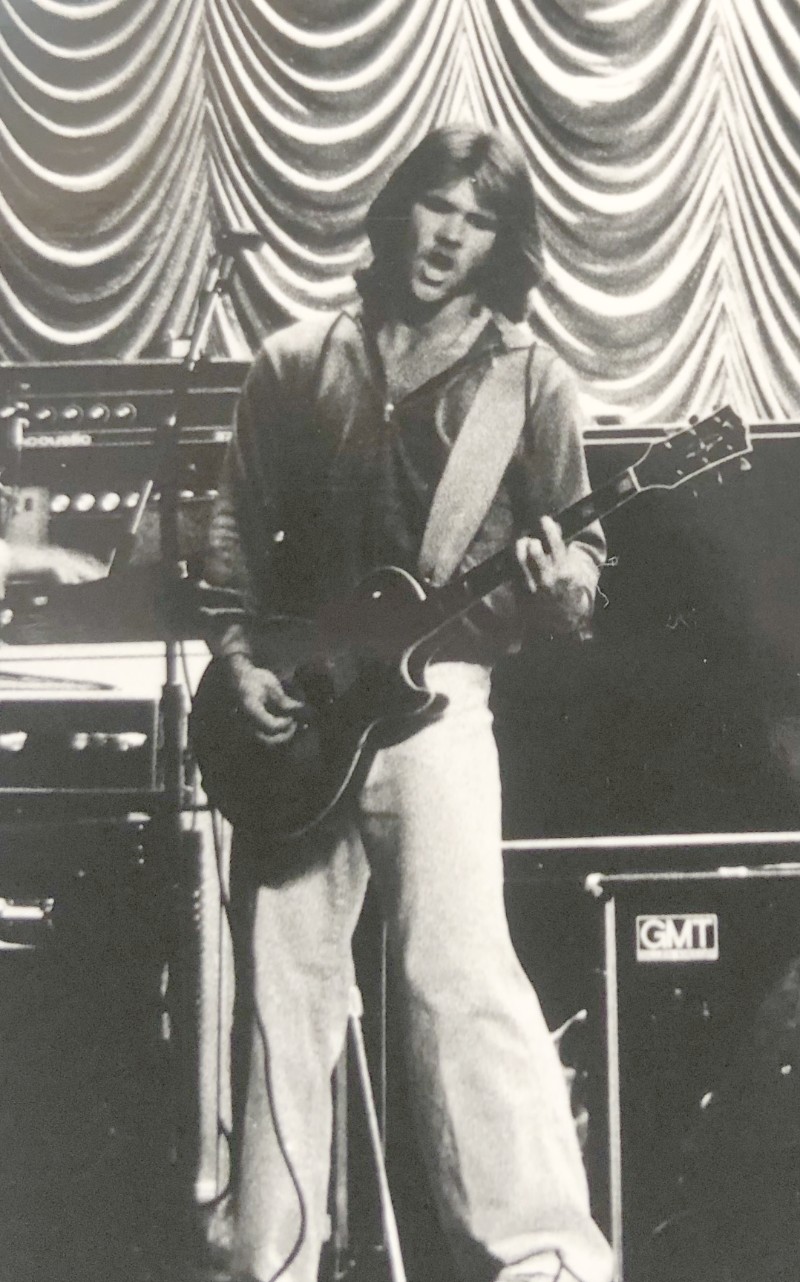 Craig Jameson performs at Myron’s Ballroom in Los Angeles in the 1970s. Courtesy photo.
Q: How did you form the band Supper’s Ready in high school?
A: I moved into the music crowd in high school, and that’s when I met Bill Lawrence, who became my then best friend. We formed a cover band [called Supper’s Ready] in 12th grade, and it lasted through our early junior college days. (The band was named after Genesis’ 1972 song.)
In 12th grade, we started playing gym concerts and dances, and then we got bigger club gigs. It would be like 1,000 people at these gatherings.
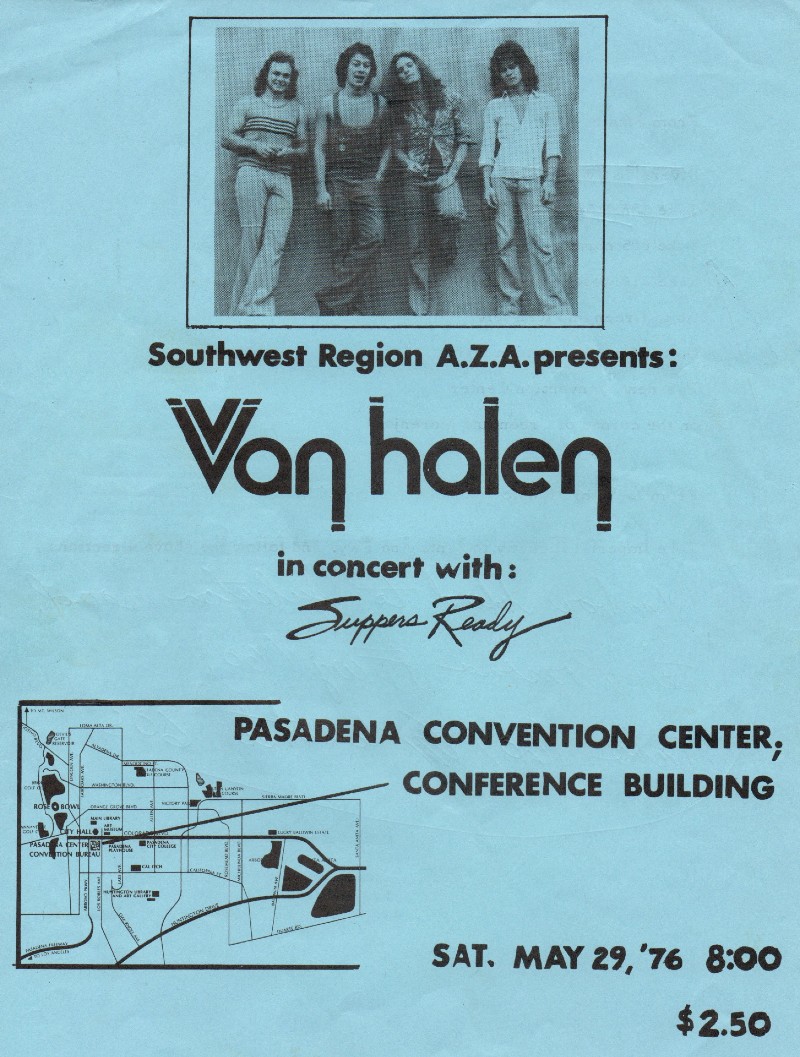 A poster from the Van Halen and Supper’s Ready show in 1976. Poster courtesy of Craig Jameson.
Q: How did that lead to opening for Van Halen at the Pasadena Convention Center in May 1976?
A: We started playing those clubs, and some people started noticing that we were a big hit because we were playing all of the then hits. All the kids at the time were hearing one after another all of the things that they loved.
That’s the advantage of being a cover band over an original band because if no one knows your originals, it’s less exciting than hearing “Smoke on the Water” [by Deep Purple] and “Rock and Roll” by Led Zeppelin.
When we opened for Van Halen, the promoter said, “Van Halen hasn’t issued an album yet. Let’s have these guys come in and warm up the crowd because all the people coming will not have heard a lot of Van Halen’s material.” That’s the short story of how we got there.
Q: What was Van Halen like back then?
A: We knew when we heard Eddie [Van Halen] play that we were watching someone extraordinary who was going somewhere. I had never heard of him before that day—I had never heard of Van Halen. We were an Orange County band, and we were going to open for Van Halen. We just said, “We’ll go and do our part.”
You couldn’t look up bands on Spotify or Google back then; they were completely unknown. When we got there, they were already set up, and Eddie was up there doing what he does. We were absolutely blown away, and they hadn’t recorded their album yet. He was probably in his early 20s. They finished their soundcheck ahead of us. We set up our band, and we were about to do our soundcheck.
They pulled up their folding chairs and just sat in front of our band to see what we had. They were very friendly and super supportive, and it was like we were all in it together. They made us feel really good, and we were in awe of them. They had an LA quality; they wore these jumpsuits as if they’d been through a war.
All of them had this blown-out [look], as if they had just fallen out of a train and rolled down the tracks for a while. They were gritty. That was great to see, and we took a lot away from that.
Q: Why did you pursue architecture as a career instead of music?
A: I thought to myself, “If I’m not writing originals, and I don’t want to play someone else’s originals, and I don’t want to become a bar band—that’s not my future either—then how am I going to make a living?” That became the litmus test to the point where I said, “All right, I still have to earn a living. I better find a reliable profession.”
So I turned to architecture because that was my next favorite thing. Knowing I wasn’t ready to make a living with music, my parents were delighted, especially my mom, because she thought going down the art path was going to be certain death. They were happy I was getting professional and getting real, but for me, it was a sad realization that I had to let go of my first calling.
I said, “I’m going to have to hang this up for a little while,” which I did. I sold some of the equipment I wish I still had, but switched to acoustic guitars because they were more portable. They were my companions for the next 30 years along with my handheld recorder.
Q: How did you start Ghosts of the Open Road in the mid-‘90s?
A: I was working in an architectural office, but doing this labor of love in the evenings. I didn’t have a big social life; I was really very reclusive. I had about four songs on my four-track [recorder], and as luck would have it, I was visiting my parents in Orange County. I ran along the riverside and saw a mutual friend of my old bandmate Bill Lawrence from Supper’s Ready.
I talked with this mutual friend, and I asked how Bill was doing. He said, “He still lives in Orange County. He would love it if you gave him a call,” so a light bulb went off. I had his number, and I called him. I said, “Well, let’s just get together and catch up.”
That led to him hearing these songs, like four or five songs. He was in a band and working as a graphic artist. He loved what I was doing, and he said, “Let’s get together and come up with some rhythm tracks,” because I didn’t have drums.
I would go down to Orange County on the weekends, and he and I would sit in his garage. He had this little keyboard synthesizer that we would use to create drum sounds. We would load my tracks in, and then he did the bass drum on one key. We got the bass drum established, and then we’d do the snare. We’d run it all back and do a couple of toms. Then, we created demos of the songs’ structures.
But we knew that wasn’t enough. We either needed a band to play the songs, or we needed to go into a studio to build them into something worth recording. That led to finding [co-producer] Jimmy Hunter, and he had a studio in West Hollywood called Cazador Studios.
Q: How did that result in recording and releasing the group’s self-titled album in 1995?
A: Through a variety of serendipitous things, I met Jimmy Hunter. He listened to what we had, and he was very intrigued. He said, “You can record it here. $20 an hour is what I’ll charge you,” so we went at it. He knew a lot of LA musicians that we used for the sessions.
One musician was [late bassist] Bob Birch. He was Jimmy Hunter’s friend and was often called for session work. And lucky for me, he was available. I remember he came to our first session, and he was a consummate rock-and-roller. He showed up in a white pickup truck with a six-string fretless bass.
He had already written out his part for the songs that we had. I remember being so impressed because we were doing everything by ear, and he walked in and had charts. He went into the studio, and Jimmy and I were behind the glass. He played those songs like he had been playing them all his life. I just thought, “This guy is amazing, and this is what a session player can do.”
We also had a great dedicated manager at the time, and he sent our CD to over 50 college radio stations. We charted in the [College Media Journal] in 1995 and 1996, and it was a test for us. We wondered, “Is anyone going to like our stuff?”
When we sent it to DJs, we got some really enthusiastic comments, and then we looked in CMJ, and there we were in the top 30. We were next to bands like The Smashing Pumpkins, and that helped us build credibility.
Q: How did you make the career transition from architecture back to music?
A: That was the plan many years before I retired—that was the dream—but I didn’t know how to make that transition. It was extremely stressful to figure out how to bring my architectural partnership to a satisfying and friendly conclusion.
Two of us had been leading an eight-person architecture firm. We were good friends and and had been through the trenches of building an architecture practice together. It was difficult to say to myself: “I’m not gonna leave this stone unturned because I have all of this music that I’ve developed. I have to break away.”
He respected that, and we found a way to make it happen. There was a lot of detail involved, but I cut the cord in September 2023. Leading up to that, I knew I was going to release material. I didn’t have a band, but I was recording singles with Dana Nielsen. We recorded one song and then five others, so those were in the bag when I came to Midland.
Q: Tell me about your songwriting process.
A: Since the [iPhone] came out in 2007, I’ve become really acquainted with the voice-memo function. I retired my handheld recording [device], and I started relying on the voice memos. Every time I hit on something that resonates emotionally, I grab it before it disappears. Like most musicians, I have a very broad collection of those fragments.
I periodically curate those fragments and pull out the top 10 that I really feel motivated to pursue. And then I rank those and say, “After I’m done with these three or four that are pretty well fleshed out, that will be my next go-to inspiration.” I want to create those songs in their best and finest form, get some radio airplay, and build an authentic audience.
Q: What’s it like to work with Andy Reed as your producer?
A: We’ve slowly built up from just me as a solo instrumentalist to creating compositions that are meant for fully staged performances. And now, the next step, next year, will be casting the band. Hopefully, that’s not too far away so we can start performing some of the pieces. It will probably start with me solo, and then I’ll add a bass player and drummer.
Q: “See the World” is a wake-up call about the world’s decline and the struggle to make sense of it. How did the song become a rallying call for making change?
A: It’s about allying yourself with the ecology of a better world and saying, “How do we make a place where everyone on this planet can thrive?” We have to pay attention to where we all live, so let’s do so. I’m not a political writer, but I have a heart and know others share those concerns. If you can put it out in a song in a way that reaches people, it might open up some thinking that is otherwise closed.
Q: “Lost Light” explores losing your sense of direction and trying to move forward. How did past professional experiences inspire this song?
A: I watched my dad slowly become obsolete. He felt obsolete because he used to do all the repair work on our cars, and he could do everything mechanical. The tools he used became obsolete, and he couldn’t work on his own car anymore.
The world of his past started to close, but then we bought him a laptop, and he was too old to become facile with email. He couldn’t get a grip on where it was all going, so in one sense, the past grew dim and started closing, but the future, at the same time, was dark for him. He couldn’t see his way into it, so hence “Lost Light.”
When I left my architectural practice, I saw some old tools that started to become obsolete. There were new tools we were totally unfamiliar with, and we were asking: “How do we use this? Is it going to make better architecture? Where is it going?”
Q: “The Call” is about listening to yourself and focusing on the future. How did your return to music spark this song?
A: I think everyone has somewhere in their own DNA a map that is emotional and mental and requires some careful listening. You have to be thoughtful and quiet to discover it, but it’s there to be discovered.
That’s why it’s “The Call.” We kinda have to find it, and we all have instincts—we prefer to do one thing over another. If we keep moving toward our own preferences, that’s nature’s way of saying, “Yes, this is what you’re supposed to do.” If you deny those things, then you’ll be frustrated and lack an internal sense of alignment.
I think people can relate to that. I know I did because, for me, the call of music has been primary since I can remember. I had to set it aside because I didn’t believe that I could make money doing it. When I reunited with that calling, all these doors started to open.
Q: “Grifter” explores the mindset of a fraudster and the magnitude of their web of deceit. How did a culture of fraud inspire this song?
A: It’s not inspired by any one person; it’s inspired by watching the news. There are some people who don’t seem to have a conscience about how they’re making their fortune. Unfortunately, in America, we celebrate the resourceful self-made millionaire, or whoever gets richest the fastest.
Our culture does, unlike Scandinavia or Japan, which celebrates achievement. You might make a lot of money, but if you’re a great artist, educator, or mathematician, that is a much higher standard and gives you a much higher cultural standing than making a real fast buck. In America, people try to make a fast buck to have that celebrity status.
They cut corners to find the quickest way to do it and then use deceitful, fraudulent practices. They start stretching the truth about their product or service, and pretty soon, they don’t even realize they’re doing it. They start making false claims. … It’s really all about a me-first culture.
Q: What’s up next for you?
A: I have four songs in progress. I’m committed to releasing something every four to six weeks, and I’ve been pretty good at hitting those milestones. I have bookings with [producer] Andy Reed all the way through December, and by the time the holidays hit, I hope to have three more songs complete and ready to issue.

